10 Insulation Board Buying Tips for Global Buyers

Buying insulation board across borders is rarely as simple as comparing prices per square meter. Product names can hide major differences in thermal performance, moisture resistance, density, fire behavior, and service life. This guide, “10 Insulation Board Buying Tips for Global Buyers,” offers a practical way to examine those differences before placing an order.

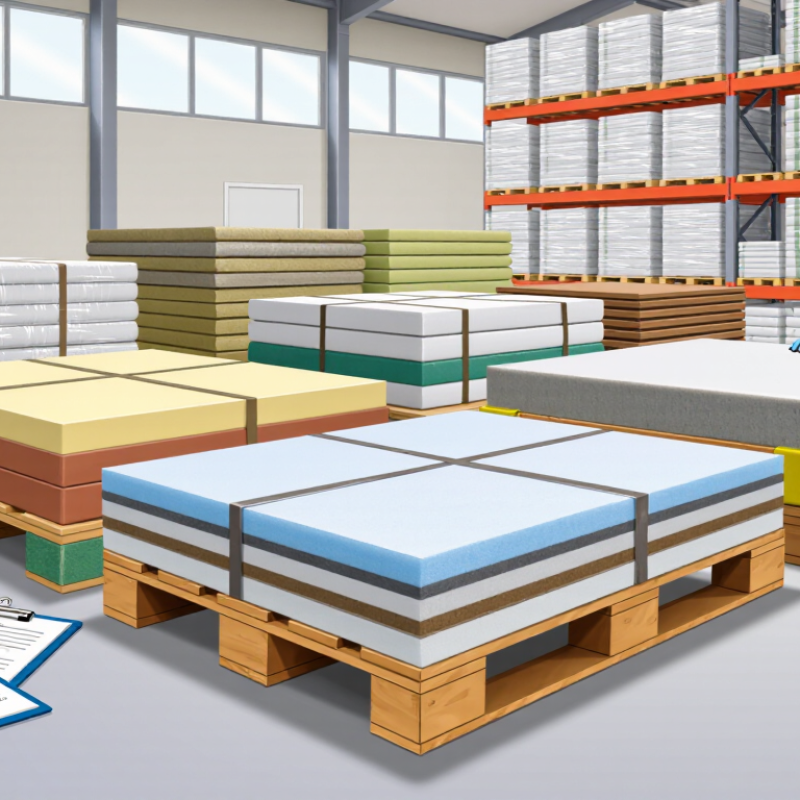
Start with the building’s actual demands. Check the declared thermal conductivity, required R-value, thickness tolerance, compressive strength, water absorption, and temperature range. Ask for current technical datasheets and independent test reports. A polished brochure is not enough. Packaging also matters. Damaged corners, wet cartons, and unclear labels can create expensive problems after arrival. Confirm pallet dimensions, container loading plans, storage instructions, and replacement procedures before shipment.

Building scientist Dr. Joseph Lstiburek has said, “The perfect wall has all the control layers on the exterior.” His principle reminds buyers to consider how insulationboard works with weather barriers, air barriers, vapor control, and structural layers. A product may perform well in a laboratory but fail when poorly installed or exposed to unexpected moisture. That possibility deserves attention.

Some choices remain imperfect. The cheapest board may increase labor, waste, or energy loss later. A thicker board may improve performance, yet reduce usable interior space. Regional standards, climate conditions, and fire requirements can also change the best option. Careful buyers compare verified performance, supplier experience, quality consistency, and total delivered cost—not only the factory quotation. Small details often decide whether a shipment becomes a durable building solution or an expensive lesson.
10 Insulation Board Buying Tips for Global Buyers

Understanding Insulation Board Types and Core Performance Ratings

10 Insulation Board Buying Tips for Global Buyers

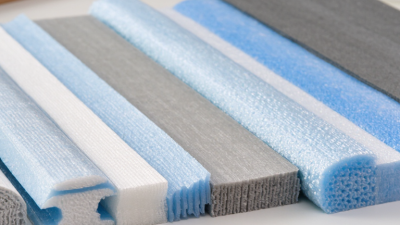
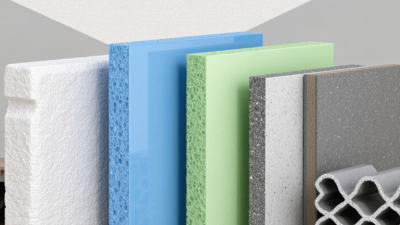
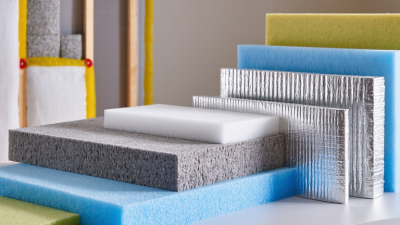
Understanding the board type is only the beginning. Mineral wool offers strong fire resistance and sound control. EPS is lightweight and economical, while XPS usually handles ground moisture better. PIR provides high thermal performance at reduced thickness. Wood-fiber boards can support lower-impact designs, but moisture detailing requires care.

Compare declared thermal conductivity, not marketing language. A lower lambda value means better insulation, but test conditions matter. Calculate R-value from thickness and conductivity, then check whether the declared value follows EN or ASTM procedures. The 2023 UNEP Global Status Report states that buildings consume about 30% of global energy and produce around 26% of energy-related emissions. Small rating errors can therefore become large operating costs.

Check compressive strength beneath floors and roofs. Review water absorption for basements, façades, and humid transport routes. Confirm reaction-to-fire classification under EN 13501-1 or the relevant local standard. Also inspect density, dimensional stability, facing adhesion, and declared service temperature. A practical site lesson is simple: damaged edges reduce installation quality. Do not ignore them.

No rating is perfect. Laboratory values may not match dusty sites, thermal bridges, or careless joints. Ask for technical datasheets, test reports, factory quality records, and batch traceability. I would also request samples after long-distance shipping. One overlooked detail remains common: buyers compare price per board instead of cost per usable square metre. That calculation deserves a second look.

Matching Board Materials to Climate, Building Use, and Location

10 Insulation Board Buying Tips for Global Buyers

Matching insulation to climate, building use, and location prevents expensive performance gaps.

The IEA’s Buildings 2023 report estimates that buildings consume about 30% of global final energy.

It also attributes roughly 26% of energy-related emissions to the sector.

Insulation selection therefore affects both operating costs and carbon performance.

In humid coastal climates, prioritize low water absorption and reliable vapor control. Closed-cell boards can limit moisture entry, but installers must seal joints carefully.

In cold regions, continuous insulation reduces thermal bridges around concrete slabs and steel framing. Mineral wool suits projects requiring fire resistance and sound control. PIR offers high thermal resistance where wall space is limited. Wood-fiber boards may suit breathable assemblies, but they need careful moisture design. Check the declared thermal conductivity, not only the advertised R-value.

Building use changes the decision. A warehouse roof needs compressive strength and stable dimensions. A residential wall needs thermal, acoustic, and indoor-air considerations. For underground applications, verify soil pressure and long-term moisture exposure.

Location matters too. Local codes, available fasteners, transport distance, and installer skill can outweigh laboratory performance.

The GlobalABC 2023 status report identifies buildings and construction as responsible for about 37% of global energy-related carbon emissions. That makes lifecycle thinking practical, not cosmetic.

A perfect board rarely exists. A cheaper product may create hidden labor costs. A higher R-value may perform poorly after careless installation.

Request third-party test data, fire classification, aging results, and project-specific calculations before ordering. Recheck the specification.

Checking Thermal, Moisture, Fire, and Sound Insulation Performance

10 Insulation Board Buying Tips for Global Buyers

Thermal performance starts with declared lambda, not thickness alone. Lower thermal conductivity usually means better resistance, but density and aging also matter. UNEP’s 2023 Global Status Report for Buildings and Construction states that buildings use about 30% of global final energy. Request tested lambda values at the temperatures used in your project. Check the aged R-value, dimensional stability, and joint details. A small gap around a window can undermine a well-rated board. Do not trust brochure estimates alone.

Moisture changes performance quietly. Ask for water absorption results under EN 1609 or EN 12087, plus water-vapor resistance under EN 12086. Check the climate, exposure, and drainage design. Wet insulation may lose thermal efficiency and encourage concealed damage. Fire data requires equal care. Compare EN 13501-1 classifications or ASTM E84 results, but do not treat them as interchangeable. Request smoke and flaming-droplet information where applicable. NFPA’s 2023 U.S. fire-loss report recorded more than 1.3 million fires, reminding buyers that reaction-to-fire data is not a paperwork detail.

Sound insulation is often misunderstood. A board’s density does not automatically prove better airborne sound reduction. Request laboratory data from ISO 10140 testing and the rating method under ISO 717. Review the complete wall or roof assembly, not the board in isolation. Flanking paths around sockets, rails, and ceiling joints can dominate results. A perfect board rarely exists. Certificates can still miss installation reality. Recheck test scope, production batch, tolerances, and local code acceptance before placing a large order.

10 Insulation Board Buying Tips for Global Buyers - Checking Thermal, Moisture, Fire, and Sound Insulation Performance

Use the indicative ranges below for initial product screening. Final selection should be based on the declared performance of the specific thickness, density, facing, and installation system.

No. Buying Checkpoint Typical Data and Practical Benchmark Relevant Test Methods or Standards What Global Buyers Should Request or Verify Risk Level
1 Compare declared thermal conductivity Lower thermal conductivity means better insulation at the same thickness.

Typical ranges at approximately 10 °C:
EPS: 0.032–0.038 W/m·K
XPS: 0.029–0.036 W/m·K
Mineral wool: 0.034–0.041 W/m·K
PIR/PUR: 0.022–0.028 W/m·K
Phenolic foam: 0.020–0.024 W/m·K
EN 12667, EN 12939, ISO 8301, ASTM C518, or ASTM C177 Compare products at the same mean temperature and thickness. Ask for declared thermal conductivity, design conductivity, test temperature, aging condition, and resistance to thermal performance over time. High
2 Calculate thermal resistance for the actual thickness Thermal resistance is calculated as R = thickness ÷ thermal conductivity.

Example: a 100 mm board with a conductivity of 0.025 W/m·K has a nominal resistance of approximately 4.0 m²·K/W, excluding thermal bridges, joints, fixings, and surface resistances.
EN ISO 6946, ISO 10211, or local building-code calculation procedures Confirm whether the supplier quotes board-only R-value or complete-system U-value. Check required thickness for the destination climate zone and building element. High
3 Check moisture absorption and water resistance Closed-cell boards generally absorb less liquid water than fibrous boards, but joints, edges, facings, and cutting can increase water entry.

Typical short-term water absorption by volume may be approximately:
XPS: below 1–2%
EPS: approximately 2–5%
Mineral wool and other products vary widely with water-repellent treatment and test direction.
EN 1609 for short-term partial immersion; EN 12087 for long-term immersion; ASTM C209 or ASTM C272 where applicable Request water absorption by the exact test method, duration, specimen orientation, and product thickness. Verify edge sealing, drainage, vapor control, and suitability for below-grade or exterior exposure. High
4 Evaluate vapor permeability and condensation risk Water-vapor resistance varies considerably:
Mineral wool: generally vapor-open
EPS: moderately vapor-permeable
XPS, PIR, and phenolic foam: generally more vapor-resistant, especially with facings

A high vapor resistance can be beneficial or harmful depending on the wall or roof build-up.
EN 12086, ASTM E96, EN ISO 13788, or hygrothermal simulation methods Obtain the water-vapor resistance factor or permeance of the complete faced board. Check dew-point location, indoor humidity, climate zone, and whether a separate vapor-control layer is required. High
5 Verify reaction-to-fire classification Typical classifications, depending on composition, facing, thickness, and mounting system:
Mineral wool: often A1 or A2-s1,d0
EPS and XPS: commonly Class E without a tested protective system
PIR/PUR and phenolic foam: often Class B or C with suitable facings and system configurations

The board classification alone may not represent the full wall or roof assembly.
EN 13501-1, EN 13823, EN ISO 11925-2, ASTM E84, or NFPA 285 where required Request a fire classification report for the exact product, facing, thickness, adhesive, fixing method, and end-use application. Check local requirements for combustible insulation and façade systems. High
6 Assess smoke production and burning droplets In the European classification system, s1 indicates low smoke production and d0 indicates no flaming droplets or particles during the specified test. These ratings are not interchangeable with every national fire-rating system. EN 13501-1 and the associated SBI and ignitability tests Do not rely only on a generic “fire resistant” statement. Check smoke class, flaming-droplet class, tested orientation, and whether the result applies to the exposed face or complete assembly. High
7 Check acoustic absorption capability Rigid closed-cell foam boards usually provide limited sound absorption because their airflow resistivity is relatively high. Porous mineral-wool boards can provide substantially higher absorption; a 50–100 mm porous board may achieve a typical weighted absorption coefficient of approximately 0.70–1.00 when tested as an exposed absorber, depending on density, facing, air gap, and mounting. ISO 354, ASTM C423, ISO 11654, and airflow-resistivity testing such as ISO 9053 Ask for the absorption coefficient by frequency, not only a general “soundproof” claim. Check whether the objective is room reverberation control, airborne sound insulation, or impact-noise reduction. Medium
8 Check airborne sound insulation of the complete assembly Board thickness alone does not determine sound reduction. Flanking paths, air gaps, studs, joints, fixings, surface layers, and airtightness can dominate performance. A single insulation board cannot be assigned a reliable wall Rw or STC value without the complete construction. ISO 10140, ISO 717-1, ASTM E90, ASTM E413, or field tests under ISO 16283 Request a laboratory report for the complete wall, roof, or partition system. Verify the exact stud spacing, cavity depth, board layers, joints, sealants, and installation method. High
9 Confirm dimensional stability and installation tolerance Thermal cycling, moisture, and temperature can affect board dimensions. Poorly fitting boards create thermal bridges and acoustic leakage. Product tolerances commonly include limits for length, width, thickness, squareness, and flatness; the actual limits depend on the applicable product standard. EN 822, EN 823, EN 824, EN 825, EN 1603, or the relevant national product standard Request dimensional-tolerance data and batch inspection records. Confirm whether boards are suitable for tight-fit installation, mechanically fixed systems, rainscreen cavities, or sandwich-panel production. Medium
10 Review documentation, compliance, and environmental data A technically suitable board should have traceable product data, test reports, safety information, installation instructions, declared dimensions, density, thermal values, fire performance, moisture data, and service-temperature limits. Environmental claims should be supported by a product-specific declaration rather than a general marketing statement. Product standards such as EN 13162, EN 13163, EN 13164, EN 13165, or EN 13166; ISO 14025 and EN 15804 for environmental declarations Request current third-party or accredited-laboratory reports, technical datasheets, safety data sheets, certificates of conformity, batch numbers, installation manuals, and product-specific environmental declarations where required. Medium

Note: The performance ranges are representative screening values for common insulation-board categories, not guaranteed specifications. Actual results depend on density, thickness, facing, aging, temperature, moisture condition, test direction, workmanship, and the complete building assembly. Always use the declared value and certification for the exact product and application.

Comparing Certifications, Sizes, Costs, and Supply Reliability

10 Insulation Board Buying Tips for Global Buyers

Comparing Certifications, Sizes, Costs, and Supply Reliability

Certification is the first filter, not the final decision. Check whether the board meets the destination market’s requirements, such as EN 13162, ASTM C578, or equivalent national standards. Request current test reports for thermal conductivity, fire performance, water absorption, and dimensional stability. A certificate without traceable batch records is weak evidence. The 2023 UNEP Global Status Report states that buildings consume about 34% of global energy. Small performance differences can therefore affect long-term operating costs.

Sizes deserve equal attention. Compare thickness, length, width, edge profile, and pallet quantity. A 1,200-millimeter board may suit one project but create waste on another. Confirm tolerances before ordering. Poorly matched dimensions increase cutting, labor, and disposal costs. That is often missed. Ask for sample pieces and installation guidance, especially when local crews use different methods.

Price comparisons should include freight, duties, storage, breakage, and installation time. The lowest factory price may not be the lowest delivered cost. The World Bank’s 2023 Logistics Performance Index shows major differences in customs, infrastructure, and shipment reliability between markets. Request production lead times, safety-stock policies, container loading plans, and delay procedures. Review at least three months of delivery records when possible. Perfect reliability is unrealistic, and buyers should admit that forecasts can fail. A practical contract defines acceptable delays, replacement terms, inspection rights, and communication responsibilities before payment.

10 Insulation Board Buying Tips for Global Buyers

Comparing indicative material costs, thermal performance, standard sizes, certifications, and supply reliability.

Indicative international material-only ranges for 50 mm boards. Actual prices vary by region, order volume, freight, fire rating, facing, and project specifications.

Board Type Typical Sizes Common Product Standard Supply Reliability
EPS 1200 × 600 mm; 20–คุณ? 300 mm thick EN 13163; EN 13501-1 fire classification High
XPS 1250 × 600 mm; 30–200 mm thick EN 13164; EN 13501-1 fire classification High
PIR 1200 × 600 or 2400 × 1200 mm; 20–240 mm thick EN 13165; EN 13501-1 fire classification Medium–High
Phenolic Foam 1200 × 600 or 2400 × 1200 mm; 20–150 mm thick EN 13166; EN 13501-1 fire classification Medium
Mineral Wool 1200 × 600 mm; 40–200 mm thick EN 13162; EN 13501-1 fire classification High

Buyers should compare thermal conductivity, declared R-value, compressive strength, water absorption, fire performance, and dimensional tolerances—not price alone. Request current technical datasheets, certificates, test reports, packing details, minimum order quantities, production lead times, and a landed-cost quotation before placing an international order.

Evaluating Suppliers, Ordering Samples, and Planning Installation

10 Insulation Board Buying Tips for Global Buyers

In site reviews, supplier evaluation often reveals more than a product brochure. Request factory test reports, production dates, and batch traceability. Check thermal conductivity, density, water absorption, fire performance, and dimensional tolerance. These values should match recognized standards, such as ISO 6946 and relevant regional product standards. UNEP’s 2023 Global Status Report states that buildings used 34% of global energy in 2022. Better insulation can therefore support measurable energy savings, but only when installation quality remains consistent.

Order samples before approving a full container. Ask for boards from different production batches. Measure thickness, edge straightness, surface strength, and packaging damage. Keep one sample for comparison after delivery. A small sample can hide larger production variation. That risk is easy to underestimate. Also request a written installation guide, recommended adhesives, fixing patterns, cutting methods, and storage limits. Confirm whether the supplier provides technical support across time zones. The IEA’s Energy Efficiency 2023 report highlights the importance of reducing building energy demand through practical efficiency improvements.

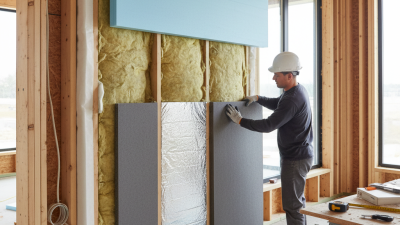
Plan installation before placing the purchase order. Confirm wall dimensions, joint layouts, moisture exposure, fire zones, and local code requirements. Add a realistic allowance for cutting waste, but avoid excessive surplus. On one review, unclear corner details caused more waste than the board specification itself. The plan was technically sound, yet incomplete. Recheck the drawings with the installer, not only the designer. Delivery timing matters too; damp storage areas can damage otherwise compliant boards. Keep inspection records, photographs, and batch numbers throughout the work.

LSP App

Download the LSP App now

Scan QR code to download the app

We use cookies to personalize content, utilize website traffic analytics & support our marketing initiatives. By continuing to browse our site you consent to receive our cookies. For more information see our Privacy Statement. 
Ok