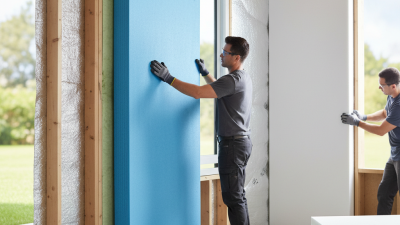
Choosing insulation polystyrene for an international project is not simply a matter of comparing prices. Buyers must examine thermal performance, moisture exposure, compressive strength, fire classification, dimensions, and installation conditions. The right board for a cold warehouse may fail in a humid basement or beneath a heavily loaded floor. Small details matter. Edge profiles, surface texture, packaging, and storage can influence installation quality.
Building-science expert Joseph Lstiburek has often emphasized, “A building enclosure is a system, not a collection of products.” This principle is essential when comparing EPS, XPS, graphite-enhanced EPS, molded polystyrene, and other insulation polystyrene options. A product may show an attractive declared R-value, yet perform differently when joints are poorly sealed or moisture remains trapped. Numbers need context.
This guide reviews ten polystyrene insulation types for global buyers. It connects material characteristics with real purchasing decisions, including climate, transport distance, project loads, and local construction practice. It also considers recycled content and responsible manufacturing, because sustainability claims should be verified rather than accepted at face value. Certificates help. They do not replace technical judgment.
The selection process is rarely perfect. Product data can vary between regions, and terminology may create confusion. Buyers should request current technical sheets, independent test results, and installation guidance from reputable manufacturers. Check twice. A cheaper panel can become expensive when cutting waste, delays, or premature replacement enter the calculation. The best choice balances performance, compliance, durability, availability, and practical site experience.
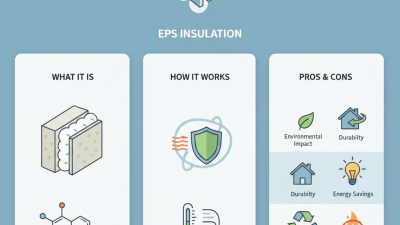
Polystyrene insulation is a closed-cell foam with a light, bead-based or extruded structure. Expanded polystyrene, or EPS, contains fused beads and typically offers thermal conductivity near 0.031–0.040 W/m·K. Extruded polystyrene, or XPS, has a more continuous cell structure, stronger moisture resistance, and values commonly near 0.029–0.036 W/m·K, according to EN 13163 and EN 13164 product classifications.
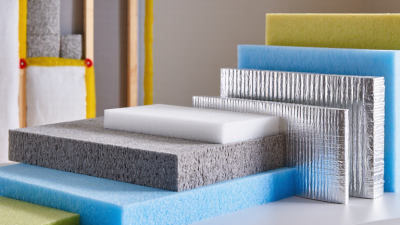
Main categories include standard EPS, high-density EPS, graphite EPS, fire-retardant grades, XPS boards, and laminated panel systems. Their performance changes with density, thickness, compression, and installation quality.
This choice matters because buildings generated about 37% of global energy and process-related carbon emissions in 2022, according to the 2023 Global Status Report for Buildings and Construction by UNEP and GlobalABC. Yet thermal data alone can mislead. A thicker board may perform poorly if joints remain open or moisture enters the assembly. On site, installers often focus on board price, while edge detailing quietly controls long-term performance. That is an uncomfortable gap.
Tips: Match the product to the exposure. Use moisture-resistant XPS for below-grade or inverted-roof conditions, and consider EPS where cost, breathability, and easy cutting matter. Check declared conductivity, density, compressive strength, water absorption, and fire classification. Ask for independent test reports. A neat specification is not always a good building.
Top 10 Polystyrene Insulation Types by Performance and Application
Polystyrene insulation serves walls, roofs, floors, foundations, and infrastructure. The right choice depends on moisture, compressive load, temperature, and fire requirements. The International Energy Agency reports that buildings consumed about 30% of global final energy in 2022, increasing demand for effective envelope insulation. (IEA, Buildings 2023)
The main ten options are white EPS, graphite EPS, molded EPS, high-density EPS, low-density EPS, floor-grade EPS, roof-grade EPS, XPS boards, geofoam EPS, and insulated sandwich panels. White EPS commonly offers thermal conductivity around 0.034–0.040 W/m·K. Graphite EPS can improve thermal performance through infrared reflection. XPS usually provides stronger moisture resistance and higher compressive strength, making it suitable for below-grade walls and inverted roofs. High-density EPS supports heavy floors and loading areas. Low-density EPS suits lightweight wall systems. Geofoam EPS reduces soil pressure beside roads and retaining structures.
Performance data must be read carefully. EN 13163 and ASTM C578 classify products by declared thermal and mechanical properties, not marketing language. A lower lambda value may not guarantee better field performance. Joints, moisture, thermal bridges, and installation quality matter greatly. Roof applications require stable dimensional behavior. Floor systems need verified compressive resistance. Fire performance also depends on the complete assembly and local building codes. This ranking is useful, but not universal. Soil conditions and climate can change the best answer.
Representative thermal conductivity values for commonly used polystyrene insulation forms. Lower λ values indicate better thermal insulation performance. Actual values vary by density, thickness, temperature, moisture exposure, and product standard.
Graphite EPS and high-performance XPS generally provide the lowest thermal conductivity, making them suitable for energy-efficient façades, roofs, foundations, and floors. Standard EPS is widely selected for wall systems, insulated concrete forms, packaging, and geofoam because of its cost efficiency and low weight. XPS is commonly preferred where higher moisture resistance and compressive strength are required.
Top 10 Insulation Polystyrene Types for Global Buyers
Expanded polystyrene (EPS) and extruded polystyrene (XPS) differ in density, moisture resistance, and compressive strength. Global buyers should match each type to climate, loading, and installation conditions. EN 13163 covers EPS products, while EN 13164 covers XPS products in European markets. ASTM C578 provides another widely used specification for rigid cellular polystyrene insulation.
Standards are only the starting point. Fire performance depends on the complete wall or roof assembly, not insulation alone. EN 13501-1 classification should be checked with the approved facing, adhesive, and fixings. ASTM E84 results cannot replace project-specific fire engineering. A practical inspection should confirm thickness, edge damage, storage temperature, and visible gaps. Small gaps matter.
Environmental screening also needs more discipline. The UNEP Global Status Report for Buildings and Construction 2023 states that buildings produced 37% of global energy and process-related CO2 emissions in 2022. Polystyrene can reduce operational energy demand, but production, blowing agents, transport, and disposal affect its total footprint. Request an Environmental Product Declaration compliant with EN 15804, plus verified global warming potential data. Check recycled content carefully; percentages can describe factory scrap rather than post-consumer material. I would not accept a single certificate as complete proof. Disposal planning is often overlooked, especially where foam recovery systems are limited.
| No. | Polystyrene Insulation Type | Typical Form and Main Uses | Typical Thermal Conductivity (λ, W/m·K) |
Approx. R-Value (per inch) |
Typical Compressive Strength | Relevant Standards and Tests | Key Safety Factors | Environmental Considerations | Global Buying Checks |
|---|---|---|---|---|---|---|---|---|---|
| 1 | White Expanded Polystyrene (EPS) Board | Molded or cut bead board for walls, roofs, floors, packaging-related construction details, and general thermal insulation. | 0.034–0.040 | Approx. R-3.6–R-4.2 | Approximately 70–200 kPa, depending on density and grade. | EN 13163; ASTM C578; ISO 4898; EN 826 or ASTM C165 for compression. | Combustible unless tested and protected as part of a rated assembly. Protect from ignition sources, solvents, prolonged UV exposure, and mechanical damage. | Usually manufactured using pentane as a blowing agent; verify current blowing-agent data, recycled content, and end-of-life collection options. Avoid uncontrolled burning. | Confirm density, declared λ, dimensional tolerances, fire classification, water absorption, and required facing or protective layer. |
| 2 | Graphite or Grey EPS | EPS containing graphite or another infrared-reflective additive; commonly used for external wall insulation and high-performance wall systems. | 0.030–0.035 | Approx. R-4.1–R-4.8 | Approximately 70–200 kPa, depending on density and product grade. | EN 13163; ASTM C578 where applicable; EN 13501-1 or ASTM E84 for system fire testing. | Dark surfaces absorb solar heat and can experience elevated temperatures during storage or installation. Use compatible adhesives and provide required fire protection. | Can provide lower thickness for the same thermal target, reducing material volume. Assess graphite additive disclosure, EPD availability, recycled content, and recyclability. | Request thermal performance at the intended thickness, solar exposure limits, installation instructions, and complete wall-system fire evidence. |
| 3 | High-Density EPS | Rigid EPS panels or molded components for floors, roofs, protected foundations, parking decks, and areas requiring greater load resistance. | 0.033–0.038 | Approx. R-3.8–R-4.4 | Approximately 150–400 kPa, depending on grade. | EN 13163; ASTM C578; EN 826 or ASTM C165; long-term compressive creep testing where applicable. | Design for long-term load, creep, moisture, point loading, and construction traffic. It remains combustible and generally needs a suitable thermal or fire barrier. | Higher density can increase material use but may extend service performance in demanding applications. Verify recycled content and product-specific life-cycle data. | Check design compressive stress rather than only short-term strength; request creep data, water absorption, thickness tolerance, and edge integrity. |
| 4 | Low-Density EPS | Lightweight board or molded bead insulation for non-load-bearing walls, roof voids, cavity infill, and selected packaging or temporary applications. | 0.036–0.044 | Approx. R-3.3–R-4.0 | Approximately 50–100 kPa, depending on density. | EN 13163; ASTM C578 where the product falls within the applicable grade; thermal and dimensional testing to local requirements. | More vulnerable to compression, abrasion, wind uplift, and installation damage. Use only where the calculated loads and fire requirements are satisfied. | Lower material intensity may reduce embodied impacts, but performance depends strongly on correct thickness and protection. Recycling is limited by collection and contamination. | Confirm minimum density, compressive stress, thickness recovery, water absorption, fire classification, and packaging or transport protection. |
| 5 | EPS Geofoam Blocks | Large lightweight blocks used for road embankments, bridge approaches, landscaping, void fill, and foundation load reduction. | 0.035–0.045 | Approx. R-3.2–R-4.1 | Approximately 20–200 kPa, depending on density and geofoam classification. | ASTM D6817; EN 14933 for lightweight fill applications where applicable; project-specific geotechnical testing. | Protect against petroleum solvents, fire, wind uplift, rodents, and construction equipment. Provide cover and adequate drainage where required. | Very low mass can reduce transport and structural loads. Large blocks may be reusable, but recycling depends on clean recovery and local facilities. | Specify density, allowable long-term stress, block dimensions, tolerances, buoyancy design, cover system, and geotechnical installation method. |
| 6 | EPS Insulated Concrete Form (ICF) Components | Interlocking EPS panels or forms that remain in place around reinforced concrete walls for residential, commercial, and below-grade construction. | 0.032–0.040 | Approx. R-3.6–R-4.5 for the EPS component; whole-wall performance is different. | Typically 70–200 kPa for the EPS component; structural capacity is provided by the reinforced concrete core and system design. | EN 13163; ASTM C578; local ICF evaluation requirements; ASTM E84 or EN 13501-1 for relevant assemblies. | EPS must be separated from occupied spaces by the code-required thermal barrier. Verify concrete pressure, bracing, fire resistance, and connection details. | Can reduce construction waste and operational energy demand, but permanent EPS complicates future separation and recycling. Request whole-building life-cycle information. | Buy as a tested system, not merely as loose EPS panels; verify concrete core width, reinforcement compatibility, fire rating, and regional code acceptance. |
| 7 | Standard Smooth-Skin XPS Board | Closed-cell extruded board for foundations, slabs, inverted roofs, below-grade walls, and other moisture-exposed applications. | 0.029–0.036 | Approx. R-4.0–R-4.9 | Approximately 200–500 kPa, depending on grade. | EN 13164; ASTM C578; EN 826 or ASTM C165; EN 12087 or comparable water-absorption testing. | Closed-cell structure does not make the product waterproof in every assembly. Protect from solvents, flame, high heat, UV exposure, and incompatible membranes or adhesives. | Historically, some XPS formulations used high-global-warming-potential blowing agents; specify current low-GWP formulation and request EPD or blowing-agent disclosure. | Verify aged thermal resistance, water absorption, compressive creep, edge profile, blowing-agent compliance, and compatibility with waterproofing systems. |
| 8 | Textured, Ribbed, or Waffle-Surface XPS | XPS board with a modified surface for improved adhesion to render, mortar, drainage layers, or protected membrane assemblies. | 0.030–0.037 | Approx. R-3.9–R-4.7 | Approximately 200–500 kPa, depending on grade and surface design. | EN 13164; ASTM C578; adhesion, water absorption, dimensional stability, and system fire tests as required. | The textured surface does not replace mechanical fixing or a tested render system. Check wind-load resistance, adhesive compatibility, and impact protection. | Surface modification may reduce installation waste by improving system integration, but the underlying XPS blowing-agent and recycling issues remain. | Confirm surface profile, adhesion test results, compatible mortars, mesh requirements, fire classification, and suitability for the target climate. |
| 9 | High-Compressive-Strength XPS | Heavy-duty XPS for industrial floors, foundations, plaza decks, parking areas, roads, and high-load roof assemblies. | 0.030–0.035 | Approx. R-4.1–R-4.8 | Approximately 300–700 kPa, depending on grade. | EN 13164; ASTM C578; compressive creep, dimensional stability, and long-term design-load testing. | Short-term compressive strength must not be used as the permanent design stress. Account for creep, temperature, moisture, joints, and point loads. | Higher performance can reduce thickness, but manufacturing impacts may increase with density. Compare verified EPDs and low-GWP blowing-agent declarations. | Request long-term compressive creep values, design stress, aged λ, water absorption, fire test data, and suitability for the exact load duration. |
| 10 | Tapered XPS Roof Panels | Factory-cut sloped XPS panels used to create drainage falls on low-slope roofs, terraces, and protected membrane roof assemblies. | 0.030–0.036 | Approx. R-4.0–R-4.9 at the design thickness | Approximately 200–500 kPa, depending on the base XPS grade. | EN 13164; ASTM C578; roof-system wind uplift, fire, water-flow, and compressive-performance testing as applicable. | Confirm minimum thickness, drainage design, membrane compatibility, wind uplift, foot-traffic protection, and exposure limits during construction. | Can combine insulation and drainage functions, potentially reducing additional materials. Offcuts should be collected for possible recycling rather than discarded or burned. | Require roof layout drawings, slope accuracy, minimum and maximum thickness, aged thermal data, fire classification, and complete system warranty requirements. |
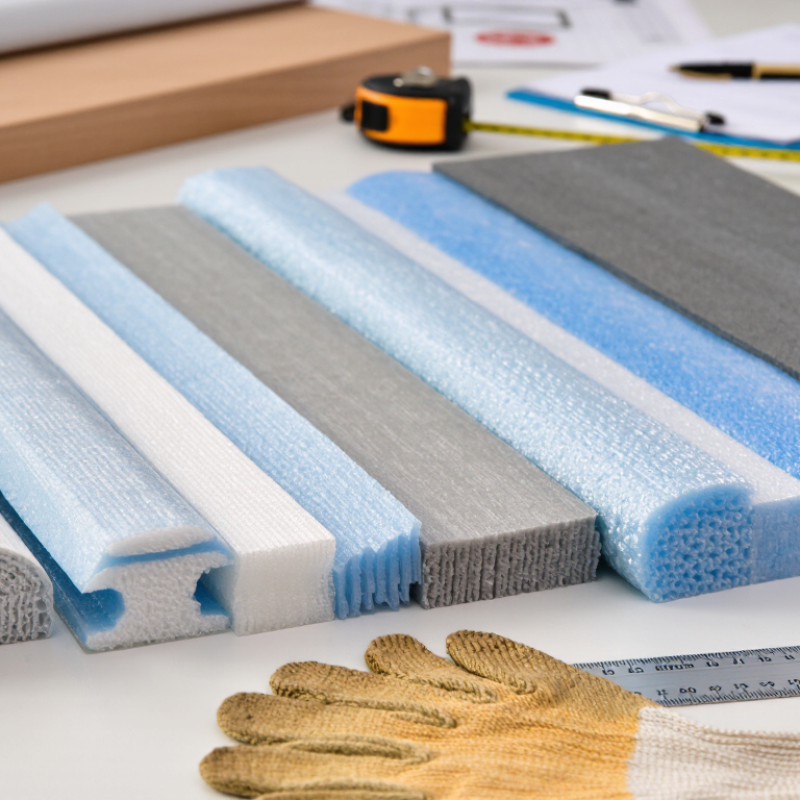
Global buyers often compare ten polystyrene options: standard EPS, high-density EPS, graphite EPS, fire-retardant EPS, molded EPS, XPS, high-compressive XPS, roof boards, under-slab boards, and pipe sections. Each type serves a different job. EPS usually offers lower cost and easier shaping. XPS performs better in wet, high-load areas, but its price is higher. Compare thermal conductivity, density, compressive strength, water absorption, and dimensional stability. A thicker board is not automatically better.
Supplier reliability needs evidence, not confident promises. Request current test reports, batch certificates, product samples, and clear tolerance data. Check whether results match standards such as EN 13163, EN 13164, or ASTM C578. Review packaging closely. Crushed corners, moisture marks, or uneven wrapping can reveal weak handling before installation. Ask for production capacity, normal lead time, container loading photos, and a written replacement process. One missed shipment can cost more than a small unit-price difference.
Tips: Compare the delivered cost, not only the factory price. Include freight, protective packaging, testing, taxes, and site waste. Keep the same sample size during price comparisons. Measure it yourself when possible. I have seen buyers accept impressive certificates, then overlook inconsistent density between batches. That mistake is easy to make. Fire classification also depends on the complete wall or roof system, not insulation alone. Ask for system-level evidence and local compliance guidance before approving the order.
Selection Guide for Different Climates, Buildings, and Project Requirements
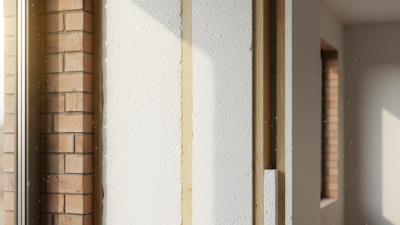
Polystyrene insulation should match the climate, wall assembly, and installation method. Expanded polystyrene, or EPS, suits many walls, roofs, and floor systems. Its open bead structure allows practical cutting on busy sites. Graphite EPS improves thermal performance where wall thickness is limited. High-density EPS handles heavier floor loads and protected roof applications. Low-density EPS may reduce cost, but it needs careful protection from compression and impact.
Extruded polystyrene, or XPS, offers low water absorption and consistent compressive strength. It is often selected for foundations, below-grade walls, inverted roofs, and cold storage floors. However, it should not replace drainage design or waterproofing.
Fire-retardant grades can support safer assemblies, but they are not fireproof. Insulated concrete forms, sandwich panel cores, roof boards, and geofoam blocks serve different construction needs. Each requires verified test data, not assumptions.
Humid climates demand sealed joints, drainage layers, and protection from trapped moisture. Cold regions need continuous insulation to reduce thermal bridges around slabs, corners, and window openings. Hot climates benefit from reflective exterior layers and carefully shaded façades. Coastal projects should check wind loads, salt exposure, and mechanical fixing. I have seen good insulation perform poorly after careless edge cutting. That detail matters.
Lower price can become higher cost when replacement follows. Buyers should compare declared thermal conductivity, density, dimensional stability, water absorption, fire classification, and local code acceptance. Testing documents should match the actual product thickness and application.
Scan QR code to download the app
LSP Products was founded by plumbers over 50 years ago with a focus on unparalleled innovation, superior product quality, and best-in-class service to the plumbing industry. Our primary focus is the new construction market where we develop products that make installations easy and provide significant cost savings to the plumbing/mechanical contractor. LSP has a manufacturing facility located in Monterrey, Mexico and a distribution center in Dallas, Texas. We are proud to offer many products designed and made in North America… About LSP
Submit the form below to receive the document via email.