Top 10 Insulation Polystyrene Suppliers Worldwide?
Insulation polystyrene is becoming more important as builders pursue lower energy use, lighter structures, and better thermal comfort. The International Energy Agency reports that buildings consume about 30% of global final energy and produce approximately 26% of energy-related emissions. That pressure reaches every insulation supplier.
Market evidence supports this direction. Fortune Business Insights valued the global expanded polystyrene market at about USD 10.32 billion in 2023. Its report expects continued growth through 2032, supported by construction, packaging, and infrastructure demand. Grand View Research also identifies building applications as a major growth engine for polystyrene insulation.
But market size does not prove supplier quality.
This guide reviews ten insulation polystyrene suppliers worldwide through practical criteria. These include thermal conductivity, compressive strength, dimensional stability, fire performance, recycled content, certification, production capacity, and delivery reliability. Product datasheets matter. So do factory audits and project references.
Building-science expert Dr. Joseph Lstiburek offers a useful warning: “There is no such thing as a perfect wall.” His observation applies to every insulation decision. A high-performing board can still fail when moisture control, installation, joints, or detailing receive little attention.
Real projects reveal those weaknesses.
The selected companies represent different regional strengths, product types, and technical approaches. Some lead in EPS systems. Others focus on XPS, recycled feedstock, or integrated building solutions. Rankings are never flawless. Regional prices, regulations, and climate conditions can change the result.
Readers should verify current certifications and local code compliance before purchasing. Supplier claims deserve careful comparison. Reliable insulation begins with evidence, not attractive marketing.
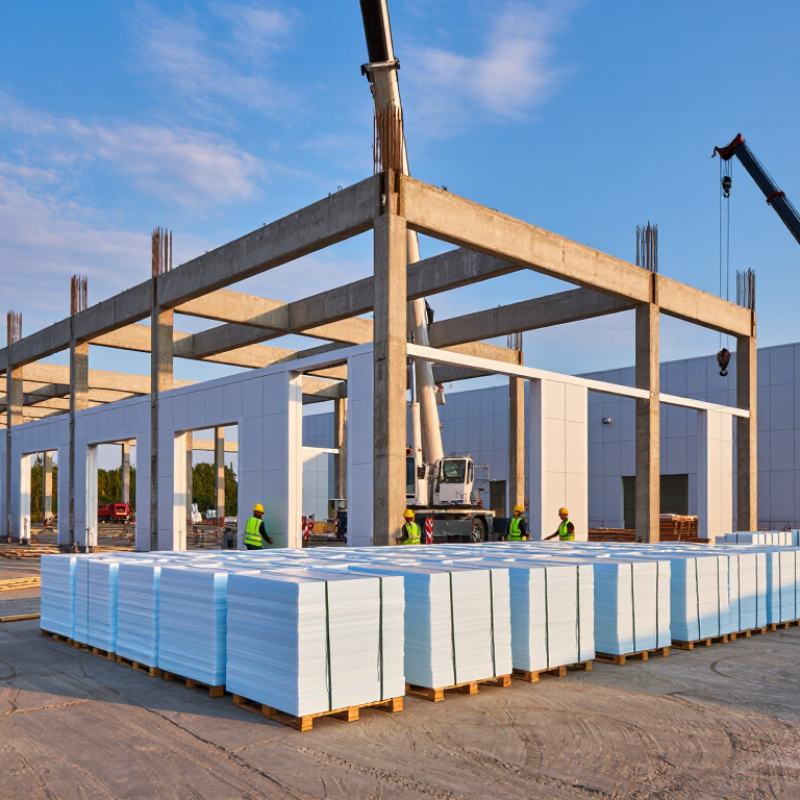
What Insulation Polystyrene Is and How It Is Used
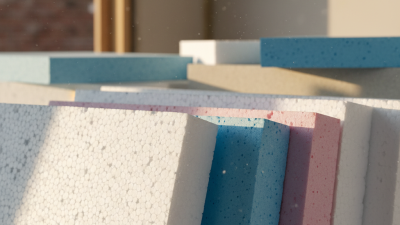
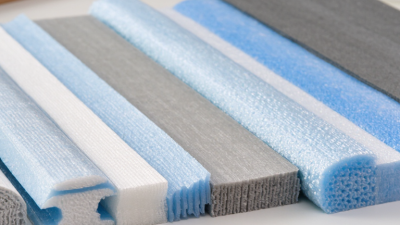
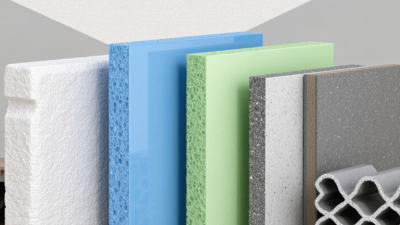
Insulation polystyrene is a rigid foam used to slow heat transfer through walls, roofs, floors, and foundations. It mainly appears as expanded polystyrene (EPS) or extruded polystyrene (XPS). EPS contains small fused beads, while XPS has a more continuous closed-cell structure. Both are lightweight and moisture resistant. XPS usually offers stronger compression performance for below-grade applications.
The 2023 Global Status Report for Buildings and Construction reported that buildings used about 34% of global energy in 2022. Better insulation can reduce heating and cooling demand, especially in poorly insulated buildings. A typical board is installed behind cladding, beneath concrete slabs, or inside cavity walls. Its value depends on thickness, density, thermal conductivity, and correct joint sealing. Small gaps can create cold bridges.
However, polystyrene is not a perfect material. Fire performance, vapor movement, recycling, and end-of-life disposal require careful assessment. The International Energy Agency stresses that insulation upgrades must match local climate and building design. A thicker board is not automatically better. Moisture exposure can also change performance over time. Buyers comparing global suppliers should request tested lambda values, compressive strength data, fire classifications, and environmental documentation. Laboratory figures are useful, but site conditions still matter.
How to Evaluate Global Polystyrene Insulation Suppliers
A credible comparison of the top 10 polystyrene insulation suppliers should begin with project requirements, not popularity.
Identify the insulation type, thickness, density, compressive strength, and expected service temperature.
EPS and XPS behave differently under moisture and repeated loading.
A coastal roof needs different evidence than an interior partition.
Request current technical datasheets, independent test reports, and batch traceability records.
Check thermal conductivity at realistic temperatures, not only the most attractive laboratory value.
Review fire performance, dimensional stability, water absorption, and declared recycled content.
Ask whether testing follows recognized international standards.
Documents should match the exact product and production site.
Generic certificates are weak evidence.
Supplier experience becomes clearer through detailed project references, responsive engineering support, and honest answers about limitations.
Request samples from normal production, then inspect edges, density, surface quality, and packaging.
Small defects matter.
Discuss lead times, container protection, minimum order quantities, and replacement procedures before signing a contract.
A low price can hide unstable supply or expensive installation delays.
I have learned that polished websites prove little.
A supplier that admits a product’s limits may be more reliable than one promising perfect performance.
Still, references should be verified independently, because even good evaluations can miss regional logistics, climate exposure, or changing factory conditions.
Profiles of the Top 10 Insulation Polystyrene Suppliers
The global insulation polystyrene market includes manufacturers with different strengths, equipment, and regional priorities. A Northern European supplier focuses on low-emission production and precise board cutting. A Central European producer offers dense EPS panels for façades and renovation projects. An East Asian supplier competes through large output and automated molding lines. Its packaging is efficient, although delivery consistency can vary by port.
A North American manufacturer develops XPS boards for foundations, roofs, and areas exposed to moisture. A Mediterranean supplier serves warm-climate construction, where cooling performance matters as much as winter insulation. A Middle Eastern producer adapts EPS products for intense heat and dusty job sites. A South Asian supplier provides economical insulation blocks for rapidly expanding housing projects. The material quality is often practical, but buyers should inspect batch records carefully.
A Latin American supplier supports local contractors with cut-to-size panels and shorter delivery routes. An Eastern European producer combines recycled content with standard thermal boards, responding to stricter environmental expectations. Across these ten supplier profiles, professional buyers should compare thermal conductivity, compressive strength, water absorption, fire performance, and dimensional stability. Ask for current test reports, not only marketing sheets. A site visit can reveal storage problems, warped boards, or crushed corners that catalogues never show. I have found that technical data is useful, but it does not replace installation experience. Even reliable suppliers may struggle during raw-material shortages. That weakness deserves honest attention.
Comparing Products, Certifications, Capacity, and Market Reach
A credible Top 10 insulation polystyrene supplier list should compare more than price. EPS and XPS products differ in density, thermal conductivity, moisture resistance, and compressive strength. For wall systems, I would check declared lambda values and dimensional stability. For foundations, water absorption and long-term load performance matter more.
Certifications reveal manufacturing discipline, but they need careful reading. Look for ISO 9001, product testing under EN 13163 or ASTM C578, and verified fire classifications where applicable. Environmental Product Declarations can clarify recycled content, energy use, and production impacts. A certificate alone can mislead. Verify its scope, expiry date, testing laboratory, and exact product grade before making comparisons.
Capacity also shapes reliability. Review annual output, plant locations, molding technology, packaging quality, and lead times during peak construction months. A supplier with several regional plants may reduce freight damage and delivery delays. Market reach should include distributor networks, technical support, installation guidance, and experience with local building codes. I would request recent project references and sample test reports. Small details matter, such as clean-cut edges, consistent board thickness, and protected bundles after rain. No supplier performs perfectly. My own comparison could overvalue published data and underweight after-sales support, so site feedback should remain part of the ranking.
Key Factors for Selecting the Right Worldwide Supplier
Choosing the right worldwide insulation polystyrene supplier requires more than comparing prices. Start with verified technical data, including density, thermal conductivity, moisture resistance, and compressive strength. These values should match your wall, roof, or foundation design.
Ask for recent laboratory reports and independent certification. Check fire-performance testing, production quality controls, and batch traceability. A reliable supplier can explain how raw materials are stored, how boards are cut, and how defects are handled. Request physical samples. A clean edge and consistent thickness matter on a real jobsite.
Delivery reliability deserves equal attention. Review monthly capacity, export experience, packaging methods, and typical lead times. A low quotation becomes expensive when damaged boards arrive late. Confirm whether the supplier can support different thicknesses, custom dimensions, and changing project schedules. Clear technical communication is essential across time zones.
I would also inspect financial stability and after-sales response. Can the supplier provide installation guidance without overstating performance? Can they replace nonconforming material quickly? These questions expose weak systems. Price still matters, but it should be compared with total delivered cost, waste, and service risk. My own evaluation would not be perfect; a polished factory visit can hide inconsistent batches. Independent testing and a small trial order offer better evidence.


 Skip to main content