How to Choose the Right Foam Insulation Boards?

Choosing the right foam insulation boards begins with the building, not the product label. Wall exposure, moisture, fire performance, climate, and installation quality all influence the result. A board that performs well beneath a dry basement floor may fail when poorly protected on an exterior wall.

The International Energy Agency reports that buildings consume about 30% of global energy demand. Its recent buildings analysis also links the sector to roughly 26% of energy-related emissions. These figures explain why insulation decisions deserve careful attention. Foam insulation boards can reduce heat transfer, limit thermal bridging, and improve indoor comfort. However, advertised R-values do not tell the whole story. Joints, fasteners, compression, aging, and water exposure can reduce real-world performance.

Building scientist Joseph Lstiburek captures this systems-based view: “Buildings are systems. Everything is connected to everything else.” His principle remains useful when comparing expanded polystyrene, extruded polystyrene, polyisocyanurate, and other board types. Each option presents trade-offs involving cost, thickness, moisture resistance, fire safety, and environmental impact.

The U.S. Department of Energy’s Building America research repeatedly emphasizes continuous insulation and careful air-sealing. That evidence supports a practical evaluation method. Check the climate zone. Inspect the assembly. Confirm local code requirements. Verify the manufacturer’s tested data.

A perfect choice is rare. Product literature can oversimplify reality. This guide therefore examines performance beyond the boldest specification, helping readers select foam insulation boards with clearer expectations and fewer costly surprises.
How to Choose the Right Foam Insulation Boards?

Identify the Main Types of Foam Insulation Boards

Choosing the right foam insulation board starts with identifying its structure, not its advertised R-value. Moisture changes everything.

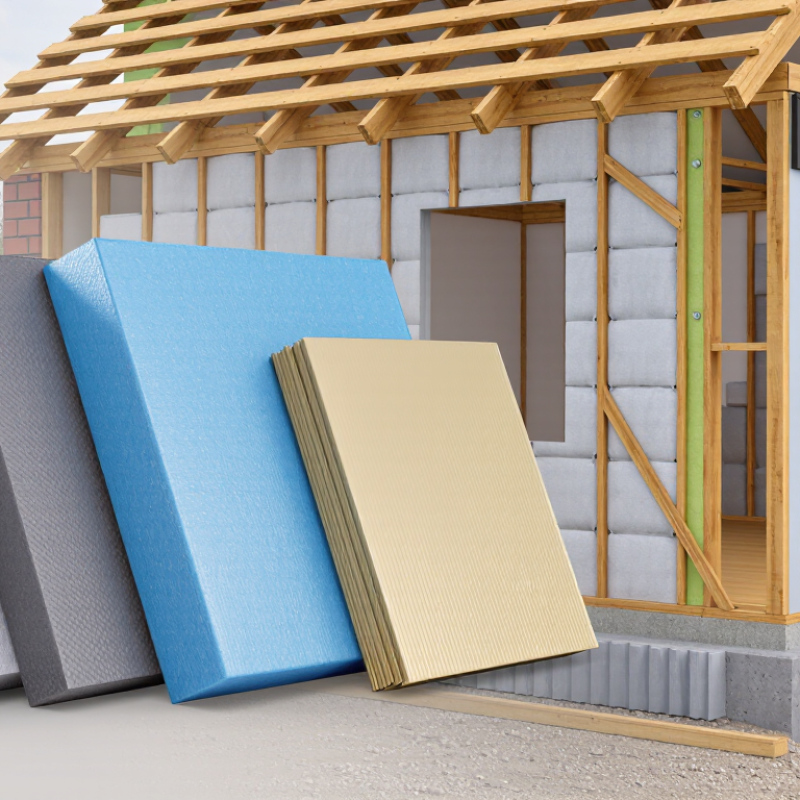
Expanded polystyrene, or EPS, is made from small foam beads. It is lightweight, economical, and useful for walls, foundations, and floor systems. Its open bead structure can absorb more moisture than closed-cell products, so exposed edges need careful protection.

Extruded polystyrene, or XPS, has a denser, closed-cell structure. It resists water better and handles compression beneath slabs or foundation walls. However, its performance depends on sealed joints and correct installation. A damaged board can create a cold bridge.

Polyisocyanurate, often called polyiso, usually has reflective facers and offers strong thermal resistance per inch. It works well in roof assemblies and framed walls, but its rated performance may change in very cold conditions. Check the product data for the actual temperature range.

Phenolic foam boards provide excellent insulation in limited spaces. They can be thinner while achieving useful thermal performance. Their facers and edges still require attention during cutting and fitting.

On site, small gaps are easy to overlook. They are not harmless. Measure the cavity, inspect the substrate, and match the board to moisture exposure, load, fire requirements, and climate. Do not guess.

A practical mistake is choosing the highest R-value without studying installation details. The best board on paper may perform poorly when joints remain open, water reaches the assembly, or the wrong adhesive damages the foam. Check local building requirements and manufacturer testing before installation.

Match Board Properties to Your Building’s Insulation Needs

How to Choose the Right Foam Insulation Boards?

Match Board Properties to Your Building’s Insulation Needs

Start with the wall, roof, or foundation—not the board’s headline R-value. The U.S. Department of Energy’s Energy Saver guide reports roughly R-4 to R-6.5 per inch for rigid foam boards. That range is useful, but it does not tell the whole story. Compare each product’s declared long-term thermal resistance, thickness, and performance at your project’s expected temperatures. Oak Ridge National Laboratory research shows polyisocyanurate performance can vary with temperature. Check the data sheet, not just the label.

Moisture and load matter, too. For below-grade walls, check water absorption and compressive strength; a board under soil faces different demands than one behind interior drywall. On a roof, consider wind uplift, drainage, and how the boards fit around edges and penetrations. Fit matters. Gaps around a window frame can undermine an otherwise high-performing assembly. Also confirm how the board works with the wall’s air and vapor-control layers. Real buildings are messier than tables. I would compare complete assembly details before choosing, and revisit the choice if local climate or installation conditions differ from the assumptions in the product data. DOE guidance on insulation materials and ORNL thermal-performance research are useful starting points.

Compare R-Values, Thicknesses, and Moisture Resistance

How to Choose the Right Foam Insulation Boards?

Compare R-values, thicknesses, and moisture resistance before choosing a foam board. U.S. Department of Energy Energy Saver guidance lists typical rigid-foam performance at roughly R-3.8 to R-6.5 per inch, depending on material. That range makes thickness important: a two-inch board rated R-5 per inch provides about R-10 before installation effects. Gaps, compressed edges, and framing can lower the whole-wall result. There is no perfect board for every wall. Choosing only the highest advertised R-value is an easy mistake.

Moisture matters just as much. A board may resist water, but seams and penetrations can still let moisture reach the assembly. Check the product’s published water-absorption and vapor-permeance test data, then consider where the board sits in the wall or roof. Building Science Corporation guidance emphasizes managing bulk water and drying potential as part of a complete assembly. For example, a damp basement wall needs a different moisture strategy than a dry interior partition. Details matter.

Tips: Compare R-value at your expected temperature, not just per inch. Check tested moisture data, seal joints as specified, and plan drainage. A quick cutaway mock-up can reveal awkward gaps before installation begins. Even careful planning can miss one.

Check Fire Safety, Environmental Impact, and Installation Requirements

Choosing foam insulation means checking more than thermal performance. Fire behavior depends on the board and the complete wall or roof assembly. Read test documentation for flame spread, smoke development, and required protective layers. A foam board may need a thermal barrier, such as gypsum board, to limit heat exposure. Confirm details against project requirements, not just a product label. Small print matters. Fire performance can change when joints, facings, or coverings differ.

Environmental claims deserve the same scrutiny. Ask about blowing agents, recycled content, manufacturing impacts, and disposal options. These factors vary by product and region, so “green” is not a useful verdict by itself. A board that lasts decades may reduce replacement, yet its end-of-life route can remain unclear. That trade-off is easy to miss. Not always obvious.

Installation is where good specifications can unravel. The surface should be clean and dry, and boards should fit without large gaps. Use compatible adhesives and follow stated fastening patterns; improvised fixes can damage facings. Wear suitable eye and skin protection when cutting, and control dust with careful cleanup. Check corners, penetrations, and window edges closely. A neat-looking panel can still hide a gap behind a pipe. An on-site review can catch problems before finishes conceal the work.

How to Choose the Right Foam Insulation Boards? — Check Fire Safety, Environmental Impact, and Installation Requirements

Typical nominal thermal resistance per inch of common foam board types

How to use this chart: These are approximate typical R-values per inch; actual performance varies by product, temperature, and facing. Compare product data sheets for the conditions in your project.

  • Fire safety: Check the product’s fire-test data and local building-code requirements. Foam plastic insulation may need an approved thermal barrier when used in occupied spaces.
  • Environmental impact: Compare product-specific Environmental Product Declarations (EPDs), including the blowing agent and its global warming potential.
  • Installation: Confirm the board is suitable for the application’s moisture, temperature, and load conditions, and follow the manufacturer’s instructions for joints, adhesives, and protective layers.

Choose the Best Board for Your Budget and Project Conditions

Choose a foam board by matching its performance to the job, not by comparing price alone. EPS often costs less and can suit many basic insulation projects. XPS resists moisture well, but its cost and environmental profile may not fit every plan. Polyiso can provide strong insulation per inch, though its performance may change in very cold conditions. Check product data for the temperatures and installation details your project will face. Measure twice. A small error in board thickness or coverage can create gaps and waste material.

Your budget should include more than the boards. Add compatible tape or adhesive, cutting tools, protective layers, and possible delivery costs. For a basement wall, moisture exposure and drainage details matter; for a roof, space limits and local climate may guide thickness. Ask whether the boards need protection from sunlight, impact, or fire, and follow the relevant installation instructions. That matters. Compare total installed cost, not just the price per sheet. If estimates are close, pause and verify the assumptions: waste, edge fitting, and labor can shift the final cost. It is easy to overbuy high-performance boards where a simpler option would work, or underbuy and regret it later.

LSP App

Download the LSP App now

Scan QR code to download the app

We use cookies to personalize content, utilize website traffic analytics & support our marketing initiatives. By continuing to browse our site you consent to receive our cookies. For more information see our Privacy Statement
Ok