How to Choose Polyolefin Duct Insulation in 2026

Choosing polyolefin duct insulation in 2026 is not a color or price decision. It is a system decision. A duct running through a humid ceiling void faces different demands from one in a dry plant room. Look closely at operating temperature, insulation thickness, vapor resistance, and the manufacturer’s tested performance. Check the product data sheet, not just the front of the package.

Building-science expert Joseph Lstiburek has written extensively about moisture and control layers. A practical paraphrase of that approach is: “Treat heat, air, and moisture as connected problems.” This is not a verified verbatim quotation about polyolefin insulation. It is a useful lens for evaluating it. A neat-looking sleeve can still underperform if joints are open or the vapor barrier is damaged. Inspect the seams. Check the bends.

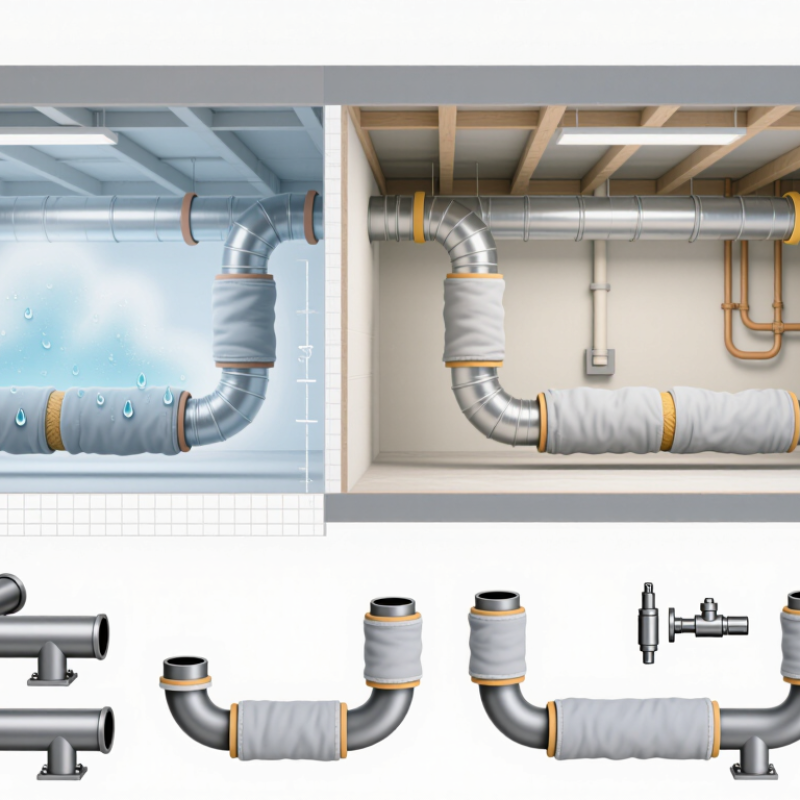
Before specifying polyolefin duct insulation, confirm that its ratings suit the actual duct location and local project requirements. Ask how the material handles condensation risk, cleaning, and installation around supports. Compare complete systems, including tapes and fittings, rather than insulation alone. For a small duct run, a few poorly sealed joints may matter more than a minor difference in nominal thickness. And real sites are rarely perfect. A drawing may miss a tight elbow or a crowded ceiling space. Record those constraints, review the manufacturer’s instructions, and have a qualified project professional verify the selection.
How to Choose Polyolefin Duct Insulation in 2026

Define Polyolefin Duct Insulation and Its Key Properties

How to Choose Polyolefin Duct Insulation in 2026

Define Polyolefin Duct Insulation and Its Key Properties

Polyolefin duct insulation is a lightweight, usually closed-cell foam made mainly from polyethylene or polypropylene. It slows heat transfer around supply and return ducts. Its small enclosed cells also limit moisture uptake, though seams and damaged facings can still admit water. Key specifications include thermal conductivity, thickness, water-vapor transmission, service-temperature range, and fire-test performance. The details matter.

A low conductivity value can look impressive, but compare values tested at similar temperatures and thicknesses. ASHRAE’s Handbook—Fundamentals explains the heat-transfer principles behind these comparisons. Flexibility helps insulation wrap around elbows, while compression can reduce its effective thickness. ENERGY STAR’s duct-sealing guidance estimates that typical homes lose 20% to 30% of duct air through leaks and poor connections. Insulation cannot fix those gaps; sealing and insulation solve different problems.

Assess Duct Conditions, Climate, and Performance Requirements

How to Choose Polyolefin Duct Insulation in 2026

Start with the duct’s actual condition, not just its location. Check for loose joints, damaged jackets, condensation, and restricted access. Insulation will not fix air leaks. The U.S. Department of Energy’s Energy Saver guidance estimates that typical homes lose 20–30% of the air moving through their duct systems through leaks and poor connections. Seal defects before choosing insulation. A cold, damp surface needs a different assessment from a dry duct in a protected ceiling space.

Climate shapes the performance target. Use local outdoor design temperatures, such as those in ASHRAE’s climatic design data, alongside the duct’s supply-air temperature and route. In humid areas, inspect the vapor retarder and seams carefully; gaps can let moist air reach cold duct surfaces. In colder regions, ducts outside conditioned space may need greater thermal resistance to limit heat loss and condensation risk. Small details matter. Check corners, hangers, and access panels.

Then compare polyolefin products by declared R-value at the intended thickness, operating-temperature range, water-vapor resistance, and suitability for the duct’s installation environment. Confirm test data and installation instructions, rather than relying on a generic “high efficiency” claim. I would also verify that the finished system leaves room for inspection and maintenance. That part is easy to overlook. A tidy insulation layer can still underperform if seams remain open or the duct is poorly sealed.

How to Choose Polyolefin Duct Insulation in 2026

Typical thermal conductivity range for closed-cell polyolefin foam

Lower thermal conductivity generally means better resistance to heat flow. This typical reported range corresponds to approximately R-3.6 to R-4.1 per inch; actual performance varies with formulation, thickness, and test conditions. Before selecting insulation, check the duct’s location and operating temperature, local climate, condensation risk, required R-value, and the product’s tested vapor permeance and temperature limits.

Compare Insulation Types, Thicknesses, and Fire Ratings

Polyolefin foam is lightweight, closed-cell, and resists water-vapor movement, making it useful around cool supply ducts. Fiberglass offers strong thermal performance at relatively low cost, but its facing and seams need careful protection. Mineral wool tolerates higher temperatures and can provide better fire resistance, though it is heavier. Feel the difference during installation: foam cuts cleanly, while fibrous materials can shed particles.

Thickness should match duct location, climate, operating temperature, and local energy requirements. One inch may suit some indoor runs; colder spaces or demanding systems may need more. There is no universal thickness. The U.S. Department of Energy’s Energy Saver guidance estimates that typical homes lose 20%–30% of conditioned air through duct leaks, holes, and poor connections. That figure covers more than insulation, but it shows why sealed joints matter alongside added thickness.

Check tested fire performance, not just material descriptions. ASTM E84 reports flame-spread and smoke-developed indices; common Class A limits are 25 and 50, respectively. Those results do not describe every fire condition or guarantee approval for a complete duct assembly. Confirm the product’s tested configuration and required protection with project specifications and applicable codes. A detail is easy to miss: foil facing alone does not make foam noncombustible.

Check Standards, Certifications, and 2026 Product Specifications

How to Choose Polyolefin Duct Insulation in 2026

Check Standards, Certifications, and 2026 Product Specifications

For a 2026 project, check the insulation’s technical sheet against the building code and job requirements. Standards vary by region and product type, so confirm that each cited test applies to polyolefin foam. For example, ASTM C518 measures thermal transmission, while ASTM E84 evaluates surface-burning characteristics. A test result alone does not guarantee approval for every duct assembly. Ask for current reports identifying the tested product, thickness, and facing.

Compare specifications that affect real installation: thermal conductivity, declared service-temperature range, water-vapor performance, thickness, and dimensional stability. Check whether the stated values apply to the exact product configuration you plan to buy. Certifications should identify their scope and issuing body; a logo without supporting documentation tells you little. Fire performance may depend on the complete assembly, including duct surface and installation details. That part is easy to overlook. I would also verify that the published 2026 data sheet is current, since older figures can remain in circulation.

Tips: Keep the technical sheet and test reports together. Match thickness to the design, inspect seams and joints, and confirm local acceptance before ordering. If two figures conflict, pause and ask for clarification. Better a small delay than a specification guess.

Select and Verify the Right Insulation for Your Duct System

Choose polyolefin duct insulation for the actual duct conditions, not just its listed thickness. Record supply-air temperature, surrounding temperature, and humidity near the duct. These details help determine whether the insulation can limit heat transfer and reduce condensation risk. Check the product data for its service-temperature range, thermal performance, water-vapor resistance, and intended use. Confirm that its fire and smoke ratings meet project specifications and applicable building requirements. Measure twice.

Before installation, inspect the duct surface and remove dust, oil, and loose material. Cut sections neatly around bends, dampers, and access panels. Seal joints with compatible materials, following the insulation instructions. Pay close attention to hangers and supports; compression can reduce insulation performance, while small openings can become paths for moisture. Small gaps matter. After installation, check seams, corners, and penetrations by sight and touch. A smooth finish is useful, but it does not prove every joint is sealed. If condensation appears during operation, review both the insulation details and site conditions rather than adding material blindly. Keep records of the selected thickness, product data, and inspection findings. I would not treat a single visual check as enough.

LSP App

Download the LSP App now

Scan QR code to download the app

We use cookies to personalize content, utilize website traffic analytics & support our marketing initiatives. By continuing to browse our site you consent to receive our cookies. For more information see our Privacy Statement. 
Ok