Choosing the China best closed cell polyolefin foam supplier requires more than comparing prices and product photos. Buyers should examine foam structure, density, thickness tolerance, surface finish, and long-term performance. These details affect insulation, packaging protection, automotive components, and industrial sealing applications.
A reliable supplier should provide clear technical data, production experience, and traceable quality records. Ask for test reports covering water absorption, compression set, tensile strength, thermal conductivity, and operating temperature. Factory audits can reveal practical conditions, such as clean lamination areas, calibrated cutting equipment, and consistent warehouse storage. Small details matter.
Experience matters greatly.
Manufacturers with export history often understand packaging, documentation, and communication requirements. However, international experience does not automatically prove product quality. Samples should be tested under the same conditions expected in real use. A foam sheet that performs well in a showroom may behave differently after heat, pressure, or repeated flexing.
The best supplier should also discuss customization honestly. Color, adhesive backing, slit rolls, die-cut parts, and flame-retardant options may require different processes. Some suppliers promise everything too quickly. That should encourage careful questioning, not immediate trust. Confirm lead times, minimum order quantities, inspection procedures, and after-sales support in writing.
This guide evaluates leading Chinese manufacturers through practical and technical criteria. It considers material consistency, engineering support, production capacity, certifications, and customer feedback. No supplier is perfect. Even a strong factory may have limitations in customization or delivery speed. A balanced review helps buyers select closed cell polyolefin foam with greater confidence and fewer costly surprises.
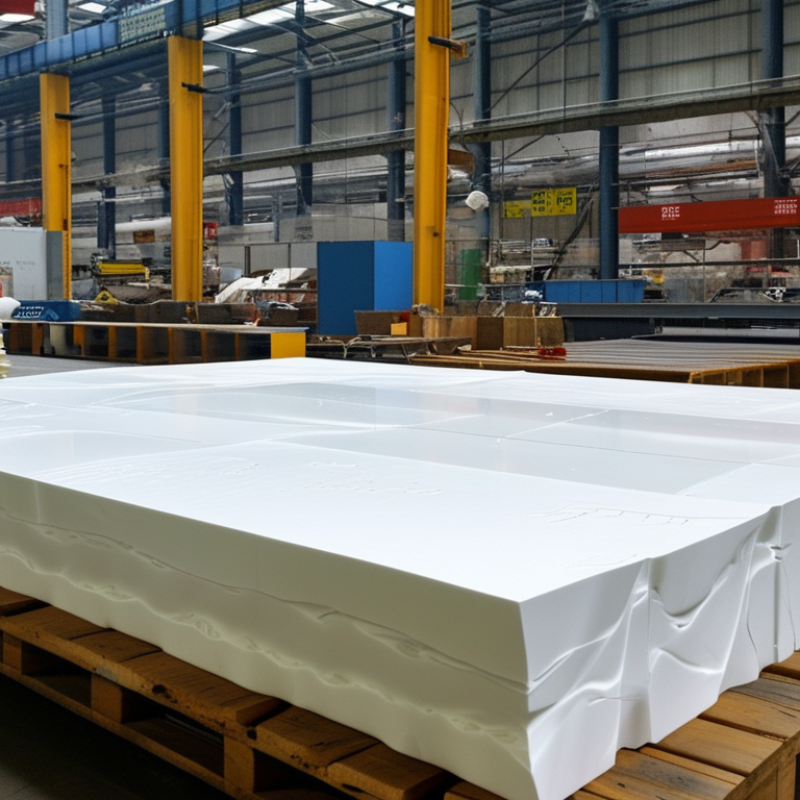
Closed cell polyolefin foam is a lightweight material made from polyolefin polymers. Its tiny cells remain sealed during production. This structure limits water absorption and slows air movement through the foam. It also provides useful cushioning, thermal insulation, and vibration control.
In practical applications, the foam feels smooth, resilient, and slightly springy. Installers often cut it with a sharp blade for gaskets, pipe covers, protective packaging, and equipment insulation. Its low density helps reduce added weight. Its closed structure can also support cleaner surfaces in damp environments.
It is not a miracle material. Performance depends on density, thickness, temperature, and processing quality. A thin sheet may protect a surface but offer limited insulation. A soft grade may cushion well but compress under constant loads. Engineers should check recovery, compression set, flame behavior, and dimensional stability before choosing a specification.
During supplier evaluation, request a technical data sheet and a representative sample. Test the foam under actual humidity and temperature conditions. Ask how production controls cell uniformity, thickness, and surface finish. These details matter more than appearance alone. A reliable supplier should explain limitations clearly, even when the material seems suitable.
China Best Closed Cell Polyolefin Foam Supplier?
How Closed Cell Polyolefin Foam Is Made
Closed cell polyolefin foam begins with polyethylene or polypropylene resin pellets. Manufacturers blend them with colorants, stabilizers, and controlled nucleating agents. The mixture enters an extruder, where heat and shear create a uniform melt. A physical blowing agent then forms tiny gas cells inside the polymer. Crosslinking may follow, using radiation or chemical methods, to improve strength and dimensional stability.
The hot foam expands through a die or between calibrated rollers. Cooling locks the cell structure in place. Each cell remains sealed, limiting water absorption and heat transfer. Operators then measure density, thickness, compression resistance, and cell uniformity. ISO 845 provides a recognized method for apparent density testing, while ASTM D3575 supports evaluation of flexible cellular materials.
Process control matters more than appearance. A slightly uneven surface can reveal unstable pressure or cooling. The 2024 Grand View Research market analysis valued the global polyolefin foam market at roughly US$7 billion in 2023, showing strong demand for lightweight insulation and protection materials. Yet market growth does not remove manufacturing risks. Excessive blowing can weaken the foam, while insufficient expansion wastes resin. Experienced engineers adjust temperature, screw speed, and cooling time for each formulation. Some results still require practical review, not blind trust in test data.
| Category | Key Dimension | Typical Value or Process Detail | Technical Significance |
|---|---|---|---|
| Raw Materials | Primary polymer | Polyethylene (PE), polypropylene (PP), or an appropriate polyolefin blend | Controls flexibility, stiffness, chemical resistance, service temperature, and recyclability. |
| Nucleating agent | Usually a finely dispersed mineral or polymeric additive, selected according to the formulation | Promotes more uniform cell formation and can improve surface appearance and dimensional consistency. | |
| Blowing agent | Physical blowing agents such as carbon dioxide, nitrogen, or hydrocarbons may be used depending on the process | Creates the gas phase that expands the molten polymer into a cellular structure. | |
| Functional additives | Colorants, antioxidants, flame retardants, antistatic agents, or processing aids when required | Adjusts appearance, processing stability, electrical behavior, or fire performance. | |
| Manufacturing Process | 1. Compounding | Polymer pellets, additives, and nucleating agents are mixed in a controlled formulation. | Provides uniform composition and stable product performance. |
| 2. Melting and plasticization | The blend is heated above its melting or softening range inside an extruder. | Produces a homogeneous melt suitable for gas dispersion and extrusion. | |
| 3. Gas injection and mixing | The blowing agent is injected into the polymer melt under controlled pressure and temperature. | Determines expansion ratio, cell size, density, and closed-cell content. | |
| 4. Die extrusion | The gas-filled melt passes through a sheet, board, profile, or tube die. | Creates the required product geometry and initial thickness. | |
| 5. Nucleation and expansion | A pressure drop at the die allows dissolved gas to form and expand microscopic cells. | Cell growth must be controlled to avoid collapse, excessive open cells, or uneven thickness. | |
| 6. Cooling, calibration, and finishing | The foam is cooled, dimensionally stabilized, trimmed, laminated, slit, or die-cut as specified. | Improves dimensional accuracy, surface quality, and conversion suitability. | |
| Typical Product Data | Cell structure | Predominantly closed cells; exact percentage depends on formulation and processing conditions | Reduces water absorption and supports thermal and cushioning performance. |
| Density range | Approximately 25–300 kg/m³ for common flexible and semi-rigid polyolefin foam grades | Lower density reduces weight; higher density generally improves strength and durability. | |
| Thickness | Common commercial sheets and rolls are available from about 1 mm to more than 20 mm; thicker sections may be laminated | Thickness is selected according to cushioning, insulation, sealing, or spacer requirements. | |
| Thermal conductivity | Typically about 0.035–0.060 W/(m·K) at room temperature, depending on density and cell structure | Lower values indicate better resistance to heat transfer. | |
| Water absorption | Generally low; many closed-cell grades absorb less than 1% by volume under short-duration water-immersion testing | Helps maintain insulation and cushioning properties in humid or splash-prone environments. | |
| Operating temperature | Often approximately −40°C to 90°C for standard grades; specialized formulations may differ | The allowable range depends on polymer type, load, exposure time, and additive package. | |
| Chemical resistance | Generally resistant to water, dilute acids, dilute alkalis, and many common chemicals; compatibility should be tested for solvents and oils | Supports use in packaging, construction, automotive, HVAC, and industrial applications. | |
| Quality Control | Density verification | Measured by mass-to-volume calculation, commonly following ISO 845 or ASTM D1622 methods | Confirms batch consistency and helps predict mechanical performance. |
| Compression behavior | Compression stress, compression set, and recovery are evaluated at specified deflections and temperatures. | Indicates load-bearing capacity and long-term resilience. | |
| Dimensional stability | Samples are conditioned at controlled temperature and humidity, then checked for shrinkage or expansion. | Important for gaskets, laminates, insulation panels, and precision-cut parts. | |
| Cell and surface inspection | Visual inspection and microscopic analysis may be used to evaluate cell uniformity, skin quality, and defects. | Helps identify processing instability and surface-related conversion problems. | |
| Water absorption testing | Testing may be performed using recognized foam methods such as ASTM C272, depending on the intended application. | Verifies resistance to moisture uptake and performance retention. | |
| Application Suitability | Packaging and protection | Lightweight sheets, profiles, and inserts for impact protection and surface separation | Low moisture uptake and cushioning can protect products during storage and transport. |
| Thermal and pipe insulation | Closed-cell tubes, sheets, or laminated insulation components | Reduces heat transfer and limits moisture penetration when properly installed. | |
| Automotive and industrial components | Seals, spacers, anti-rattle parts, gaskets, and protective liners | Can provide low weight, vibration reduction, sealing, and chemical resistance. | |
| Construction and HVAC | Expansion-joint backing, vapor-control layers, underlayment, and duct or pipe insulation | Performance depends on thickness, installation method, fire classification, and environmental exposure. |
Note: The listed values are representative ranges for common closed-cell polyolefin foam products. Actual specifications vary with polymer type, density, cell structure, additives, processing method, and applicable test standard.
Closed-cell polyolefin foam is valued for its balanced performance, not one spectacular feature. Its sealed cells limit water absorption and help maintain insulation in humid environments. The material is lightweight, flexible, and resistant to many common chemicals. It also cushions equipment during handling, transport, and installation.
Density, cell uniformity, and compression set strongly affect real performance. A thicker sheet is not always better. High-density foam may support heavier loads, while softer foam can absorb vibration more effectively. Thermal resistance depends on the formulation and temperature range. Fire behavior also requires separate testing. I would not trust general claims without independent test data, production samples, and clear technical specifications. No foam is perfect.
Tips: Check density, thickness, tensile strength, and compression set before ordering. Ask for water absorption and thermal conductivity results. Review performance after repeated compression, not only after a fresh sample. A reliable supplier should explain tolerances, inspection methods, and batch consistency. Small variations can matter when foam seals a panel or protects a precision part. My experience is that practical trials often reveal weaknesses missed by a product sheet. Allow time for that step.
China Best Closed Cell Polyolefin Foam Supplier?
Evaluating a China-based foam supplier requires more than comparing prices. Review the technical data sheet, production records, and sample results. Closed-cell polyolefin foam should show stable density, low water absorption, and consistent cell structure. Ask for samples from different production batches. One sample can hide weaknesses.
During factory evaluations, inspect mixing, foaming, cutting, and packaging areas. Check whether operators record temperature, thickness, and dimensional changes. Request test reports for compression set, tensile strength, thermal conductivity, and flammability, when relevant to your application. Independent laboratory testing adds useful confidence. A polished website is not proof.
Tips: Confirm the raw material source, minimum order quantity, lead time, and replacement policy in writing. Ask how the supplier handles uneven thickness or damaged rolls. Keep communication records. Small details matter. A factory may offer excellent samples but struggle with repeat orders. This is easy to overlook. Also, do not accept vague claims such as “premium quality” without measurable limits, test methods, and dates. A reliable supplier explains limitations openly, even when the answer is inconvenient.
Closed cell polyolefin foam serves packaging, automotive interiors, construction, and HVAC insulation. Grand View Research estimated the global polyolefin foam market above USD 6 billion in 2023, with growth exceeding 6% annually through 2030. Its analysis links demand to lightweight transport parts and energy-saving building materials. IMARC Group also identifies packaging and automotive components as major application areas. Real-world performance depends on more than market growth.
Quality begins with a measurable specification, not a glossy sample. ISO 845 measures apparent density, while ASTM D3575 evaluates flexible cellular materials.
ASTM C272 helps assess water absorption, which matters near chilled pipes and humid warehouses. For thermal insulation, ASTM C518 or ISO 8301 can measure thermal conductivity.
Suppliers should report test temperature, specimen thickness, conditioning time, and batch number. Otherwise, comparison becomes weak.
A capable China supplier should provide stable cell structure, clean edges, and consistent thickness across rolls. Automotive liners need controlled compression recovery. Protective packaging needs impact cushioning without excessive permanent deformation.
Factory audits should review mixing records, extrusion temperature, online thickness checks, and lot traceability.
One weakness remains: laboratory results may not match field handling. Foam can pass a density test yet fail after repeated bending.
Pilot trials, aging tests, and customer-use simulations deserve equal attention. That extra work is often overlooked.
Scan QR code to download the app
LSP Products was founded by plumbers over 50 years ago with a focus on unparalleled innovation, superior product quality, and best-in-class service to the plumbing industry. Our primary focus is the new construction market where we develop products that make installations easy and provide significant cost savings to the plumbing/mechanical contractor. LSP has a manufacturing facility located in Monterrey, Mexico and a distribution center in Dallas, Texas. We are proud to offer many products designed and made in North America… About LSP
Submit the form below to receive the document via email.