Choosing the right foam insulation can feel simple until the project reaches a cold roof, humid wall, or uneven foundation. Product labels often promise high performance, but real results depend on climate, thickness, installation quality, and surface preparation. This guide examines 10 best foam insulation products for global buyers, using practical criteria rather than marketing claims alone.
The comparison considers thermal resistance, moisture control, expansion behavior, curing time, packaging, and application tools. It also reviews spray foam, rigid panels, and expanding foam for different building tasks. Experienced installers know that a small gap around a pipe can waste significant energy. They also know that foam insulation is not automatically suitable for every substrate or room. Fire performance, ventilation, local building requirements, and manufacturer instructions require careful attention. Conditions vary. Details matter.
The products are assessed through technical documentation, published test information, user experience, and suitability for international purchasing. Shipping temperature limits and storage conditions receive attention too. A product may perform well in one region and disappoint in another. No ranking is perfect. Some performance data may change between batches, climates, or installation methods. Buyers should confirm current specifications and seek qualified local advice before ordering large quantities. This approach aims to support informed decisions, reduce avoidable waste, and make product comparisons more useful for contractors, distributors, and property owners worldwide.

Foam Insulation Fundamentals: R-Values Range from R-3.5 to R-7.2 per Inch
For global buyers, R-value provides a useful way to compare foam insulation performance. It measures resistance to heat flow through one inch of material. Foam products commonly provide about R-3.5 to R-7.2 per inch, depending on structure, density, and testing conditions. A higher rating can reduce heat transfer, but it does not guarantee better performance in every building.
Open-cell foam often falls near the lower end of this range. Closed-cell foam can approach the higher end. The exact value may change with temperature, aging, thickness, and installation quality. In a cold warehouse, a small gap around a metal panel can create noticeable heat loss. That detail is easy to miss. Buyers should compare declared R-values under recognized test standards, rather than relying on marketing language.
Field inspections often reveal uneven spraying, compressed areas, or dusty surfaces. These defects can reduce real-world results. A two-inch layer rated at R-6 per inch may not deliver its expected value if moisture enters the assembly. No calculation is perfect. Climate, wall design, vapor control, fire performance, and local building codes also matter. Request technical data sheets, installation limits, and independent test information before purchasing. Recheck the assumptions. Buildings rarely behave exactly like laboratory samples.
10 Best Foam Insulation Products for Global Buyers
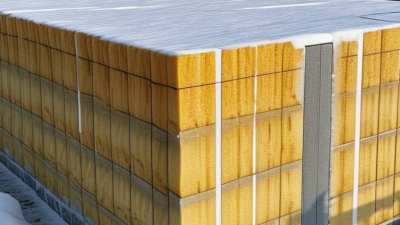
Rigid foam selection depends on R-value, density, moisture exposure, and aging performance. The U.S. Department of Energy reports typical EPS performance near R-3.6 to R-4.2 per inch. XPS commonly reaches about R-5 per inch. These figures vary with temperature and testing methods. EPS densities often range from 15 to 30 kg/m³, while XPS commonly falls between 28 and 40 kg/m³. Higher density can improve strength, but it does not automatically guarantee better insulation.
PUR and PIR usually provide higher initial thermal resistance, often around R-6 to R-7 per inch. The 2021 ASHRAE Handbook notes that foam conductivity changes with temperature, gas diffusion, and moisture. PIR panels may deliver strong fire performance, but their aged R-value needs careful review. PUR can offer excellent insulation with thinner assemblies. It can also be more sensitive to installation errors. Small gaps matter.
A neat ranking is tempting, but incomplete. For below-grade use, compressive strength and water absorption may outweigh peak R-value. Buyers should compare declared lambda values under EN 13163, EN 13164, and EN 13165, not marketing averages. Density data can also be misleading when products use different test standards. I would request third-party certificates, dimensional tolerances, and long-term thermal data before ordering. The cheapest panel may become expensive after cutting waste, damaged edges, or poor site fitting.
For global buyers, spray foam selection starts with the promised R-value, not the product label. Open-cell foam commonly delivers R-3.5 to R-4 per inch. Its softer structure expands widely and can fill irregular roof cavities. It also allows more vapor movement, which matters in drying strategies. Closed-cell foam usually reaches R-6 to R-7 per inch. A thinner layer can provide strong thermal resistance where wall depth is limited. These figures are useful, but they are not guarantees.
On a real project, installers should check tested density, substrate temperature, humidity, and application thickness. Poorly mixed foam may shrink, crack, or remain tacky. That is not a small defect. Request current technical data, independent test evidence, fire performance information, and regional compliance documents before purchasing. R-value can also change with aging, moisture, and installation quality. A cold metal roof and a dusty concrete wall do not behave alike. Field inspection still matters.
Open-cell foam can suit interior roofs where controlled vapor movement is acceptable. Closed-cell foam may fit compact assemblies or areas needing greater moisture resistance. Yet higher R-value does not automatically mean better performance. It can complicate repairs and increase material cost. I would compare whole-assembly results, not inch ratings alone. One practical mistake is ignoring ventilation and condensation modeling. Another is assuming one formulation works across every climate. Experienced buyers leave room for testing, adjustment, and occasional disappointment.
Typical thermal resistance of spray foam insulation by product profile. Open-cell foam generally provides R-3.5–R-4 per inch, while closed-cell foam provides R-6–R-7 per inch. Values shown are representative midpoints of these published industry ranges.
Note: Actual R-value can vary by formulation, installation quality, temperature, aging, and regional testing standards. Always verify the technical data sheet for the selected product.
When comparing the ten best foam insulation products, moisture resistance is often the first practical test. Closed-cell boards and sprayed foams usually absorb less water than open-cell materials. However, damaged edges, poor joints, and unsealed penetrations can still create wet spots. In coastal warehouses, I would inspect samples after water exposure, not rely only on catalogue claims. Small gaps matter.
Fire class requires careful reading. A product may achieve a strong reaction-to-fire rating only within a tested wall or roof assembly. EN 13501-1 classifications and ASTM E84 results are not directly interchangeable. Some products produce limited flame spread, while others require a protective lining, such as gypsum board. Installation quality changes the outcome. That detail is easy to miss.
Global buyers should also compare GWP, especially the blowing agent used in production. Lower-GWP formulations can reduce climate impact, but the declared value should come from a verified environmental product declaration. Check whether the figure covers the full product life cycle. It should. A high-performance foam is not automatically the most sustainable choice if its manufacturing impact is large. Conversely, a modest GWP advantage may disappear when replacement, transport, or poor durability is included.
The strongest option depends on climate, fire rules, and building design. Scores alone can mislead. A broader comparison is wiser.
For global buyers screening ten foam insulation products, compliance begins with the declared product type. ASTM C578 covers rigid cellular polystyrene insulation, including required thermal and physical performance. EN 13164 applies to extruded polystyrene, while EN 13165 covers polyurethane and polyisocyanurate products. These standards address characteristics such as thermal conductivity, dimensional stability, water absorption, and compressive strength.
Do not compare certificates casually. ASTM and EN test systems use different classifications and reporting formats. A laboratory report should show test temperature, ageing method, thickness, and declared thermal conductivity. Missing details create expensive surprises. Request current factory production-control records, not only a sales datasheet. Short documents can hide long risks.
ISO 14025 relates to Environmental Product Declarations, or EPDs. It verifies environmental information through a life-cycle assessment, but it does not prove insulation performance. Check the program operator, product category rules, declared unit, system boundaries, and independent verification. UNEP’s 2023 Global Status Report for Buildings and Construction estimates that buildings consume about 30% of global final energy and produce roughly 26% of energy-related emissions. Material selection therefore deserves both energy and carbon scrutiny. Still, EPD comparisons can be imperfect when boundaries differ. I would record every assumption before ranking products, then verify regional fire, moisture, and installation requirements with a qualified consultant.
| Rank | Product Category | Foam Type | Typical Application | Typical Thermal Conductivity (λD, W/m·K) |
Typical Compressive Strength (kPa) |
Moisture / Water Exposure | ASTM C578 Check | EN 13164 Check | EN 13165 Check | ISO 14025 Check | Key Buyer Verification Documents |
|---|---|---|---|---|---|---|---|---|---|---|---|
| 1 | High-Density XPS Roof Board | Extruded polystyrene (XPS) | Inverted roofs, terraces, podium decks, and protected membrane roofs | 0.029–0.036 | 300–700 | Low water absorption; suitable for intermittent or prolonged moisture exposure when properly detailed | Applicable Verify the declared ASTM C578 type and strength |
Applicable Product standard for XPS thermal insulation |
Not primary | EPD required ISO 14025 applies to the environmental declaration, not the insulation performance |
Declaration of performance, compressive stress test, water absorption test, dimensional stability, thermal resistance, and EPD if claimed |
| 2 | Standard XPS Foundation Board | Extruded polystyrene (XPS) | Basements, foundation walls, slab edges, and below-grade perimeter insulation | 0.030–0.037 | 200–500 | Closed-cell structure provides good resistance to ground moisture; drainage and waterproofing remain necessary | Applicable | Applicable | Not primary | EPD required | Soil-contact suitability, water absorption by diffusion and immersion, freeze–thaw performance where relevant, and verified thickness tolerance |
| 3 | High-Load XPS Floor Board | High-density extruded polystyrene (XPS) | Industrial floors, warehouse slabs, parking decks, and foundation slabs | 0.032–0.038 | 500–1,000 | Low water uptake; long-term creep resistance must be checked for sustained loads | Applicable | Applicable | Not primary | EPD required | Long-term compressive creep, design stress, point-load resistance, thermal aging, and installation load calculations |
| 4 | XPS Cold-Store Panel Core | Extruded polystyrene (XPS) | Cold rooms, refrigerated storage areas, and temperature-controlled enclosures | 0.029–0.035 | 200–500 | Good resistance to vapor and moisture; joints and vapor-control layers require careful sealing | Applicable | Applicable | Not primary | EPD required | Low-temperature thermal aging, water vapor resistance, joint performance, surface-finish compatibility, and fire test for the complete panel assembly |
| 5 | Grooved XPS External Wall Board | Extruded polystyrene (XPS) | External foundation walls, drainage layers, and protected below-grade systems | 0.030–0.038 | 200–500 | Water-resistant and compatible with drainage membranes when the complete system is approved | Applicable | Applicable | Not primary | EPD required | Drainage capacity, water absorption, compressive strength, dimensional stability, adhesive compatibility, and system installation instructions |
| 6 | PIR Flat-Roof Board | Polyisocyanurate (PIR), usually faced with coated glass fiber or foil laminate | Warm flat roofs, metal decks, concrete roofs, and mechanically fixed roof systems | 0.022–0.028 | 120–200 | Low water absorption in the finished board; edge protection and sealed joints are important | Not primary | Not primary | Applicable Verify the EN 13165 product classification |
EPD required | Thermal conductivity at declared thickness, dimensional stability, compressive strength, reaction-to-fire classification, and roof-system fire tests |
| 7 | PIR Pitched-Roof Board | Polyisocyanurate (PIR) rigid board | Between and over rafters, loft conversions, and pitched-roof upgrades | 0.022–0.026 | 120–180 | Low moisture uptake when joints, penetrations, and vapor-control layers are correctly installed | Not primary | Not primary | Applicable | EPD required | Declared thermal resistance, water vapor resistance, dimensional stability, fire classification, and compatibility with roof membranes and fixings |
| 8 | PIR Cavity-Wall Board | Polyisocyanurate (PIR) with low-emissivity facing | Cavity masonry walls, framed walls, and partial-fill wall systems | 0.022–0.027 | 100–180 | Low water absorption; cavity width, drainage, and exposure classification must be verified | Not primary | Not primary | Applicable | EPD required | Wall-system thermal calculation, moisture risk assessment, cavity exposure suitability, fire performance, and declared product dimensions |
| 9 | Rigid PUR Insulation Board | Polyurethane (PUR) rigid foam | General wall, floor, roof, refrigerated-room, and equipment insulation | 0.023–0.029 | 100–200 | Closed-cell structure limits water uptake, but exposed edges and joints need protection | Not primary | Not primary | Applicable | EPD required | EN 13165 declaration, thermal aging data, dimensional stability, compressive strength, fire classification, and facing adhesion |
| 10 | Phenolic Foam Insulation Board | Phenolic rigid foam | High-performance wall, roof, floor, and service-zone insulation where reduced thickness is valuable | 0.019–0.025 | 90–150 | Low water absorption in the board; moisture behavior depends on facings, joints, and the installed assembly | Not primary | Different standard Typically assessed under EN 13166 |
Not primary | EPD required | EN 13166 declaration, thermal conductivity, dimensional stability, water vapor resistance, fire classification, and complete-system fire evidence |
Scan QR code to download the app
LSP Products was founded by plumbers over 50 years ago with a focus on unparalleled innovation, superior product quality, and best-in-class service to the plumbing industry. Our primary focus is the new construction market where we develop products that make installations easy and provide significant cost savings to the plumbing/mechanical contractor. LSP has a manufacturing facility located in Monterrey, Mexico and a distribution center in Dallas, Texas. We are proud to offer many products designed and made in North America… About LSP
Submit the form below to receive the document via email.