Why Does a Fuel Pump Motor Commutator Wear Out?

A fuel pump can run for thousands of hours, yet its small electric motor still depends on constant contact between brushes and a rotating commutator. The Fuel Pump Motor Commutator carries current through copper segments as the armature turns. Each contact creates friction, and tiny electrical arcs can gradually mark the surface. Wear is expected. Rapid or uneven wear is not.

Several conditions can speed that process. Worn brushes, weak brush springs, poor alignment, and rough commutator surfaces can disrupt electrical contact. Heat can also damage brushes and insulation. In some pump designs, low fuel flow may reduce cooling, but the effect depends on the unit. Contamination and restricted filters may add strain to a system, though they do not prove the commutator itself has failed. That distinction matters.

Symptoms such as a noisy pump, intermittent starting, or low fuel pressure can point to several different faults. They are clues, not a diagnosis. A worn commutator may show grooves, darkened segments, or uneven brush contact when inspected by a qualified technician. Not always. The pump’s design and service history matter, too. This article explains how normal contact becomes damaging wear, which operating conditions can accelerate it, and what evidence helps separate commutator failure from other pump problems. The diagnosis is rarely tidy; one symptom alone seldom tells the whole story.
Why Does a Fuel Pump Motor Commutator Wear Out?

Fuel Pump Motor Commutator: Function and Construction

Fuel Pump Motor Commutator: Function and Construction

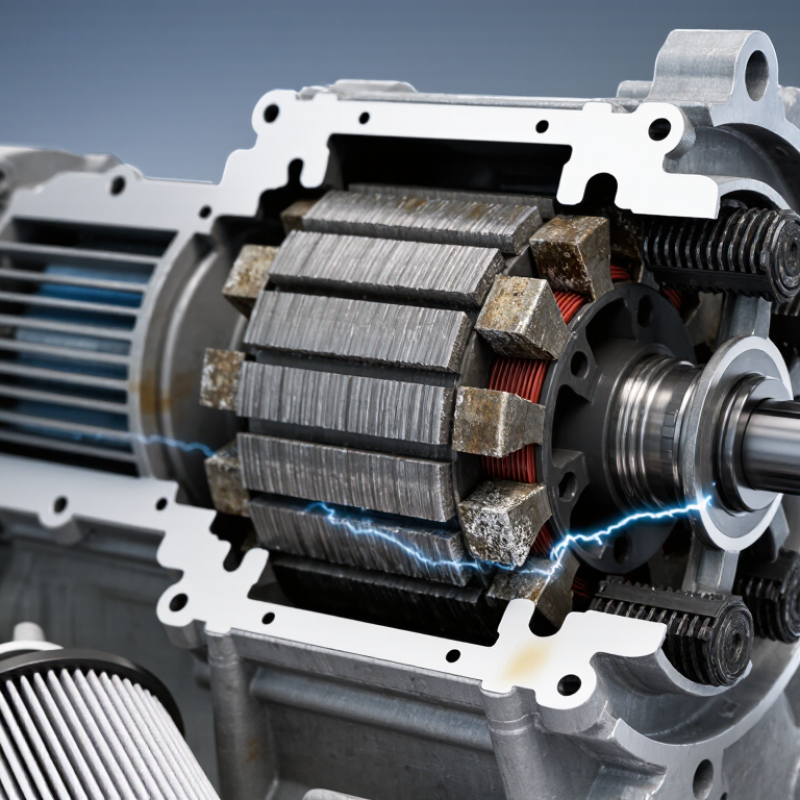
Inside many electric fuel pumps, a small DC motor turns the pumping element. Its commutator is a segmented copper cylinder attached to the motor’s rotating armature. Carbon brushes press against the segments as the armature spins. Each segment connects to a winding, and the brushes transfer current between the stationary circuit and the moving rotor. This switching reverses current through the windings at the right point in each rotation, helping the motor continue turning. That contact matters.

The commutator’s copper segments are separated by thin insulating gaps, commonly made with mica or another suitable insulation. Brush pressure must be enough for steady electrical contact, but not so high that friction rises unnecessarily. During operation, brushes gradually wear and leave fine dust; heat, contamination, poor contact, or electrical arcing can accelerate damage to the commutator surface.

The details vary by motor design, so appearance alone cannot confirm a fault. A darkened or uneven surface deserves attention, but it is not a diagnosis by itself. Honestly, wear can be subtle. A technician may need to check brush condition, electrical continuity, and rotor movement before deciding whether the motor is failing.

How Normal Commutator Wear Develops

A fuel-pump commutator wears through repeated contact with the carbon brushes. Each rotation brings a brush across the copper segments, carrying current while friction slowly removes material. SAE technical literature on brushed DC motors identifies current density, speed, temperature, and contact condition as key wear variables. There is no single reliable wear rate for every pump; operating conditions matter. Small changes add up.

A worn commutator may show dark tracks, uneven copper, or shallow grooves beneath the brush path. Heat can accelerate the process. High current raises contact stress, while fuel-flow restrictions may increase pump load and operating temperature. Technical guidance from the Electrical Contacts handbook emphasizes that contact resistance and surface films affect electrical performance; a rough or contaminated surface can disrupt current transfer. The result may be arcing, visible as tiny flashes at the brush edge. Brief flashes can occur during normal switching. Persistent sparking deserves attention.

Wear is not always even. A brush that sits crooked can polish one segment more than its neighbors, and vibration may worsen contact. That detail is easy to overlook. Inspecting only the brush length can miss a damaged commutator surface. Measurements of segment condition, brush seating, and pump current provide a clearer picture than sound alone. A faint hum is not proof of healthy contact.

Why Does a Fuel Pump Motor Commutator Wear Out?

How normal commutator wear develops

During brush bedding-in, contact surfaces gradually conform. In normal operation, friction and electrical arcing slowly wear the Brushes And Commutator. The curve shows a qualitative progression, not measured service-life data: actual wear varies with materials, current, temperature, contamination, fuel conditions, and operating cycles.

Operating Conditions That Accelerate Wear

Why Does a Fuel Pump Motor Commutator Wear Out?

Operating Conditions That Accelerate Wear

A commutator wears faster when brushes repeatedly arc against its copper segments. High current, poor electrical contact, and excess heat intensify that damage. Low fuel levels can also reduce cooling around an in-tank pump, especially during long drives or repeated hard acceleration. Fine debris may add abrasive wear, though a clogged filter or worn bearings can produce similar symptoms. Diagnosis is not always straightforward.

Fuel composition deserves careful interpretation. The U.S. Department of Energy’s Alternative Fuels Data Center describes E10 as gasoline containing up to 10% ethanol, and E15 as containing 10.5% to 15%. Those figures describe blend content, not commutator wear rates. Still, fuel-system material compatibility and contamination matter; ethanol alone should not be blamed without testing. Small changes matter. So does a weak electrical connection, which can raise motor current and heat.

Tip: Keep the tank adequately filled, replace a restricted filter according to service guidance, and check pump voltage under load. Listen for a changing whine, but don’t treat noise as proof of commutator failure. A current draw test and inspection of the electrical supply can help separate motor wear from wiring or fuel-flow problems.

Signs and Diagnosis of Commutator Damage

A fuel pump motor’s commutator transfers electrical current to the rotating armature through carbon brushes. Over time, brush friction, heat, contamination, and electrical arcing can wear or pit its copper segments. Uneven contact may make the pump run intermittently, especially when the engine is hot or the fuel tank is low. The clues are real, but they are not proof.

Possible symptoms include extended cranking, brief power loss, an inconsistent pump hum, or a sudden no-start. These symptoms can also come from a weak battery, poor wiring, a clogged filter, or another fuel-system fault.

Diagnosis should compare fuel pressure with the vehicle’s service specifications and check voltage at the pump under load. A technician may also assess current draw for irregular patterns. A quiet pump alone tells little. Internal commutator inspection usually requires removing the pump assembly, so avoid opening a fuel system without proper training and precautions.

Tips: Note when symptoms occur, such as after a hot restart. Have pressure and electrical supply checked before replacing parts. Fuel vapors ignite easily; keep sparks and open flames away.

Maintenance Factors That Influence Service Life

Why Does a Fuel Pump Motor Commutator Wear Out?
Maintenance Factors That Influence Service Life

A commutator wears as its copper segments repeatedly contact the carbon brushes. Heat, abrasive debris, weak brush pressure, and electrical arcing can speed that process. Fuel helps cool the submerged motor, so repeatedly running near empty may reduce its cooling margin. It is not the only cause. A restricted filter can also make the pump work harder, raising motor load and temperature. Check for slow starts, whining, or falling fuel pressure rather than waiting for a failure.

Cleanliness deserves attention. ISO 4406:2021 classifies solid-particle contamination using counts at 4, 6, and 14 micrometres; it is a measurement framework, not a fuel-pump pass/fail limit. In practice, inspect the tank for rust or sediment when diagnosing repeat failures, and replace a clogged filter at the vehicle’s specified interval. Measure voltage at the pump under load, too. Poor connections can create voltage drop and extra heat. Keep the tank clean. Avoid dry running during testing. Still, maintenance cannot undo existing commutator damage, and a symptom alone does not prove the pump is at fault. Compare pressure, current draw, and wiring condition with service specifications before replacing parts.

Why Does a Fuel Pump Motor Commutator Wear Out? - Maintenance Factors That Influence Service Life

Maintenance factor How it affects commutator wear Practical maintenance measure Typical influence on service life
Fuel contamination Dirt and abrasive particles can enter the pump and accelerate wear at the brushes and commutator surface. Keep the tank clean, replace the fuel filter at the vehicle maker’s recommended interval, and investigate recurring debris. High when contamination is persistent.
Low fuel level and inadequate cooling Fuel flowing through many in-tank pumps helps carry away heat. Repeated operation with very little fuel can increase pump temperature and stress motor components. Avoid routinely running the tank near empty, especially in hot conditions or during sustained high-load driving. Moderate to high, depending on pump design and operating conditions.
Restricted inlet or filter A blocked strainer, filter, or fuel line can make the pump work harder and may reduce fuel flow available for cooling and lubrication. Check fuel pressure and delivery when symptoms arise; inspect or replace restricted filters and strainers as specified. Moderate to high if the restriction is severe or prolonged.
Running dry or frequent loss of prime Fuel pumps are generally designed to operate with fuel present. Dry operation can remove cooling and lubrication and may cause rapid overheating or damage. Maintain adequate fuel supply and diagnose leaks, pickup problems, or installation issues that allow the pump to run without fuel. High; even brief dry running can be harmful, depending on the pump.
Low voltage or poor electrical connections Excessive resistance at connectors, grounds, relays, or wiring can reduce pump voltage and contribute to poor operation. Electrical faults can also cause abnormal current and heat. Inspect terminals and grounds for looseness, corrosion, or overheating; test voltage at the pump under load and repair wiring faults. Moderate; can become high when the fault is severe or persistent.
Excessive operating temperature Heat can accelerate brush and commutator deterioration and may damage insulation. High under-hood or fuel temperatures can add to the pump’s thermal load. Correct cooling, fuel-flow, and electrical problems; use the specified pump and fuel system components for the application. High when elevated temperatures are sustained.
Fuel incompatibility or degraded fuel Fuel outside the pump’s specified compatibility can affect internal materials, while aged or degraded fuel may contribute to deposits and restricted flow. Use fuel approved for the vehicle and pump system; follow storage guidance and address deposits or contamination promptly. Variable; depends on fuel type, exposure, and pump materials.
Incorrect pump installation or poor fit Misalignment, damaged connections, an unsuitable strainer, or incorrect mounting can restrict flow or introduce vibration and operational stress. Follow the vehicle service procedure and verify the pump, strainer, seals, connectors, and mounting are correct for the application. Moderate to high when installation affects flow or creates mechanical stress.
Repeated short cycling or abnormal demand Frequent starts, unusual pressure demand, or a system fault can increase operating cycles and electrical or thermal load. Diagnose pressure-control, regulator, leak, and wiring issues rather than replacing the pump without testing the system. Variable; higher when abnormal cycling or demand is continuous.

Influence ratings are qualitative. Actual pump life varies with pump design, vehicle application, fuel quality, operating conditions, and maintenance history.

LSP App

Download the LSP App now

Scan QR code to download the app

We use cookies to personalize content, utilize website traffic analytics & support our marketing initiatives. By continuing to browse our site you consent to receive our cookies. For more information see our Privacy Statement. 
Ok