Why Choose a Cigarette Display Rack for Retail Stores? The answer begins with control, not promotion. A well-designed Cigarette Display Rack can organize regulated products behind the counter, separate product categories, and reduce stock-handling errors. It can also support clear age-verification procedures when staff follow local requirements. The rack should never encourage youth appeal or impulse purchasing. Its value lies in orderly, compliant retail operations.
The 2023 WHO Report on the Global Tobacco Epidemic states that tobacco causes more than eight million deaths annually worldwide. The report also emphasizes strong retail controls and restrictions on tobacco marketing. WHO tobacco-control director Dr. Rüdiger Krech has stated, “Tobacco is a deadly product that kills up to half of its users.” That warning changes how retailers should evaluate fixtures. A display solution must support responsibility, not visibility for its own sake.
Practical details matter. Adjustable shelves can fit different pack sizes. Lockable sections can limit unauthorized access. A compact footprint can preserve cashier visibility and customer flow. Easy-clean surfaces help maintain a professional counter area. These features may improve inventory checks, though evidence linking one rack design to sales performance remains limited. That point deserves honesty.
A Cigarette Display Rack is not a magic solution. It cannot replace staff training, age checks, or legal review. Retailers should compare local regulations with guidance from public-health authorities before installation. The strongest choice balances durability, workflow, security, and responsible presentation. In this setting, better organization is useful—but only when compliance remains the priority.
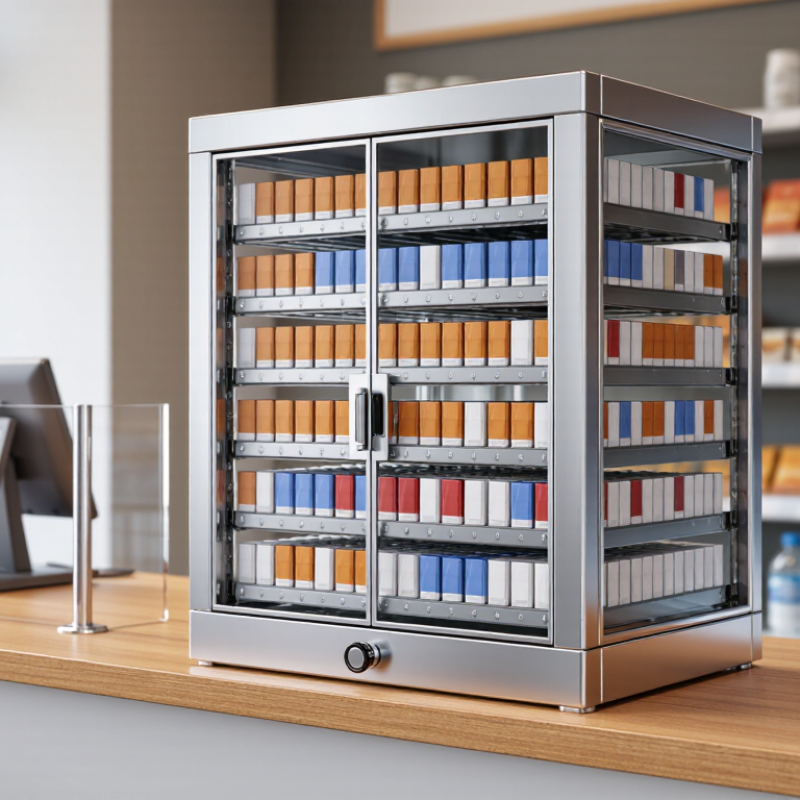
A cigarette display rack is a purpose-built fixture for storing and organizing regulated tobacco products at the retail counter. It usually has narrow shelves, dividers, and clear labels. Some models include lockable doors or covered fronts. These features help staff control access while keeping inventory easy to check.
The rack works through simple visual and physical organization. Staff arrange products by size, type, or price, then update labels when stock changes. A compact layout reduces searching time during busy periods. It also leaves more counter space for payment equipment. In daily retail operations, staff should check stock against sales records and inspect the rack for damage. Small errors matter.
Placement requires care. The unit should remain behind the counter and follow local age-verification, advertising, storage, and licensing rules. It should never make restricted products directly accessible to customers. Good lighting helps employees read labels, but excessive visibility may conflict with local requirements. The design is not perfect. A crowded rack can slow service, hide missing items, or create cleaning problems. Dust gathers quickly in tight corners. Regular cleaning, secure storage, and staff training make the fixture more reliable. A practical rack supports controlled sales without becoming the focus of the store.

A cigarette display rack is a structured storage and presentation system placed behind or near the checkout area. It keeps products organized, allows staff to locate packs quickly, and uses limited counter or wall space efficiently.
The chart estimates how many front-facing packs can fit on one shelf at different shelf lengths. The calculation uses a 55 mm average pack-facing width: shelf length ÷ 55 mm, rounded down. Actual capacity varies by pack format, shelf dividers, and rack design.
Retail stores use cigarette display racks to keep regulated products organized, visible, and controlled. In daily operations, a well-designed rack reduces search time behind the counter. Staff can locate approved products without opening several drawers. That matters during busy periods. Small details matter.
A rack also supports responsible sales practices. Covered or lockable designs can limit unauthorized access and reduce accidental handling. Clear sections help staff check stock, packaging condition, and required health notices. Placement should follow local rules on visibility, advertising, and age-restricted sales. Employees still need reliable age verification procedures. A rack cannot replace trained judgment.
From an operational perspective, vertical storage uses limited counter space efficiently. Adjustable slots can accommodate different pack sizes, while labeled positions make counting easier. Retailers may notice fewer misplaced items and simpler restocking. However, displays are not automatically effective. Poor lighting, crowded compartments, or weak locks create confusion. In routine store checks, a practical rack needs regular review, not just a polished appearance. Store traffic changes, and yesterday’s arrangement may waste time today. Measuring retrieval time and checking compliance can reveal problems early. The best choice balances staff access, restricted customer access, durability, and clean maintenance.
A cigarette display rack can make a retail counter easier to manage. Its main value is product organization, not decoration. Separate shelves help staff locate permitted products quickly and reduce time spent opening crowded drawers. Clear sections also support accurate stock checks during busy shifts. From practical store experience, a rack with adjustable dividers works better than fixed compartments. Pack sizes and inventory needs can change.
Good organization improves store efficiency in small but noticeable ways. Staff can restock faster, count remaining items more accurately, and keep the checkout area less cluttered. A well-positioned rack can also protect products from damage caused by loose storage. However, visibility must match local regulations and store policies. Some layouts look efficient but create confusion during age-controlled sales. This is worth reviewing.
Tips: Choose durable materials, smooth edges, and easy-clean surfaces. Label sections discreetly and keep fast-moving items within reach. Leave enough counter space for payment and verification steps. Check the rack weekly for empty slots, dust, and misplaced stock. A simple checklist helps, although staff may not follow it perfectly every day. That weakness should be considered when planning the display.
A cigarette display rack can make a retail counter more organized, visible, and easier to manage. Its value depends on practical design, not decoration alone. Staff should identify products quickly without turning the counter into a crowded storage area.
When choosing a rack, check its dimensions first. Measure the counter, wall space, and customer pathway. A narrow unit may suit a small shop, while a wider model can hold several product categories. Adjustable shelves are useful because packaging sizes can change. Clear labels also reduce staff errors during busy hours.
Security is another essential feature. Choose sturdy materials, stable bases, and lockable sections where local rules require controlled access. The rack should support responsible, age-restricted sales rather than encourage impulse purchasing. Keep it away from heat, moisture, and direct sunlight. Easy-clean surfaces matter too; dust gathers quickly around counters.
Visibility needs careful judgment. Products should remain easy for authorized staff to locate, but the display must follow local advertising and retail regulations. My first layout placed the most requested items too low, which slowed service. A small trial arrangement revealed the problem. Leave enough space for stock checks and cleaning. Soft lighting can improve visibility, although excessive brightness may look unsuitable. Ask staff to test the rack during a busy shift. Their feedback often exposes weaknesses that measurements miss.
Choosing a cigarette display rack begins with the store’s space and local compliance requirements.
Measure the wall, counter depth, aisle width, and nearby electrical fixtures. A rack should hold products securely without blocking customer movement or staff visibility. Small stores often need a slim vertical unit, while larger shops may use a lockable cabinet with adjustable shelves. Keep frequently handled items within easy staff reach.
Compliance must guide the design, not follow it.
Rules differ by country, region, and store type, so confirm current requirements with the relevant authority before ordering. Check whether products must remain covered, concealed, locked, or placed behind the counter. The rack should also support required health warnings and avoid unapproved promotional features. Clear labeling helps staff work accurately, especially during busy periods.
Material choice matters. Powder-coated metal is easy to clean and usually handles daily contact well. Rounded edges reduce avoidable injuries. Strong hinges, stable feet, and transparent sections can improve security and stock control.
In practice, a rack may look perfect in a catalog but feel awkward after installation. Leave enough space for restocking and cleaning. I would also test the rack with real packaging sizes, because shelf measurements can be misleading. A tidy layout is useful, but legal access controls and staff supervision must come first.
Scan QR code to download the app
LSP Products was founded by plumbers over 50 years ago with a focus on unparalleled innovation, superior product quality, and best-in-class service to the plumbing industry. Our primary focus is the new construction market where we develop products that make installations easy and provide significant cost savings to the plumbing/mechanical contractor. LSP has a manufacturing facility located in Monterrey, Mexico and a distribution center in Dallas, Texas. We are proud to offer many products designed and made in North America… About LSP
Submit the form below to receive the document via email.