Why Choose Acoustic Insulation Foam for Global Projects?
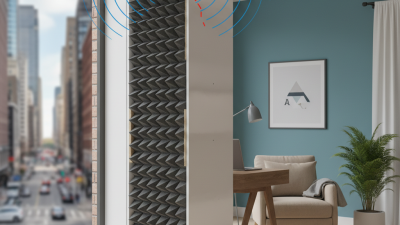
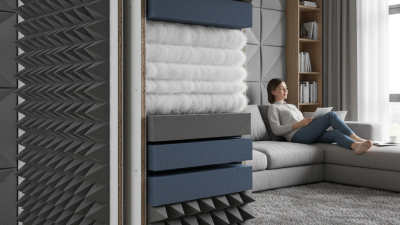
Global construction projects face different sound challenges, from busy airports to compact hotel rooms. Acoustic insulation foam offers a practical way to reduce airborne noise, reverberation, and equipment vibration. Its lightweight structure can fit walls, ceilings, machinery enclosures, and transport interiors.
Dr. Marshall Long, an established architectural acoustics author, states, “Good acoustic design controls the source, the path, and the receiving space.” This principle explains why material selection cannot rely on thickness alone. Project teams should examine absorption ratings, foam density, fire performance, moisture resistance, emissions, and installation conditions. These details matter in humid coastal buildings, dry industrial plants, and densely occupied offices.
Measure twice.
In my experience, acoustic insulation foam works best when it is designed into the assembly, rather than added after problems appear. Correct sealing around joints and service penetrations can prevent small gaps from becoming audible weaknesses. A poorly installed panel may look professional but perform unevenly. That is an uncomfortable truth.
Global buyers also need consistent documentation. Product data sheets, laboratory test reports, batch records, and independent certifications improve confidence across borders. Local climate requirements and building codes still need review. No single foam solves every acoustic problem.
The material can reduce noise while supporting lighter, faster installations. However, it should not be marketed as a universal cure. Engineers must compare it with mineral wool, resilient channels, barriers, and room geometry. When testing, documentation, and workmanship align, acoustic insulation foam becomes a reliable component for safer, quieter, and more comfortable international projects.
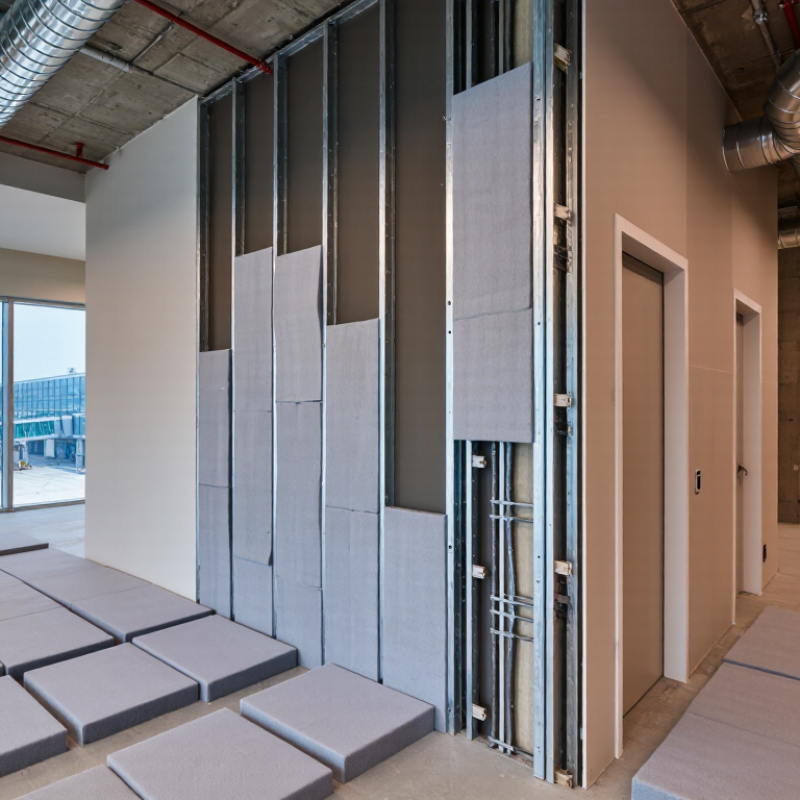
Acoustic foam works through an open-cell structure, not a solid barrier. Its interconnected pores let air move through the material. Friction then converts part of the sound energy into heat. This mechanism mainly reduces reflections inside rooms. It does not reliably block noise passing through walls.
According to ASTM C423, the Noise Reduction Coefficient averages absorption values at 250, 500, 1,000, and 2,000 Hz. The result is rounded to the nearest 0.05. ISO 354 uses a reverberation-room method for measuring sound absorption. These methods matter because mounting, thickness, air gaps, and test frequency can change performance. A single NRC number can mislead.
In project reviews, I check the full frequency curve before approving foam. A panel with NRC 0.75 may absorb speech frequencies well, yet perform weakly near 125 Hz. That weakness becomes obvious beside machinery or low-frequency ventilation noise. The 2023 ASHRAE Handbook also notes that room geometry, surface coverage, and installation affect acoustic results. Foam needs coverage planning. Too little coverage leaves strong flutter echoes. Too much can make a room unnaturally dull. I have seen specifications rely on laboratory numbers alone. That is a practical mistake worth reconsidering. Global projects also require stable fire, moisture, and installation documentation.
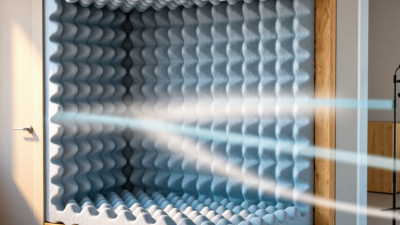
For global projects, acoustic insulation foam should be selected through measurable performance, not appearance alone. ASTM C423 evaluates sound absorption in a reverberation room. It reports absorption coefficients across specified frequencies and can support the Noise Reduction Coefficient, or NRC. NRC commonly averages results at 250, 500, 1000, and 2000 Hz.
ISO 354 uses a similar reveration-room approach for determining sound absorption. The methods are comparable, but project teams should not treat their results as automatically interchangeable. Test reports need clear details about specimen size, mounting, thickness, air gaps, and frequency bands. Small installation changes can alter performance.
The coefficient matters because foam absorbs different frequencies at different rates. A thin panel may reduce speech reflections while performing weakly against low-frequency noise. A thicker profile, or an intentional air cavity behind it, may improve lower-band absorption. On site, clean joints and full surface coverage also matter. Gaps remain audible.
A practical review compares laboratory data with the room’s actual noise pattern. Certification helps, but it cannot replace field judgment. Some specifications look precise and still miss the installation reality. That is where project teams should question assumptions, document mounting conditions, and request repeatable testing before approving large-scale use.
Representative reverberation-room performance data for open-cell acoustic insulation foam at two commonly specified thicknesses
| Performance Dimension | Test Method / Reference | Unit | 50 mm Foam Panel | 100 mm Foam Panel | Engineering Relevance for Global Projects |
|---|---|---|---|---|---|
| Material and Test Configuration | |||||
| Material construction | Open-cell acoustic insulation foam | — | Typical configuration | Typical configuration | Open interconnected cells convert part of the incident sound energy into heat through viscous and thermal losses. |
| Nominal thickness | Specimen configuration | mm | 50 | 100 | Greater thickness generally improves low- and mid-frequency absorption by increasing the distance available for sound-energy dissipation. |
| Reverberation-room test basis | ASTM C423 / ISO 354 | — | Applicable | Applicable | Both standards use reverberation-room measurements to determine sound absorption performance for architectural and industrial applications. |
| Sound Absorption Coefficients by One-Third-Octave Center Frequency | |||||
| Sound absorption coefficient, αs | ASTM C423 / ISO 354 | 125 Hz | 0.10 | 0.20 | Low-frequency absorption is limited with thin porous materials and improves as thickness increases. |
| Sound absorption coefficient, αs | ASTM C423 / ISO 354 | 250 Hz | 0.25 | 0.50 | Useful for reducing lower speech frequencies and some machinery or HVAC noise components. |
| Sound absorption coefficient, αs | ASTM C423 / ISO 354 | 500 Hz | 0.55 | 0.80 | Strong mid-frequency absorption supports improved speech clarity and reduced reverberation. |
| Sound absorption coefficient, αs | ASTM C423 / ISO 354 | 1,000 Hz | 0.75 | 0.95 | High absorption in a key speech-frequency region helps control room echo and reflected sound. |
| Sound absorption coefficient, αs | ASTM C423 / ISO 354 | 2,000 Hz | 0.85 | 1.00 | Effective control of higher speech frequencies and general interior reverberation. |
| Sound absorption coefficient, αs | ASTM C423 / ISO 354 | 4,000 Hz | 0.90 | 1.00 | High-frequency absorption helps reduce harsh reflections from hard interior surfaces. |
| Summary Metrics and Practical Selection | |||||
| NRC, Noise Reduction Coefficient | ASTM C423 convention; average of 250, 500, 1,000, and 2,000 Hz | — | 0.60 | 0.80 | Provides a simple comparative rating for mid-frequency sound absorption; it does not replace full-frequency test data. |
| Weighted sound absorption coefficient, αw | ISO 11654 classification using ISO 354 measurement data | — | Typically Class C | Typically Class A | Classification depends on the complete measured spectrum and the applicable mounting arrangement. |
| Recommended use profile | Engineering selection guidance | — | General reverberation control | Enhanced broadband control | Useful for offices, studios, equipment enclosures, transport interiors, industrial rooms, and building services spaces. |
| International specification value | ASTM C423 and ISO 354 reporting framework | — | High | High | Recognized test frameworks make performance easier to compare across regional project specifications and procurement documents. |
Noise targets rarely cover only one frequency. In project audits, machinery often creates strong energy around 125 Hz, while speech and equipment noise may reach 4,000 Hz. Acoustic insulation foam can support a frequency-matched design across this range. However, performance depends on thickness, density, mounting, and room geometry. Thin foam usually absorbs mid and high frequencies more effectively than deep bass. Low-frequency control may require thicker sections or an intentional air gap behind the panel.
A practical specification should request absorption data at 125, 250, 500, 1,000, 2,000, and 4,000 Hz. Do not rely only on a single average rating. Our first layout looked efficient on paper, but the 125 Hz result remained weak after installation. The air gap improved it noticeably. Small changes matter. Field measurements should compare reverberation time before and after treatment. Microphone placement, room occupancy, and background noise can affect the readings.
For global projects, clear testing methods improve communication between designers, contractors, and local reviewers. Product documentation should state the test standard, sample thickness, mounting condition, and environmental limits.
Installation teams also need simple cutting and fixing instructions. A technically strong material can underperform when joints are open or surfaces are poorly covered. Frequency matching is not a perfect formula. It is a controlled process of measuring, adjusting, and checking the actual room.
Why Choose Acoustic Insulation Foam for Global Projects?
Global projects rarely share the same room shape, climate, or noise source. Acoustic insulation foam offers flexible planning across studios, offices, machinery rooms, and transport facilities. Designers commonly specify thicknesses from 25 to 100 mm. A 25 mm panel can reduce reflections in compact spaces. Thicker 50–100 mm panels provide deeper absorption, especially at lower frequencies. Thickness alone is not enough.
Density must match the acoustic target and installation conditions. Lightweight foam may control speech reflections effectively. Higher-density foam can offer stronger resistance to sound energy, but it may not solve structure-borne noise. I have seen projects over-specify density while leaving hard ceiling areas untreated. The result was disappointing. Product test data should guide selection, rather than appearance or touch.
Surface coverage also changes performance. Covering 20–30% of reflective wall space may improve clarity in a busy office. Recording rooms often require more coverage, with spacing and ceiling treatment carefully considered. Full coverage is not always better. It can make a room acoustically dull. Leave selected reflective zones when natural liveliness matters. Installation teams should check humidity, temperature, fire classification, and cleaning needs for each region. Local certification requirements can vary widely. A practical design includes drawings, sample testing, and measured results after installation. Small gaps around panels can reduce the expected benefit. That detail is easy to miss.
Representative engineering values for open-cell acoustic insulation foam: increasing thickness generally improves sound absorption, while practical surface coverage can decrease when thicker panels are selected. The density range shown is typical for lightweight acoustic foam used in international interior and building projects; final specifications should be verified through project-specific laboratory testing.
Why Choose Acoustic Insulation Foam for Global Projects?
International compliance begins with evidence, not marketing claims. ASTM E84 measures flame spread and smoke development, with indexes ranging from 0–200 and 0–450. Many North American specifications classify materials as Class A, B, or C. However, the test does not represent every wall or ceiling assembly. Thickness, facing, adhesive, and installation can change performance.
European projects usually require EN 13501-1 classification. It evaluates reaction to fire through classes A1 to F, plus smoke levels s1–s3 and burning droplets d0–d2. A foam listed as “fire rated” without its exact classification is not enough. Request the complete test report, tested configuration, laboratory details, and validity date. Small documentation gaps can delay approval.
VOC records matter in occupied buildings. The U.S. Environmental Protection Agency reports that indoor pollutant concentrations may be two to five times higher than outdoor levels, and sometimes much higher. Acoustic foam should therefore include chamber testing under ISO 16000 methods or recognized regional procedures. Review total VOC data, formaldehyde results, test duration, and installation emissions. A safety data sheet alone cannot prove low emissions. This is where project teams sometimes overtrust paperwork. It needs closer review.
Scan QR code to download the app
LSP Products was founded by plumbers over 50 years ago with a focus on unparalleled innovation, superior product quality, and best-in-class service to the plumbing industry. Our primary focus is the new construction market where we develop products that make installations easy and provide significant cost savings to the plumbing/mechanical contractor. LSP has a manufacturing facility located in Monterrey, Mexico and a distribution center in Dallas, Texas. We are proud to offer many products designed and made in North America… About LSP
Submit the form below to receive the document via email.