Choosing the right FIBC (Flexible Intermediate Bulk Container) is essential for safe material handling, efficient transportation, and effective storage. Although many bulk bags look similar at first glance, their fabric construction and internal design can differ significantly.
Among the most common types are U-Panel bags, 4-Panel bags, Circular or Tubular bags, and Baffle bags. Understanding their structural differences can help buyers select the right packaging for plastic resins, fertilizers, chemicals, minerals, food ingredients, and other bulk materials.
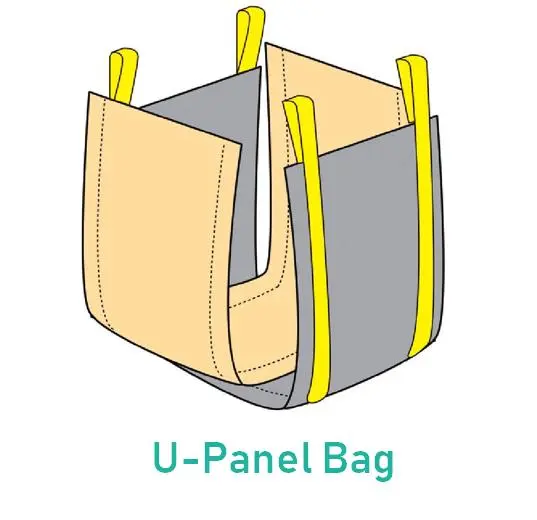
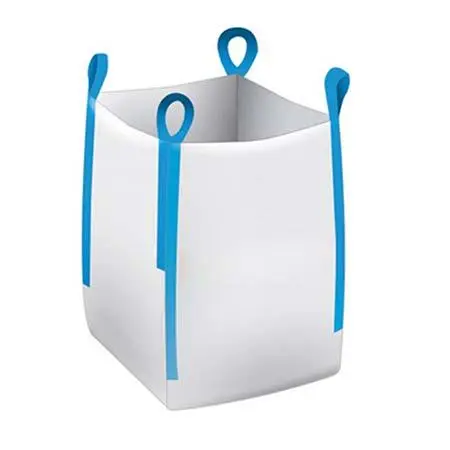
U-Panel bulk bags are manufactured using a large U-shaped body panel that forms the bottom and two opposite sides of the bag. Two additional fabric panels are sewn onto the main panel to complete the bag body.
This construction provides a practical balance between manufacturing efficiency, structural strength, and versatility.
Key characteristics:
One U-shaped main panel forms the bottom and two opposite sides.
Two additional panels complete the remaining sides.
Available with different lifting loops, filling spouts, discharge spouts, and liners.
Suitable for a wide range of industrial bulk materials.
U-Panel bags are commonly used for plastic granules, fertilizer, mineral products, and chemical raw materials.
Best suited for: Buyers looking for a versatile bulk bag design that can accommodate different filling and discharge requirements.
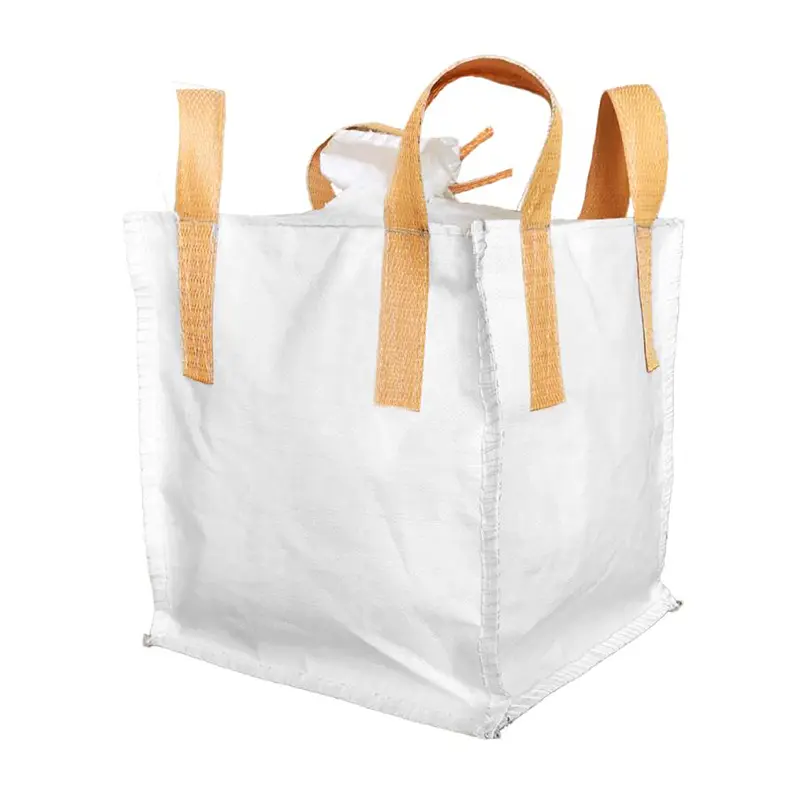
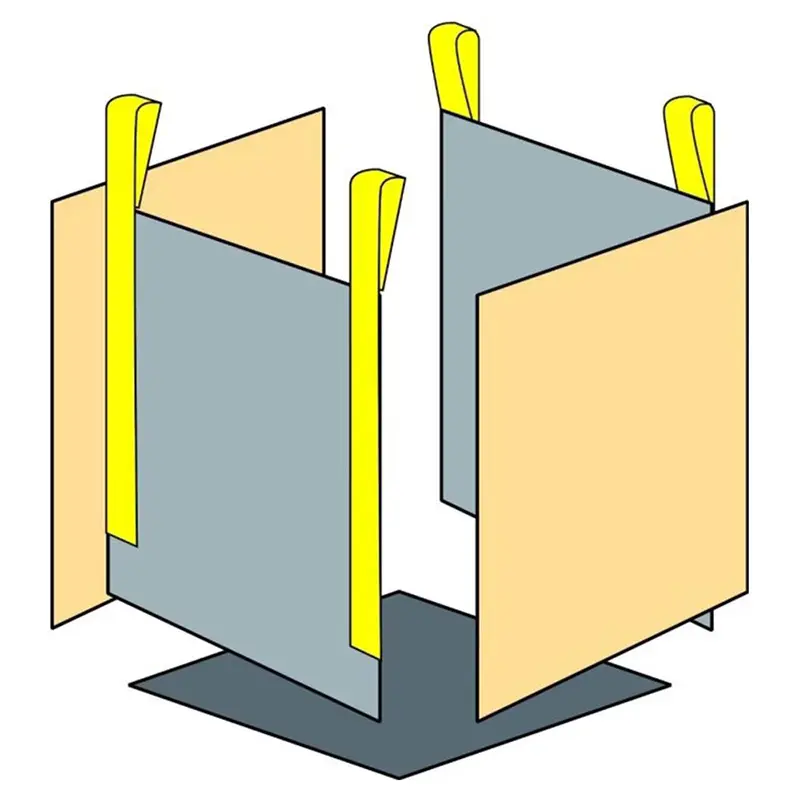
4-Panel bulk bags are constructed from four separate rectangular fabric panels, each forming one side of the bag. A separate bottom panel is normally sewn onto the body.
Because the four sides are individually cut and assembled, manufacturers can adjust the dimensions and construction to meet different application requirements.
Key characteristics:
Four separate panels form the four sides.
A separate bottom panel is normally used.
Vertical seams connect the side panels at the corners.
Different top closures, bottom discharge options, and inner liners can be incorporated.
4-Panel bulk bags are widely used for industrial powders, agricultural products, minerals, and chemical materials.
Best suited for: Applications requiring a conventional sewn-panel construction and customized bag dimensions.
Circular bulk bags, also known as tubular FIBCs, are made from tubular woven polypropylene fabric. The tubular fabric forms the bag body, reducing the need for conventional vertical body-panel seams.
Depending on the design, a separate bottom panel and other components may still be required.
Key characteristics:
The body is made from tubular woven fabric.
Conventional vertical body-panel seams can be reduced or eliminated.
The bag can be designed with different lifting loops, top configurations, and bottom discharge options.
Construction details depend on the fabric and bag design.
Circular or tubular bulk bags are used for various industrial materials, including plastic resins, fertilizers, and other granulated products.
Best suited for: Applications where tubular fabric construction is preferred and the bag dimensions match available production specifications.
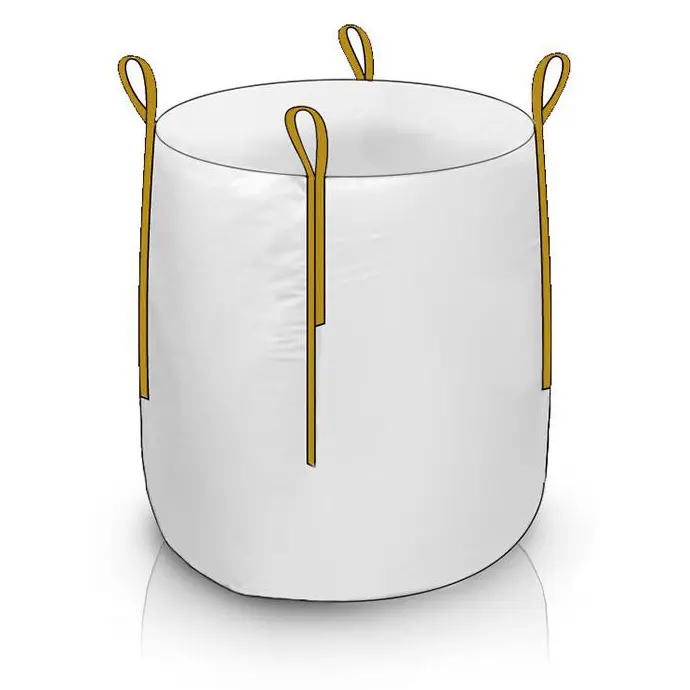
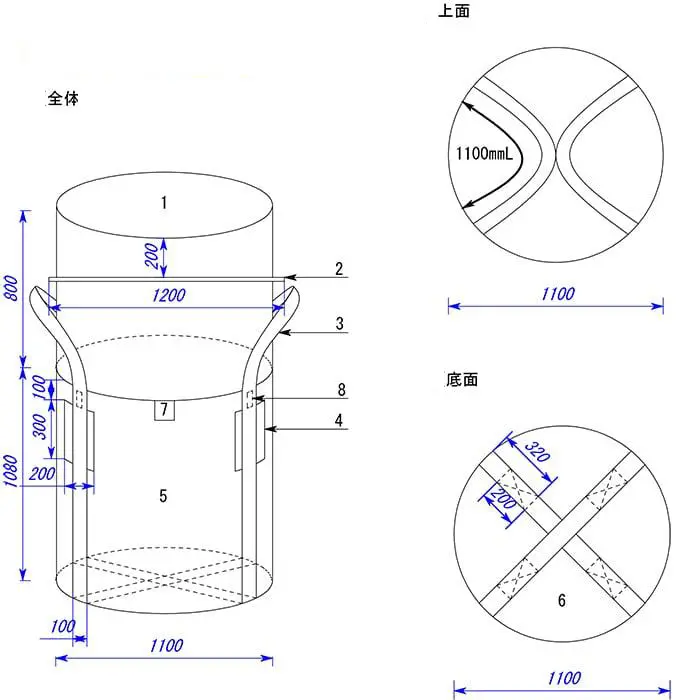
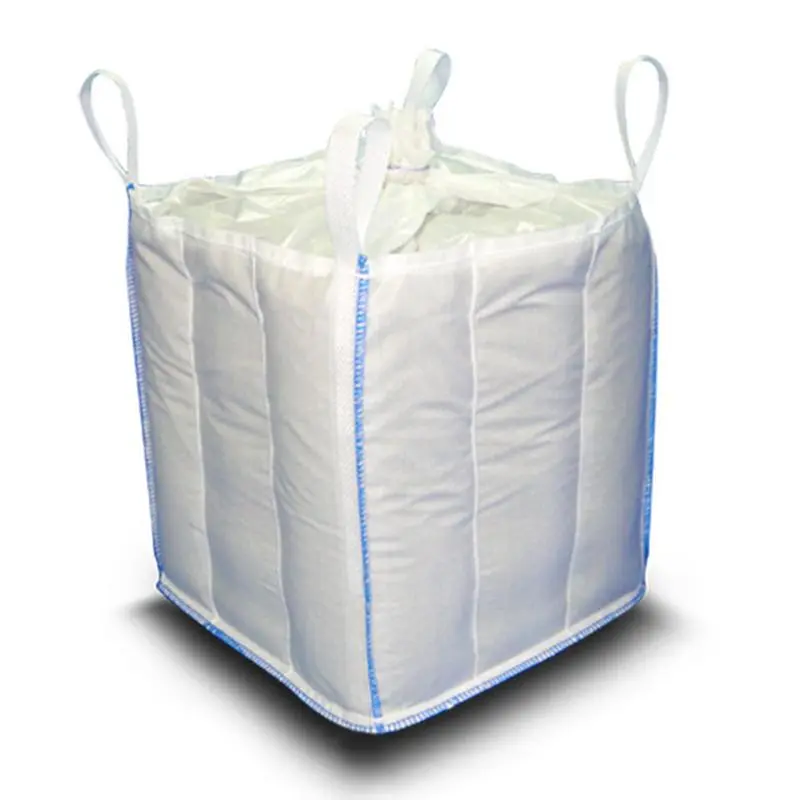
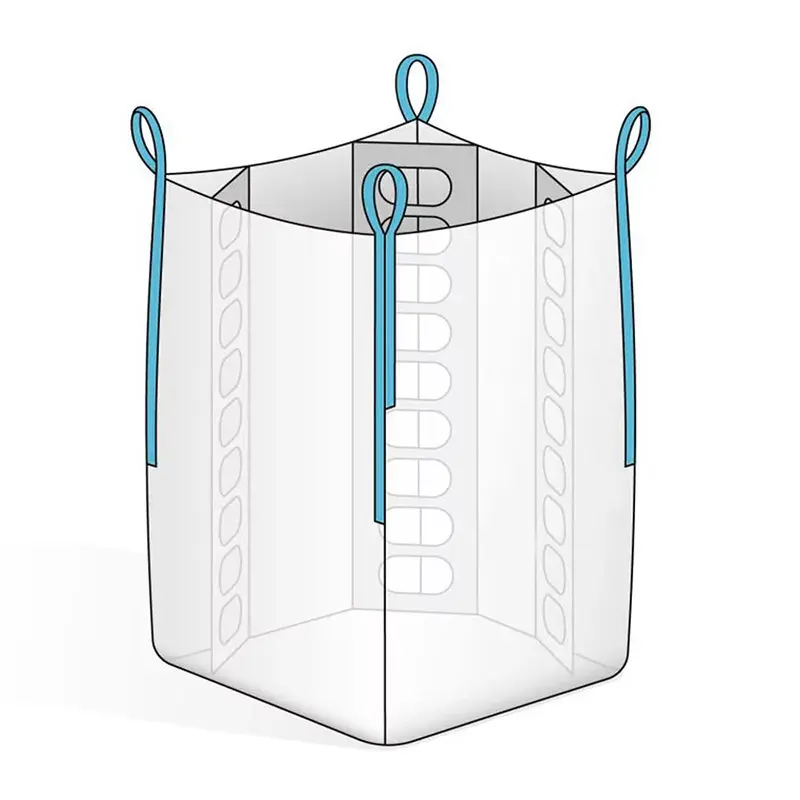
Baffle bulk bags, often called Q Bags or form-stable bulk bags, contain internal fabric baffles sewn into the corners. These baffles help the bag retain a more square shape when filled.
Unlike the first three types, which primarily describe how the bag body is constructed, the term “baffle bag” describes an additional internal structural feature. Baffles can therefore be incorporated into different basic bag constructions.
Key characteristics:
Internal baffles are sewn into the corners of the bag.
Openings in the baffles allow material to flow into the bag during filling.
The bag maintains a squarer shape after filling.
Improved shape retention can help increase storage and container-loading efficiency, depending on the material and loading arrangement.
Baffle bags are often selected for plastic granules, chemical powders, fertilizers, and other bulk materials where efficient space utilization is important.
Best suited for: Buyers who need improved shape retention and more efficient use of warehouse or shipping-container space.
| Feature | U-Panel | 4-Panel | Circular / Tubular | Baffle |
|---|---|---|---|---|
| Basic construction | U-shaped main panel plus two side panels | Four separate side panels | Tubular woven body fabric | Internal corner baffles added to a bag structure |
| Separate bottom panel | Not normally required for the basic body | Normally used | Depends on design | Depends on the underlying construction |
| Conventional vertical body seams | Typically two main side seams | Typically four corner seams | Reduced or eliminated | Depends on the underlying construction |
| Shape after filling | Depends on material and dimensions | Depends on material and dimensions | Depends on material and dimensions | Generally more square and form-stable |
| Top filling spout | Available | Available | Available | Available |
| Bottom discharge spout | Available | Available | Available | Available |
| PE inner liner | Optional | Optional | Optional | Optional |
| Main selection consideration | Versatile body construction | Separate sewn-panel construction | Tubular fabric construction | Improved shape retention |
Note: The table describes common designs. Actual construction, seam locations, load capacity, and available options vary by manufacturer and specification.
When reviewing a supplier's product photos or technical drawings, focus on the following features:
U-Panel: Look for a U-shaped main fabric panel forming the bottom and two opposite sides.
4-Panel: Look for four separate side panels joined by vertical corner seams.
Circular / Tubular: Look for a tubular body with fewer conventional vertical body-panel seams.
Baffle: Look for internal corner baffles or a filled bag that retains a more square shape.
A single front-view photograph may not provide enough information to distinguish U-Panel from 4-Panel construction reliably. Side views, bottom views, internal photographs, or a construction drawing are often more useful.
The best FIBC design depends on more than the bag's appearance. Before selecting a bag, buyers should consider:
Material characteristics: Particle size, bulk density, flowability, moisture sensitivity, and dust-leakage requirements.
Filling and discharge methods: Open top, filling spout, duffle top, flat bottom, discharge spout, or other specialized designs.
Load requirements: Safe Working Load (SWL), safety factor, lifting arrangement, and applicable handling requirements.
Storage and transportation: Stacking requirements, pallet dimensions, warehouse conditions, and container-loading efficiency.
Special requirements: PE liners, food-contact compliance, sift-proof seams, antistatic protection, or other application-specific features.
For example, a conventional U-Panel or 4-Panel bag may be suitable for many general industrial applications, while a Circular bag may be preferred when tubular fabric construction meets the design requirements. A Baffle bag may be a better option when maintaining a square shape and improving space utilization are priorities.
The final selection should be based on the actual application, technical specifications, and required performance rather than the bag name alone.
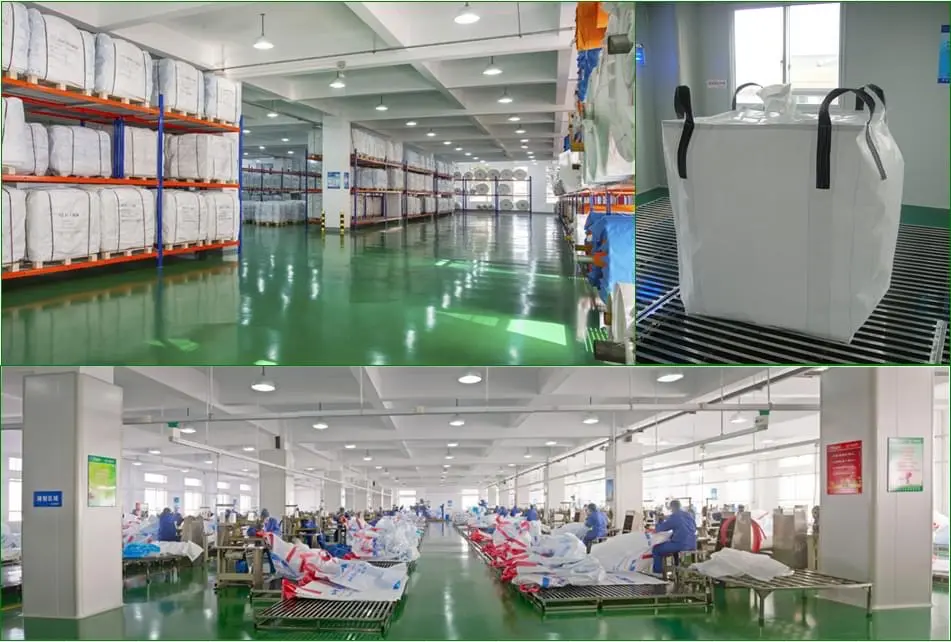
U-Panel, 4-Panel, Circular / Tubular, and Baffle bulk bags serve different structural needs. U-Panel and 4-Panel refer primarily to the way the bag body is assembled, Circular / Tubular refers to the use of tubular woven fabric, and Baffle describes an internal feature that improves shape retention.
Understanding these differences helps buyers communicate more accurately with FIBC manufacturers, compare technical quotations, and choose packaging that meets their handling, storage, and transportation requirements.
Looking for a suitable FIBC bulk bag for your application? Contact SHANDONG GOLDEN SUNSHINE NEW MATERIAL TECHNOLOGY CO., LTD. to discuss your required dimensions, loading capacity, filling and discharge design, and other technical specifications.
Website: https://www.gspacks.com/
Scan QR code to download the app
 Skip to main content