China Top 10 Solar Post Lights Manufacturers

Choosing reliable Solar Post Lights manufacturers requires more than comparing product photos or quoted prices. This guide introduces ten leading manufacturers in China, focusing on practical evidence and measurable capabilities. The review considers factory experience, lighting performance, material quality, customization options, and export support. It also examines how manufacturers manage sampling, quality inspection, packaging, and after-sales communication.

Outdoor lighting must withstand rain, dust, temperature changes, and repeated nighttime use. Therefore, this overview looks closely at IP protection, aluminum or stainless-steel construction, LED efficiency, battery capacity, charging performance, and expected service life. Clear testing records can reveal more than attractive marketing language. Certifications and documented quality procedures also deserve careful attention. They help buyers assess whether a supplier can support consistent commercial orders.

The selected companies may serve wholesalers, landscape contractors, hospitality projects, and private-label brands. Some specialize in decorative designs, while others offer stronger engineering and large-scale production. Factory visits, sample testing, and written specifications remain valuable before any purchase decision. No supplier is perfect. Even experienced manufacturers may have weaknesses in communication, lead times, or customization fees. That point matters.

This guide aims to provide a balanced starting point for responsible sourcing. It does not treat popularity as proof of quality. Instead, it encourages readers to compare real product details, supplier responses, and long-term reliability. With careful evaluation, buyers can identify Solar Post Lights partners that match their project needs, budget, and expected outdoor performance.

China Top 10 Solar Post Lights Manufacturers

What Are Solar Post Lights and How Do They Work?

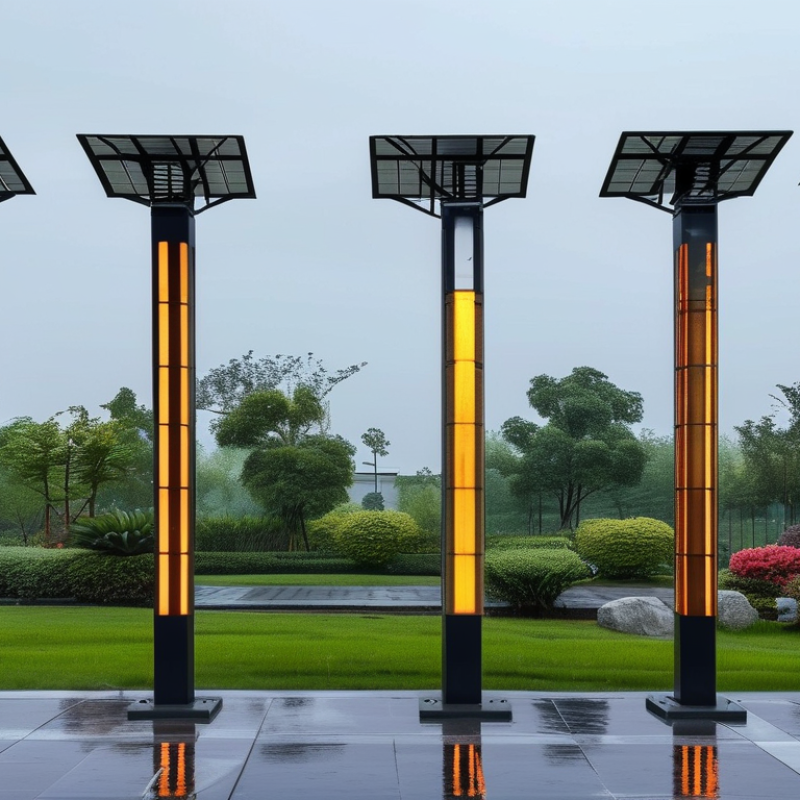
Solar post lights are outdoor luminaires with three connected parts: a photovoltaic panel, a rechargeable battery, and an LED lamp. During daylight, solar cells convert sunlight into direct-current electricity. A charge controller stores that energy safely in the battery. At dusk, a light sensor activates the LED automatically. The process is simple, but not effortless.

The International Energy Agency’s Renewables 2024 report estimates that solar photovoltaic capacity additions reached about 420 gigawatts globally in 2023. This growth supports wider access to compact solar components, including small lighting systems. However, a post light does not produce the same energy every day. Panel angle, shading, dust, temperature, and winter daylight all affect charging. A cloudy week can expose weak designs.

The U.S. Department of Energy reports that LED lighting can use at least 75% less energy than incandescent lighting. That low demand helps a small battery run a post light for several hours. In practical installations, battery capacity and operating temperature matter as much as panel size. Lithium-based batteries often perform well, but their protection circuits require careful design. Weather resistance also matters; outdoor housings should limit water entry and corrosion. An IP rating offers useful guidance, yet it cannot correct poor sealing or careless installation. Real gardens are rarely perfect laboratories.

Key Criteria for Ranking Chinese Solar Post Light Manufacturers

Ranking Chinese solar post light manufacturers requires more than attractive catalog photos.

I examine factory experience, engineering records, and evidence from outdoor installations. A serious supplier should explain panel efficiency, battery chemistry, lumen output, and expected night runtime. Test samples deserve exposure to heat, rain, dust, and repeated charging cycles. Small details matter. Loose terminals or cloudy lenses often reveal weak process control.

Quality ranking also depends on documented inspections at key production stages.

I look for incoming material checks, sealing tests, aging tests, and final electrical inspections. An IP rating should match a recognized test report, not a printed promise. The same applies to safety documentation and market-specific compliance files. Manufacturers with traceable batch records respond faster when a component fails. Warranty terms must state coverage, replacement procedures, and realistic response times.

Commercial strength includes stable component sourcing, reasonable lead times, packaging protection, and flexible project support.

A factory may offer excellent prototypes yet struggle with large orders. That weakness should affect its ranking. I also compare supplier communication, sample consistency, and the clarity of technical drawings.

Not always. However, no ranking is permanent. Climate, order volume, and installation quality can change real-world results.

My evaluation remains partly limited when suppliers provide incomplete field data. That uncertainty deserves clear disclosure, especially when buyers select long-term outdoor lighting.

China’s Top 10 Solar Post Light Manufacturers

China’s Top 10 Solar Post Light Manufacturers are often assessed through more than catalog appearance. Reliable manufacturers show consistent production records, clear testing procedures, and practical installation knowledge. Their products commonly use aluminum, stainless steel, or weather-resistant polymer housings. These materials must survive rain, dust, heat, and repeated temperature changes.

Experienced manufacturers usually control key processes in-house. These include battery assembly, LED testing, waterproof sealing, and final inspection. A professional supplier should provide photometric data, charging performance, battery specifications, and suitable installation drawings. Factory audits can reveal details that brochures hide, such as loose wiring, uneven powder coating, or weak screw threads. Small faults matter outdoors.

The strongest candidates among China’s top ten usually offer flexible pole heights, adjustable lighting modes, and replaceable components. Some support sample testing before larger orders. This is useful because stated battery life may change under cloudy weather or winter conditions. Buyers should request independent test records and inspect several production samples. Communication also deserves attention. Delayed answers can become costly during technical revisions. No supplier is perfect. Even capable factories may overlook a minor seal or provide unclear maintenance instructions. A careful evaluation should compare actual performance, not only price, output claims, or polished factory photographs.

China’s Top 10 Solar Post Light Manufacturers

This chart presents an editorial evaluation framework for comparing solar post light manufacturers. The criteria reflect practical purchasing factors: weather resistance, lighting performance, solar and battery efficiency, construction quality, and after-sales support. The percentages are weighting scores, not company-specific results.

How to read the chart: Weather resistance and lighting performance receive the highest weights because outdoor durability and dependable illumination are core requirements for solar post lights. Solar efficiency, build quality, and support also influence long-term value.

Product Ranges, Technologies, and Customization Capabilities

China Top 10 Solar Post Lights Manufacturers: Product Ranges, Technologies, and Customization Capabilities

China’s leading solar post light manufacturers usually cover garden, pathway, fence, street, and commercial landscape models. Their ranges include compact 300-lumen fixtures and larger units exceeding 1,000 lumens. Common materials include powder-coated aluminum, stainless steel, tempered glass, and weather-resistant ABS. Different projects need different bodies.

Most factories now offer monocrystalline panels, lithium batteries, dusk-to-dawn sensors, PIR motion detection, and adjustable lighting modes. Some use smart controllers for scheduled dimming and remote monitoring. During supplier evaluations, buyers should request photometric files, battery cycle data, and IP test reports. A sample should operate through several cloudy nights, not just one showroom evening. Catalog claims are not enough.

Customization is a major advantage. Manufacturers can adjust pole height, beam angle, color temperature, lumen output, battery capacity, panel size, logo placement, packaging, and installation hardware. They may also develop new molds for municipal or hospitality projects. Ask for prototype drawings before approving mass production. Small changes can affect wind resistance and heat management. I have found that attractive samples sometimes conceal weak connectors or uneven coating. That deserves attention. Factory audits, pre-shipment inspections, aging tests, and clear warranty terms help reduce those risks. Yet no checklist replaces field testing in the actual climate and soil conditions.

China Top 10 Solar Post Lights Manufacturers - Product Ranges, Technologies, and Customization Capabilities
No. Manufacturer Profile Typical Product Range Solar and Battery Configuration Lighting Technologies Housing and Protection Control and Operating Features Customization Capabilities Common Applications
1 Manufacturer 01 Garden post lights Pathway lights Low bollards Monocrystalline photovoltaic panels; lithium-ion or LiFePO4 batteries; typical battery capacity of 2–12 Ah; dusk-to-dawn operation. Integrated LED modules, 2700–6500 K color options, optical lenses for pathway illumination, and selectable brightness levels. Powder-coated aluminum or ABS housings; common outdoor protection levels include IP65 and IP66; UV-resistant diffuser options. Automatic night activation, charging protection, over-discharge protection, and optional motion-sensing operation. Custom colors, pole heights, logo printing, packaging, LED color temperature, and battery capacity. Residential gardens, walkways, courtyards, resorts, and landscape projects.
2 Manufacturer 02 Decorative lanterns Vintage post lamps Wall-post combinations Polycrystalline or monocrystalline solar modules; rechargeable lithium batteries; typical lighting duration of 8–12 hours after a full charge. SMD LED technology, warm-white illumination from 2700–3500 K, flame-effect options, and decorative shadow patterns. Aluminum, stainless steel, or weather-resistant polymer construction; sealed battery compartments; IP44–IP65 configurations. Light-sensitive switching, fixed illumination modes, replaceable battery designs, and optional remote-control functions. Custom lantern shapes, glass or acrylic covers, surface finishes, decorative patterns, color temperature, and retail packaging. Driveways, patios, hospitality venues, parks, heritage-style developments, and outdoor dining areas.
3 Manufacturer 03 Commercial bollards Public-space post lights Landscape fixtures High-efficiency monocrystalline panels paired with LiFePO4 batteries; typical system power of 3–15 W; charging and discharge management included. High-lumen SMD LEDs, asymmetric and symmetric optics, glare-control shields, and optional CRI 80+ LED packages. Die-cast aluminum bodies with corrosion-resistant coating; tempered glass or UV-stabilized PC lenses; IP65–IP67 options. Programmable dimming, motion sensors, adaptive lighting, multi-night reserve settings, and remote monitoring options for project models. Pole diameter, mounting interface, optic distribution, photovoltaic panel size, battery capacity, and lighting schedules. Commercial landscapes, pedestrian zones, municipal projects, campuses, and residential developments.
4 Manufacturer 04 Solar pillar lights Fence post lights Column-top fixtures Compact monocrystalline panels; lithium-ion batteries generally sized for decorative loads; 6–10 hours of typical nightly illumination. Low-power LED arrays, warm-white and neutral-white choices, diffused light output, and decorative upward or downward illumination. Aluminum alloy, stainless steel, or molded polymer housings; common outdoor ratings of IP44, IP54, and IP65. Automatic dusk sensor, manual override on selected models, charging indicator, and replaceable battery access. Custom mounting dimensions, cap styles, finishes, translucent panels, branding, and carton configurations. Fences, entrance pillars, boundary walls, terraces, balconies, and private residential properties.
5 Manufacturer 05 Modern pathway lights Minimalist bollards Architectural posts Monocrystalline solar cells with lithium or LiFePO4 storage; typical panel ratings of 1–8 W and energy-saving dimming profiles. Integrated LED boards, 3000–5000 K options, indirect illumination, uniform light distribution, and selectable lumen output. Extruded or die-cast aluminum, powder coating, polycarbonate optics, and IP65 protection for outdoor installations. Dusk-to-dawn control, timed dimming, passive infrared sensing, and optional wireless configuration for larger projects. Custom body geometry, dimensions, colors, optical performance, solar-panel orientation, and project-specific mounting systems. Contemporary homes, office parks, hotels, retail landscapes, and architectural gardens.
6 Manufacturer 06 Heavy-duty garden posts Park lighting fixtures Security-oriented bollards Monocrystalline modules with LiFePO4 batteries; typical rated power of 5–20 W; extended backup configurations available for low-sun conditions. High-efficiency LED chips, wide-area optics, optional motion-boost modes, and neutral-white output for improved visibility. Die-cast aluminum or galvanized steel structures; tempered glass lenses; IP66 protection and impact-resistant component options. Multi-level dimming, PIR activation, battery management systems, fault protection, and optional solar charging indicators. Custom pole height, base plate, wind-load design, battery reserve, LED output, surface coating, and installation accessories. Parks, public gardens, walkways, parking perimeters, storage facilities, and security-sensitive sites.
7 Manufacturer 07 Resort-style post lights Decorative landscape lamps Outdoor hospitality lighting Monocrystalline panels; lithium-ion or LiFePO4 battery options; typical operation of 8–14 hours depending on weather and brightness settings. Warm-white SMD LEDs, high-color-rendering options, decorative diffusers, and low-glare optical treatments. Aluminum, stainless steel, acrylic, or polycarbonate components; corrosion-resistant finishes; IP54–IP66 product configurations. Automatic photocell control, programmable brightness, remote-control options, and optional color-changing decorative modes. Custom decorative elements, finishes, diffuser materials, color temperature, logos, packaging, and hospitality project designs. Hotels, resorts, restaurants, wedding venues, private clubs, and premium residential landscapes.
8 Manufacturer 08 All-in-one solar posts Modular bollards Replaceable lighting units Integrated monocrystalline charging panels, replaceable lithium batteries, and modular power systems generally rated at 2–10 W. SMD or COB LED options, selectable beam angles, 2700–6000 K color range, and modular LED replacement designs. Powder-coated aluminum or engineering polymer; sealed electronics; IP65 protection commonly specified for landscape use. Photocell activation, battery-status indication, optional motion sensing, timed dimming, and maintenance-friendly access. Interchangeable tops, panel size, battery type, LED module, pole length, mounting base, and private-label packaging. Landscape contractors, property managers, residential communities, pathways, and retrofit projects.
9 Manufacturer 09 Smart solar bollards Connected outdoor lights Project lighting systems Monocrystalline photovoltaic panels with LiFePO4 storage; energy-management controllers; optional larger battery reserves for seasonal use. High-efficiency LEDs, programmable lumen output, adaptive lighting, and optics selected for pedestrian or landscape applications. Aluminum housings, tempered glass or polycarbonate lenses, anti-corrosion coatings, and IP66-rated configurations. Motion detection, scheduled dimming, wireless communication options, remote diagnostics, and centralized project control on selected systems. Custom communication protocols, control schedules, sensor settings, pole design, optics, battery reserve, and software interface requirements. Smart parks, campuses, business districts, residential communities, and energy-saving municipal projects.
10 Manufacturer 10 OEM solar post lights Retail-ready garden lights Contract-manufactured fixtures Solar configurations from compact decorative panels to higher-output monocrystalline systems; lithium-ion and LiFePO4 battery choices. SMD LED, COB LED, decorative filament-style LED, warm-to-neutral color temperatures, and customer-selected brightness profiles. ABS, PC, aluminum, and stainless steel construction; outdoor ratings typically ranging from IP44 to IP66 depending on design. Dusk sensors, on/off switches, motion sensors, multi-mode controls, charging protection, and low-battery protection. End-to-end OEM/ODM support including industrial design, tooling, color matching, logo application, packaging, manuals, and sample development. E-commerce products, hardware retailers, garden centers, distributors, landscaping brands, and custom project orders.

How to Choose a Reliable Chinese Solar Post Light Supplier

China Top 10 Solar Post Lights Manufacturers

How to Choose a Reliable Chinese Solar Post Light Supplier

China’s solar lighting industry is expanding with global demand. IRENA’s Renewable Capacity Statistics 2024 recorded 346 GW of new solar capacity in 2023. This growth creates more supplier choices, but quality still varies widely.

Start with engineering evidence, not attractive product photos. Request the LED datasheet, battery chemistry, panel efficiency, charging time, and operating hours. A reliable supplier should explain performance during cloudy weather. Ask for IP test records under IEC 60529 and safety documentation aligned with relevant IEC lighting standards. Small details matter. Check the cable seals, screw material, and battery compartment gasket.

Factory experience is easier to test through samples. Order several units and place them outdoors for four weeks. Compare brightness after rainy days, loose screws, and morning battery levels. Request production inspection records, incoming-material checks, and serial-number traceability. I have seen polished samples conceal weak battery cells. That mistake is expensive.

Warranty terms should identify battery life, lumen maintenance, replacement procedures, and response times. Do not accept vague promises. A supplier with export experience should provide consistent packaging, clear manuals, and realistic delivery schedules. Independent laboratory reports add credibility, but they should match the exact model. Some buyers overlook this. I would not.

LSP App

Download the LSP App now

Scan QR code to download the app

We use cookies to personalize content, utilize website traffic analytics & support our marketing initiatives. By continuing to browse our site you consent to receive our cookies. For more information see our Privacy Statement
Ok