A Cleanroom Window is more than a clear panel. It is part of the room’s contamination-control boundary, where frame joints, seals, and flush surfaces matter. A poorly aligned frame can collect dust; a sound installation supports easier cleaning and dependable visibility. Small details count.
ISO 14644-1:2015 sets airborne particle limits for cleanroom classes. For example, ISO Class 5 permits no more than 3,520 particles of 0.5 micrometres or larger per cubic metre. This is a room-classification limit, not a window rating, but it shows why every interface deserves scrutiny. Cleanroom author William Whyte has written, “The greatest source of contamination in a cleanroom is the people working in it.” His observation underlines the need to assess windows alongside cleaning practices, installation quality, and room design. Still, no window specification solves every site problem.
This guide compares ten China-based manufacturers through practical selection factors: construction, sealing, customization, documentation, and project support. Buyers should verify stated materials and performance against their own facility requirements. A product photograph cannot confirm a flush finish or reliable seal. The comparison is a starting point, not a substitute for technical review.
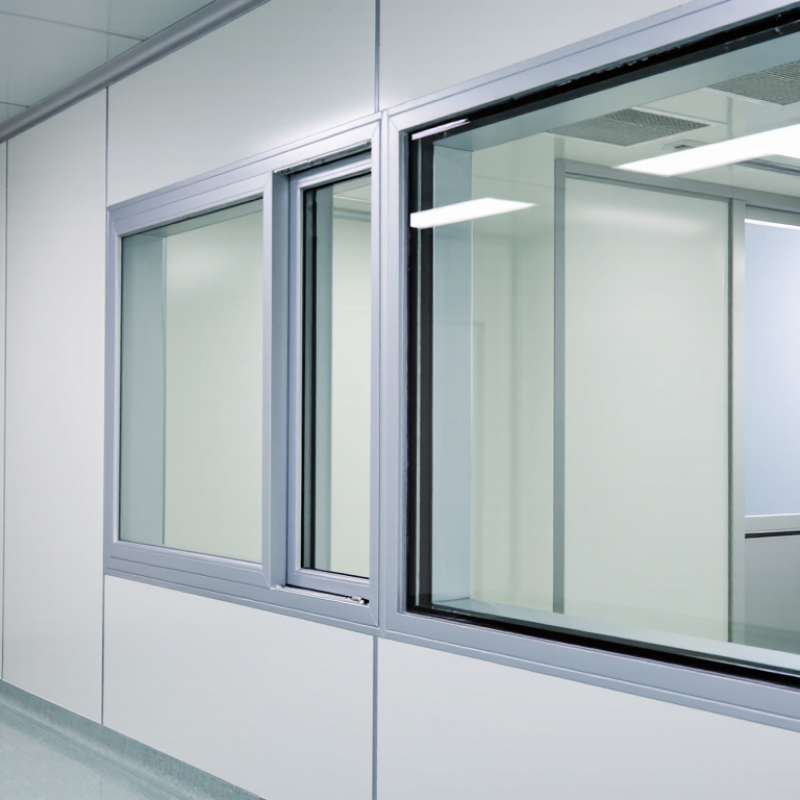
Cleanroom windows provide visibility between controlled rooms while helping maintain a stable indoor environment. Staff can check equipment or movement without opening a door. Small gaps matter. A poorly fitted frame may allow dust to collect or make cleaning harder.
Most designs use sealed glazing set into a flush frame. Double glazing can reduce heat transfer and limit condensation, though the right specification depends on room temperature and humidity. Smooth edges and minimal joints are practical features: a cloth should reach the corners without snagging. Details decide. Window dimensions, wall construction, and installation method should be checked together, not treated as separate choices.
Key performance features include airtightness, clear visibility, durable seals, and surfaces that tolerate routine cleaning. In some rooms, impact resistance or sound reduction may also matter. Ask suppliers for test data and installation guidance that match the intended conditions; a general claim is not enough. Even a strong window can underperform if its seal is damaged during fitting. And specifications do not replace inspection. Periodic checks can reveal loose sealant, moisture between panes, or scratches that become difficult to clean.
China’s cleanroom window manufacturing industry serves pharmaceutical, electronics, medical-device, and laboratory projects. Demand is shaped by more than glass clarity. Windows must sit flush with wall panels, limit dust traps, and maintain reliable seals through cleaning cycles. Double glazing can reduce condensation, while suitable frame design helps control thermal bridges. Small defects matter.
MarketsandMarkets estimated the global cleanroom technology market at US$5.5 billion in 2023, forecasting US$7.6 billion by 2028. This covers the wider cleanroom technology market, not windows alone, so it should not be read as a window-sales forecast. In China, manufacturers commonly supply custom dimensions and coordinate window frames with modular wall systems. Buyers can check drawings, material certificates, sealant compatibility, and inspection records against project requirements, including applicable ISO 14644 cleanroom classifications.
Specifications still vary between projects. A polished sample does not prove long-term sealing performance. Ask how suppliers inspect joints, handle dimensional tolerances, and test finished units. Comparisons can be imperfect when test methods differ. That uncertainty deserves more attention.
China Top 10 Cleanroom Window Manufacturers: Standards and Criteria for Comparing Manufacturers
A useful comparison starts with the room’s cleanliness class, not a product brochure. ISO 14644-1:2015 sets airborne particle limits per cubic metre: ISO Class 5 allows 3,520 particles at 0.5 micrometres or larger; ISO Class 7 allows 352,000. These figures describe room air, not window performance. Still, they help buyers define the installation environment and ask manufacturers relevant questions. Small details matter.
Compare construction drawings, frame materials, glazing options, and installation tolerances. Ask how joints are sealed and whether the finished frame sits flush with the wall. Recesses and exposed ledges can collect dust. For test evidence, ASTM E283 covers air leakage testing, while ASTM E330 evaluates structural performance under uniform static pressure. These methods do not replace cleanroom-specific review, but they make supplier claims easier to assess. Request test conditions and results, not just a certificate image.
Also examine condensation resistance, glass breakage control, cleaning compatibility, and replacement access. A window that performs well in a laboratory may be harder to maintain in a busy facility. I would not treat a polished brochure as proof. Check whether the proposed model matches the project’s pressure, humidity, and cleaning routine. Compare like with like: frame dimensions, glass build-up, test methods, and installation scope should all be recorded. Some specifications remain incomplete; that deserves a follow-up, not an assumption.
Cleanroom windows demand more than clear glass. Frame joints, flush surfaces, and dependable sealing matter during daily cleaning. The ten manufacturer profiles below reflect different production strengths, rather than a verified ranking. Buyers should confirm current specifications directly.
One manufacturer focuses on double-glazed units for temperature control. Another offers flush-mounted frames that reduce dust-catching edges. A third adapts opening sizes for renovation projects. The fourth emphasizes laminated glass and impact resistance. The fifth supplies integrated blinds, useful where light control matters. The sixth makes fixed windows for controlled environments. Ask how its team handles replacement if a pane is damaged.
The seventh profile centers on custom aluminum frames and short production runs. The eighth combines windows with partition systems, which can simplify coordination on site. The ninth highlights documented inspection and traceable material records. The tenth serves projects needing several sizes and consistent finishes. Details can vary by order. Catalog claims alone may not show how a unit performs after repeated cleaning, so request drawings, seal details, and test records before comparing suppliers. A small gap can matter.
Selecting a cleanroom window starts with the room’s process, not its appearance. Check the required cleanliness level, pressure conditions, cleaning chemicals, and wall-panel thickness. Flush-mounted glazing reduces ledges where dust can collect. Double glazing may help control condensation and temperature differences, but it is not automatically necessary in every room. Confirm glass strength, frame compatibility, and documented performance with the project team. Small details matter.
Installation quality can make a suitable window a weak point. Align the frame with the wall panel and use a compatible, low-emission sealant. The finished joint should be smooth, continuous, and easy to inspect. A neat seam is not proof of a reliable seal. Verify it under the project’s acceptance checks, and record any defects before the area enters service. This step is sometimes rushed.
Maintenance should follow the facility’s approved cleaning procedure. Use non-abrasive cloths and agents that will not damage seals or coatings. Inspect joints for lifting, cracks, or discoloration; check the glass for scratches, haze, and trapped moisture. Keep simple inspection records. A window can look clean while its seal slowly deteriorates, so visual checks alone may miss early problems.
Product Selection, Installation, and Maintenance Considerations
Use the required ISO cleanliness class as a starting point when evaluating cleanroom window systems. These limits describe airborne particle concentration—not window performance or manufacturer rankings. Confirm glazing, seals, frames, installation details, and maintenance requirements against the project specification.
Scan QR code to download the app
LSP Products was founded by plumbers over 50 years ago with a focus on unparalleled innovation, superior product quality, and best-in-class service to the plumbing industry. Our primary focus is the new construction market where we develop products that make installations easy and provide significant cost savings to the plumbing/mechanical contractor. LSP has a manufacturing facility located in Monterrey, Mexico and a distribution center in Dallas, Texas. We are proud to offer many products designed and made in North America… About LSP
Submit the form below to receive the document via email.