Choosing the right Sheet Metal Cap is a small decision with visible consequences. A poorly specified cap can collect water, expose sharp edges, or fail at expansion joints. The right profile should protect the substrate, shed rain, and remain stable under temperature changes.
Industry data reinforces the importance of material selection. The World Steel Association reported approximately 1.89 billion tonnes of crude steel production in 2023. The U.S. Geological Survey also recorded about 12.3 million metric tonnes of global zinc mine production in 2023. These figures reflect a broad, active supply chain, but they do not guarantee suitable performance. Thickness, coating, forming quality, and compatibility still matter. A common mistake is treating a low price as proof of value.
Metal-roofing consultant Rob Haddock has emphasized, “The details are where the roof succeeds or fails.” That principle applies directly to Sheet Metal Cap selection. Field experience shows that a cap fitting a drawing may still fail beside masonry, insulation, or uneven edges. Our guide examines ten practical considerations, including base-metal choice, dimensions, finish, drainage, fastening, fabrication accuracy, and maintenance access. It also questions assumptions that deserve closer review. Is the cap exposed to salt air? Will trapped moisture remain beneath it? Can installers replace damaged sections without disturbing adjacent materials? There is no universal best cap. The strongest choice balances climate, geometry, service life, installation skill, and verified specifications.
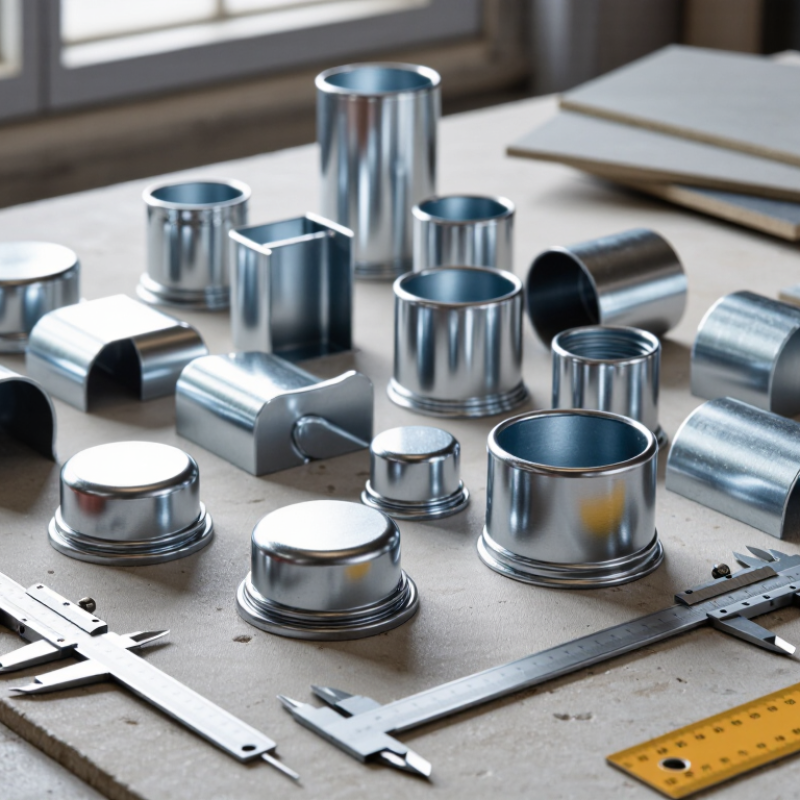
Before choosing a sheet metal cap, define what it must protect, cover, or control. A decorative cover needs different performance from a cap used on a hot duct or exposed enclosure. Write down the application, location, expected service life, and maintenance conditions. Then identify loads, temperature changes, moisture, chemicals, airflow, and contact with nearby parts. These details prevent attractive but unsuitable choices.
Do not guess the material. Stainless steel may suit moisture, while aluminum can reduce weight; the correct choice depends on the environment. Coating, thickness, edge treatment, and forming method also affect durability. Tips: Match the cap to measurable requirements. Specify load capacity, temperature range, corrosion exposure, fit tolerance, and sealing needs before requesting samples. Ask for drawings, test information, and material certificates when performance matters.
A practical review should include installation. Will the cap be screwed, snapped, welded, or removed regularly? A tight fit can improve protection, but excessive tolerance may complicate assembly. Small details matter. From production experience, failures often begin with overlooked drainage or sharp edges. I once underestimated cleaning access on a covered assembly; the cap worked, but servicing became unnecessarily slow. That lesson changed my checklist. Tips: Test a representative sample in real conditions. Check fit after thermal cycling, inspect water paths, and confirm that tools can reach fasteners. No design is perfect on paper. Field feedback should refine the specification before full production.
| Tip | Purpose or Performance Requirement | Key Dimension or Selection Factor | Practical Guidance | Typical Verification Method |
|---|---|---|---|---|
| 1 | Define the primary function | Protection, closure, decoration, shielding, or structural support | Select the cap design according to its main job. A protective closure may need stronger material and retention than a decorative trim cap. | Review the application drawing, installation procedure, and required service life. |
| 2 | Match the cap to the mating part | Opening size, outside diameter, inside diameter, depth, and wall clearance | Measure the mating component at several points. Allow for material thickness, forming variation, coating thickness, and installation clearance. | Use calibrated calipers, micrometers, gauges, and a production-fit trial. |
| 3 | Choose an appropriate metal | Strength, corrosion resistance, conductivity, weight, and formability | Aluminum is lightweight and corrosion resistant; stainless steel provides high corrosion resistance and strength; carbon steel is economical but generally requires protective treatment. | Compare material certificates, mechanical requirements, corrosion conditions, and forming capability. |
| 4 | Specify suitable material thickness | Rigidity, impact resistance, weight, bend radius, and manufacturing method | Thicker sheet usually improves stiffness and durability but can increase weight, cost, and forming force. Confirm the minimum thickness required for the load. | Perform a deflection, compression, impact, or handling test based on the application. |
| 5 | Account for environmental exposure | Moisture, salt spray, chemicals, ultraviolet light, dust, and temperature | Use corrosion-resistant material or a compatible finish for outdoor, coastal, industrial, or wash-down environments. Check chemical compatibility before approval. | Evaluate the operating environment and use a relevant corrosion or chemical-resistance test. |
| 6 | Define sealing and ingress protection | Seal type, compression, joint design, drainage, and required IP level | A cap intended only for dust protection may require a different design from one exposed to water jets or temporary immersion. Avoid trapping water inside the assembly. | Confirm the applicable enclosure rating and conduct dust or water ingress testing where required. |
| 7 | Select the retention method | Press fit, snap fit, threaded attachment, screws, rivets, welds, or adhesive | Choose retention based on removal frequency, vibration, load, access requirements, and risk of accidental detachment. | Measure insertion and removal force, then test under vibration and repeated installation cycles. |
| 8 | Control edges and surface safety | Edge radius, burr control, corners, seams, and user contact areas | Specify deburring, edge finishing, or hemmed edges where personnel may handle the cap or where cables and seals could be damaged. | Conduct visual inspection and perform a hand-feel, glove, or cable-abrasion check. |
| 9 | Consider thermal and electrical requirements | Temperature range, heat transfer, electrical continuity, insulation, and grounding | Metal caps can conduct heat and electricity. Define whether the cap must dissipate heat, remain electrically isolated, or provide a reliable grounding path. | Check temperature limits, dielectric requirements, continuity, and bonding resistance as applicable. |
| 10 | Confirm manufacturing and quality requirements | Tolerances, surface finish, batch consistency, tooling, inspection, and total cost | Use laser cutting, stamping, spinning, or bending according to volume and geometry. Define critical dimensions and acceptance criteria before production. | Approve a first article, inspect critical dimensions, review material records, and monitor production samples. |

Scan QR code to download the app
 Skip to main content