Choosing the right Rolling Tool Carts is not simply a matter of picking the largest model. A crowded workshop quickly reveals weak casters, shallow drawers, and uncomfortable handles. I have seen a cart look impressive online, then wobble when loaded with cordless drills, sockets, and a heavy compressor accessory. Small details matter.
This guide presents ten practical tips for comparing construction, storage, mobility, security, and value. Pay close attention to steel thickness, drawer capacity, wheel quality, and the manufacturer’s stated weight limits. A cart with four smooth casters may move easily across concrete, yet struggle on thresholds or uneven garage flooring. Measure your available space, too. A beautiful cart can become an obstacle when its drawers cannot open fully.
Test the details before trusting the appearance. That matters. Pull each drawer, check its alignment, and inspect the locking mechanism for excessive play. Read warranty terms and independent user feedback, not only promotional descriptions. Specifications can still be incomplete. Some buyers, including me, have focused too heavily on drawer count and overlooked total loaded weight. That mistake is easy to repeat.
The best choice depends on your tools, workspace, budget, and working habits. These tips will help you make a more informed decision without chasing features you may never use. Expect trade-offs. A compact cart saves floor space but may limit future storage. A larger unit offers capacity but demands stronger flooring and safer handling. Reliability should guide the purchase.
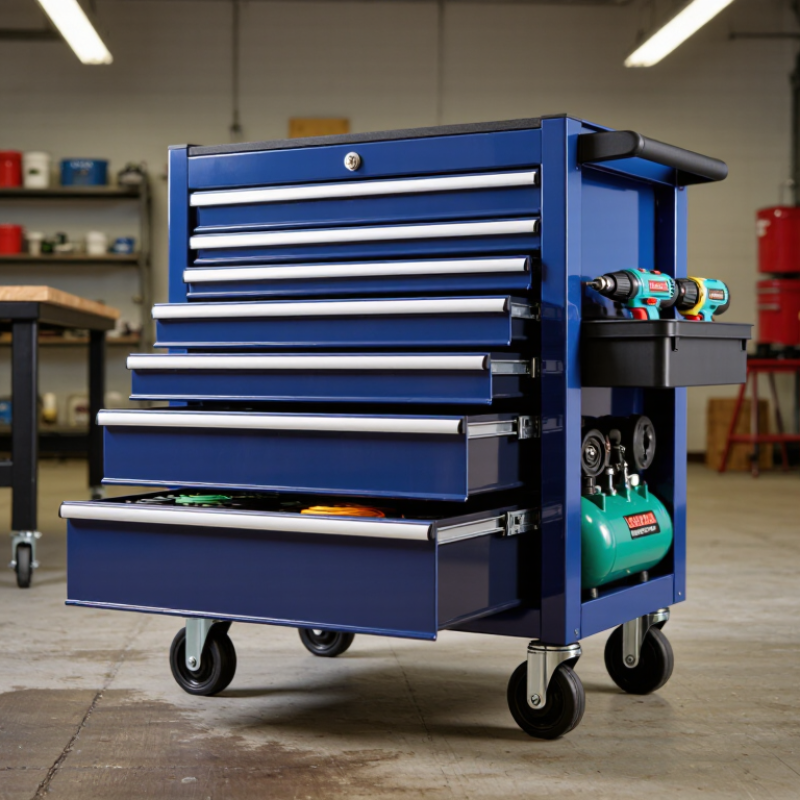
Before choosing a rolling tool cart, define the work it must support. Measure your workspace, including doorways, benches, and storage gaps. A narrow garage may offer only 30 inches of movement space. Mark the cart footprint with masking tape. Include room for open drawers and your walking path.
List your tools by frequency, weight, and size. Daily items should sit in shallow, easy-to-reach drawers. Heavy tools belong in lower compartments for better stability. Check the cart’s rated capacity against your actual load, not an imagined one. Read the manufacturer’s specifications carefully. A cart that looks spacious can become crowded quickly.
Your floor matters too. Uneven concrete requires sturdy casters and reliable brakes. Match drawer depth to your largest hand tools, measuring them before shopping. Tall handles should clear nearby shelves and workbenches. I once selected a cart that fit under my bench perfectly. The top drawer could not open fully. That mistake taught me to measure clearance twice. Leave room for future tools, but avoid buying excess storage. If you use powered equipment, plan cable access and keep cords away from moving wheels. Recheck the layout after a week of real work. Some requirements only appear after the first messy repair.

Before buying a rolling tool cart, measure your available space and rank the features that matter most. This example planning score emphasizes fit, load capacity, organization, mobility, and work surface requirements. The scores are practical buying priorities and do not represent any company or brand.
Compare cart size, storage capacity, and drawer organization before judging appearance. A 30-inch cart may fit a narrow workshop, but it can feel cramped with power tools. Measure doorways, work aisles, and the turning space around your bench. The U.S. Bureau of Labor Statistics reported that sprains, strains, and tears represented 37.4% of private-industry days-away-from-work cases in 2023. A cart with smooth casters and a comfortable handle can reduce awkward carrying, although it cannot fix poor lifting habits.
Tip: Match drawer depth to your tools. Shallow drawers suit sockets, drivers, and measuring tools. Deeper drawers hold drills, clamps, or boxed parts, but they can become disorganized quickly. Look for full-extension slides, drawer liners, and a locking mechanism. A practical test is simple: place your heaviest tool in the lowest drawer and open it fully. If the cart shifts, the design may be too light.
Tip: Count usable storage, not advertised volume. Internal drawer dimensions matter more than exterior width. The Occupational Safety and Health Administration identifies awkward posture, force, and repetition as common ergonomic risk factors. Arrange daily-use tools between knee and shoulder height. Keep rarely used equipment lower. I have found that more drawers do not always mean better organization. Too many narrow compartments can waste space and encourage random storage. Leave some capacity unused; a completely full cart is difficult to maintain.
When buying a rolling tool cart, study its construction before admiring its appearance. Steel usually handles heavy tools and workshop impacts well, while aluminum reduces weight and resists rust. Thick panels should feel firm, not flexible, when pressed by hand. Look closely. Inspect welds, drawer joints, and corner seams for gaps or rough finishing. A protective coating helps, but it cannot correct weak metal or poor assembly. For damp workshops, check whether exposed hardware can corrode over time.
Weight limits require careful reading. A published capacity may describe the entire cart, one drawer, or only a stationary load. These figures are not interchangeable. Divide your expected tools by drawer and leave spare capacity for future additions. Heavy machines belong in lower drawers to reduce tipping risk. I once loaded a compact cart with drills, batteries, and sockets without checking the caster rating. The cart moved, but its wheels dragged across the concrete. That mistake was avoidable.
Durability also depends on moving parts. Open every drawer and test whether it stays aligned under moderate pressure. Examine slide rails, handles, locks, and caster mounts. Push the cart across an uneven floor; excessive wobbling suggests weak joints or undersized wheels. Casters with reliable brakes should hold the cart firmly during use. Review maintenance instructions and written warranty terms, especially for load-related damage. I would also measure doorways and workshop aisles, because a durable cart is useless if its loaded width prevents safe movement.
| Tip | Evaluation Dimension | Recommended Benchmark | What to Check | Why It Matters |
|---|---|---|---|---|
| 1 | Frame construction | Powder-coated steel frame with welded or reinforced joints | Look for uniform welds, straight structural members, and a finish without exposed bare metal. | Steel provides high stiffness and impact resistance for heavy workshop use; powder coating helps protect against scratches and corrosion. |
| 2 | Drawer material and thickness | Steel drawers with reinforced bottoms and load-rated slides | Open and close each drawer fully; check for flexing, binding, sharp edges, or uneven gaps. | Reinforced drawers resist sagging when filled with hand tools, sockets, and metal accessories. |
| 3 | Overall and drawer weight capacity | Choose a total capacity at least 20% higher than your expected load | Confirm separate ratings for the top, drawers, shelves, and entire cart; do not rely on a single headline number. | A safety margin reduces structural stress and helps maintain smooth movement over time. |
| 4 | Caster size and construction | Four swivel casters, with at least two locking casters; approximately 100–125 mm wheels for general workshops | Roll the cart over the intended floor surface and test swiveling, braking, and wheel alignment. | Larger casters generally move more easily over seams and minor floor irregularities. |
| 5 | Mobility and stability | Wide wheelbase, balanced layout, and positive wheel locks | Push the loaded cart slowly, turn it, and engage the brakes on a level surface. | A stable base lowers the risk of tipping, especially when drawers are extended or the cart is pushed around obstacles. |
| 6 | Drawer slides and operating force | Full-extension ball-bearing slides with a specified load rating | Check that drawers remain level, open smoothly, and include a stop or retention mechanism. | Smooth, supported extension improves access and reduces premature wear caused by overloading or misalignment. |
| 7 | Surface and corrosion protection | Consistent powder coating or other documented protective finish | Inspect corners, drawer interiors, fasteners, and the underside for coating gaps or early rust. | Workshops may expose carts to moisture, oils, cleaners, and metal particles that accelerate corrosion. |
| 8 | Worktop and protective liner | Resistant steel, stainless steel, or durable polymer worktop with a replaceable liner | Check the worktop for level support, liquid resistance, and a liner that does not move during use. | A suitable top protects tools and the cart while reducing noise, sliding, and surface damage. |
| 9 | Security and drawer retention | Lockable drawers with a separate retention feature or latch | Test the lock, key or access mechanism, and drawer latch while the cart is moved. | Security features help prevent unauthorized access and reduce accidental drawer opening during transport. |
| 10 | Dimensions, ergonomics, and serviceability | Work height suited to the user, adequate drawer clearance, and replaceable casters or slides | Measure doorways and storage space; verify handle height, drawer clearance, spare-part availability, and assembly quality. | Correct sizing improves comfort and access, while serviceable parts can extend the cart's useful life. |
Selection note: Always follow the manufacturer's stated load ratings, use the cart on a suitable surface, and distribute heavy tools evenly across the lowest compartments.
Buying the best rolling tool cart starts with mobility. Test the wheels on a hard floor, not only in a showroom. Larger casters usually cross door thresholds more smoothly. Two locking swivel wheels can improve control during turns. Check the handle height while wearing work gloves. A cart that feels awkward may cause repeated shoulder strain.
Safety locks deserve close inspection. Drawers should resist opening when the cart moves. A secure central lock helps protect tools from accidental access. Check whether the lock operates smoothly with one hand. Look for drawers that remain closed during sudden stops. I once overlooked a weak latch, and a sharp tool slid onto the floor. That mistake changed how I inspect carts. Lock it twice.
Ergonomic design affects daily comfort more than impressive storage capacity.
Choose drawers that open fully without excessive force. Smooth slides reduce wrist pressure during frequent use. Rounded edges are kinder to hips and work clothing. A stable top surface should support small repairs without wobbling. Measure your usual workspace before buying. Some carts fit beside a bench but block the walking path. That detail is easy to miss. Also consider weight distribution. Heavy tools should sit low, while lighter accessories can occupy upper drawers. Check the cart after loading it, because balance often changes noticeably.
Buying the best rolling tool cart means balancing product quality, warranty coverage, and total cost. A low price may hide thin steel, weak drawer slides, or unreliable casters. Inspect the frame, welds, drawer alignment, handle strength, and wheel locks before deciding. Pull every drawer if possible. Small defects often become expensive annoyances.
TEN PRACTICAL CHECKS steel thickness, weight capacity, drawer movement, caster quality, locking security, surface finish, handle comfort, storage layout, replacement parts, and warranty terms. A useful warranty should explain coverage length, exclusions, repair options, and shipping responsibility. “Limited warranty” alone tells you very little. Read the actual conditions. Ask how claims are handled after heavy workshop use.
From my experience, a cart with smooth full-extension drawers saved time during repeated repairs. However, I once chose a cheaper model with poor wheels. It looked acceptable in the showroom, but it rolled badly across a concrete floor. That mistake changed my buying process. I now compare the purchase price with likely repair costs, delivery fees, and maintenance needs. A slightly higher cost can be sensible when construction is stronger and support is dependable. Still, expensive does not automatically mean better. Check measurable details, keep the warranty document, and leave room for honest doubt before paying.
Scan QR code to download the app
LSP Products was founded by plumbers over 50 years ago with a focus on unparalleled innovation, superior product quality, and best-in-class service to the plumbing industry. Our primary focus is the new construction market where we develop products that make installations easy and provide significant cost savings to the plumbing/mechanical contractor. LSP has a manufacturing facility located in Monterrey, Mexico and a distribution center in Dallas, Texas. We are proud to offer many products designed and made in North America… About LSP
Submit the form below to receive the document via email.