Premium Plywood is not simply plywood with a higher price tag. It is a carefully selected panel made for demanding visual, structural, or environmental conditions. Its quality depends on veneer species, core construction, adhesive performance, grading, and manufacturing consistency.
Michael Green, an architect and recognized wood-construction advocate, has said, “Wood is the only major building material that grows naturally.” That idea matters here. Premium Plywood begins with better raw material, but responsible selection requires more than admiring the surface grain. Examine the face veneer under clear light. Look for even color, tight joints, minimal patches, and no open splits. Inspect the edges, too. Large voids can reveal weak internal construction.
The best panel depends on the job.
For cabinetry, appearance and sanding quality may matter most. For furniture, a stable core and balanced veneers can reduce warping. In damp locations, confirm the panel’s moisture rating rather than trusting a marketing label. Check technical sheets, emissions information, certification claims, and the supplier’s traceability records. A reliable manufacturer should explain these details clearly.
Still, the word “premium” is not perfectly standardized. Some sellers use it loosely. That deserves caution. A flawless-looking face can hide an ordinary core, while a modest-looking panel may perform exceptionally well. I have found that small edge samples often reveal more than polished photographs. Compare several suppliers, ask for documentation, and match the panel to its actual use. Premium Plywood is a specification decision, not merely a visual preference.
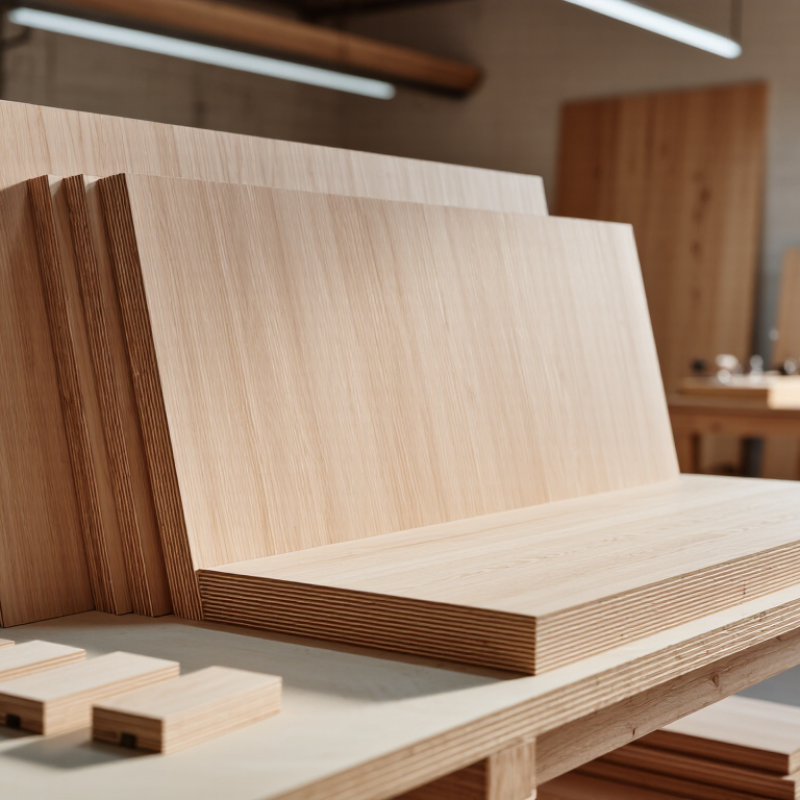
Premium plywood is engineered for consistent strength, stability, and appearance. It usually contains carefully selected veneers with balanced grain directions. Its layers are bonded under controlled pressure and heat.
The core should be dense and uniform, with few gaps, overlaps, or loose patches. Check the cut edge closely. Small voids can weaken screws and allow moisture to travel inward. A premium panel also has smooth, evenly matched face veneers, without deep repairs, open knots, or sudden color changes. However, “premium” is not a universal legal grade. Suppliers may use the term differently, so a label alone is not enough.
When choosing a panel, confirm its thickness tolerance, bonding class, and intended environment. Interior plywood may fail outdoors, even when its surface looks excellent. Ask for test data or a technical sheet covering strength, formaldehyde emissions, and moisture resistance. Hold the sheet at eye level to spot bowing. Tap the surface lightly; hollow sounds deserve inspection. I also examine freshly cut samples, because a polished face can hide a weak core. This step is easy to skip.
For cabinetry, stable faces and clean edges matter most. For structural work, bending strength and reliable bonding matter more. A heavier sheet is not automatically better. The best choice depends on performance, not appearance alone.
| Selection Dimension | Premium Plywood Characteristics | Practical Benchmark or Data | Why It Matters |
|---|---|---|---|
| Core Definition | Manufactured wood panel made from multiple thin veneers bonded with alternating grain directions and controlled quality standards. | Typically uses more consistent veneers, stronger bonding, tighter thickness tolerances, and fewer visible defects than utility-grade plywood. | Provides more predictable strength, appearance, machining, and service life. |
| Veneer Quality | Uniform veneer layers with limited knots, splits, overlaps, core gaps, and patches. | Inspect panel edges and cut samples for continuous layers and minimal internal voids. | Fewer defects improve load transfer, screw holding, cutting accuracy, and surface finish. |
| Surface Grade | Smooth, well-sanded faces with consistent color and minimal repairs or open defects. | Common face-grade systems range from A or AA for clean faces to lower grades with more knots and repairs; grading rules vary by standard. | A cleaner face reduces preparation work for furniture, cabinetry, wall panels, and visible architectural applications. |
| Thickness Tolerance | Thickness remains consistent across the sheet and is suitable for accurate joinery. | A 12 mm panel should be checked against the applicable product standard; actual tolerance depends on construction, sanding, and certification. | Consistent thickness improves flush joints, drawer fit, edge alignment, and installation quality. |
| Dimensional Stability | Balanced cross-lamination and controlled moisture content help limit warping, twisting, and panel movement. | Store panels flat, supported, and protected from direct moisture before installation; no plywood is completely movement-free. | Stable panels maintain alignment and reduce cracking, bowing, and rework. |
| Bonding Performance | Adhesive bonds are continuous and appropriate for the intended exposure class. | Interior, moisture-resistant, and exterior panels require different adhesive and durability classifications; verify the product documentation. | Correct bonding prevents delamination during changes in humidity or exposure to water. |
| Moisture Resistance | Selected according to whether the panel will remain dry, experience intermittent humidity, or face exterior conditions. | “Moisture-resistant” does not automatically mean waterproof or suitable for permanent outdoor exposure. | Matching the panel to the environment prevents premature swelling, edge damage, and bond failure. |
| Strength and Stiffness | Designed with appropriate veneer species, thickness, layer arrangement, and structural grading. | Required performance depends on span, load direction, support spacing, panel thickness, and structural design; do not select by appearance alone. | Adequate stiffness limits sagging, while sufficient strength supports safe load performance. |
| Machinability | Cuts, drills, routes, and sands cleanly with limited tear-out when suitable tools and feed rates are used. | Check edge integrity after machining and use sharp, appropriate blades or router bits. | Better machinability improves production speed and reduces material waste. |
| Formaldehyde and Emissions | Uses an adhesive system and emission classification appropriate for the intended indoor or outdoor application. | Request current third-party test reports or compliance documentation; emission limits differ by jurisdiction and standard. | Lower-emission products support indoor air-quality requirements and project compliance. |
| Certification and Traceability | Supported by clear technical data, production standards, batch information, and, where required, responsible-sourcing certification. | Verify the applicable standard, panel grade, thickness, exposure class, and certificate validity rather than relying only on marketing terms. | Documentation makes quality claims measurable and easier to verify. |
| Best-Fit Applications | Furniture, cabinetry, high-quality joinery, visible wall panels, precision components, and demanding interior or structural work. | Choose the specific panel type and grade according to appearance, loading, moisture exposure, fire requirements, and local building codes. | The best plywood is the one whose verified performance matches the project conditions and budget. |
Note: Plywood grades, tolerances, structural values, and emission classifications vary by wood species, manufacturing standard, and market. Always review the current technical datasheet and applicable local requirements before purchase or installation.

Scan QR code to download the app
 Skip to main content