Choosing the right Hdpe Welding Equipment in 2026 is not simply a matter of buying the largest machine or the newest model. The best choice depends on pipe diameter, material, job-site conditions, and how often the equipment will be used. A compact butt fusion machine may suit a small utility crew, while larger projects can demand stronger clamps, wider working capacity, and dependable hydraulic control. Details matter.
Look closely at temperature control, pressure consistency, heater-plate condition, and the availability of replacement parts. Ask how the machine performs with the pipe sizes you actually handle, not only the sizes listed in a brochure. On a muddy site, transport weight and stable positioning can matter as much as rated output. Even a capable machine can produce unreliable joints when setup, surface preparation, or operator technique is poor. Equipment cannot fix every mistake.
This guide outlines practical factors for comparing manual, hydraulic, and automated systems, along with questions to ask suppliers before purchase. It also considers training, maintenance, portability, and total ownership cost—not just the initial price. Specifications provide a useful starting point, but they do not replace documented testing or hands-on evaluation. Some buying decisions still involve trade-offs. A lower-cost model may be adequate for occasional work, yet costly downtime can quickly change the calculation. Use project requirements and verifiable product information to judge which option fits your work in 2026.
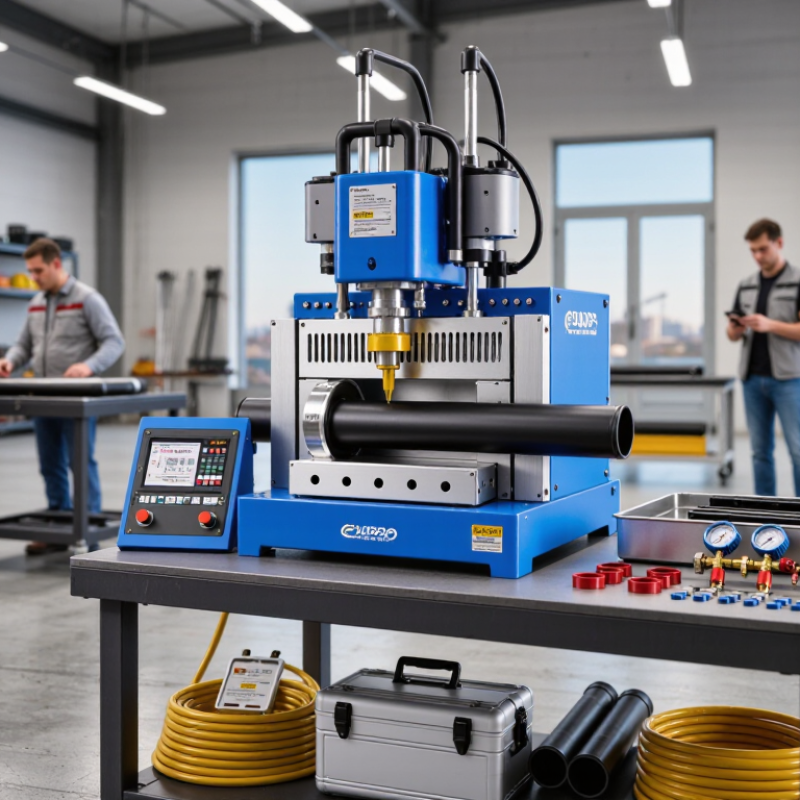
Before choosing HDPE welding equipment in 2026, define the pipe diameter, SDR, and resin type. Diameter determines clamp capacity, hydraulic force, and heater-plate size. A 63 mm service pipe needs very different tooling from a 1,200 mm transmission main. SDR is the outside diameter divided by wall thickness. Lower SDR means thicker walls and higher joining forces.
Check the resin identification carefully. PE100 and PE4710 are common pressure-pipe materials, but their fusion procedures and qualification records may differ. Confirm melt-flow behavior, density, and manufacturer processing limits before selecting temperature controls. ASTM F2620 specifies heater temperatures around 204–232°C for butt fusion. That range is useful, but not a permission slip for every resin. Real jobsite moisture, wind, and surface contamination can change results.
PPI’s PE Handbook notes that fusion quality depends on controlled bead formation, pressure, alignment, and cooling time. Choose equipment that records these variables. For large diameters, hydraulic systems usually provide steadier force than manual clamps. For thin-wall, high-SDR pipe, excessive pressure can squeeze out molten material. That mistake is easy to miss. I have seen operators trust the machine display while ignoring uneven pipe ends. A verified facing tool, calibrated gauges, and resin-specific procedure matter more than impressive frame size. Reports and standards guide the decision, but field records should challenge it.
Choosing HDPE welding equipment starts with the required procedure, not the machine’s advertised size. ASTM F2620 and ISO 21307 both guide butt-fusion work, but their procedure details and project requirements must be checked carefully. A suitable machine should control heating time, joining pressure, alignment, and cooling conditions with repeatable accuracy. It should also cover the pipe diameter, wall thickness, and resin type used on site.
In field inspections, I have seen machines fit the pipe but fail to provide stable pressure during fusion. That creates a weak bead profile and unreliable joints. Hydraulic control, accurate temperature sensing, and a rigid frame matter more than appearance. Data recording is valuable too. It helps supervisors compare actual cycles with the approved procedure. Still, records cannot replace trained operators or proper surface preparation. I have learned this the hard way: a clean-looking joint may hide poor facing or movement during cooling.
Tips: Confirm the procedure range before purchase. Check pressure control under load. Verify heater calibration. Keep the facing tool sharp. Photograph each completed bead when traceability matters. Do not ignore operator training.
A practical selection should include trial welds using the project’s actual pipe. Inspect bead symmetry, alignment, and cooling stability. Ask whether the equipment supports the specified ASTM F2620 or ISO 21307 method, rather than assuming both are interchangeable. That assumption is tempting, but it needs review. Safety guards, lifting access, maintenance support, and spare parts also influence long-term reliability. A dependable machine is not merely powerful. It makes the correct procedure easier to repeat.
When comparing HDPE welding equipment, examine how accurately its heater plate maintains temperature. ASTM F2620 gives a recommended surface-temperature range of 204–232°C for butt fusion. A controller reading alone is not enough. The plate may show 218°C while one edge runs cooler, affecting heat transfer across the pipe ends.
Check the actual plate surface with a suitable, calibrated temperature instrument before welding. Measure several locations, including near the center and outer edges. Look for stable readings, clear temperature controls, and a way to verify calibration. Small differences matter. So does repeatability.
Field conditions can complicate the check. Wind, cold air, and frequent plate handling may cause temperature changes between measurements. Keep the plate clean and allow it to recover before joining pipe. Follow the applicable procedure and equipment instructions; the ASTM range is not a substitute for job-specific requirements. I have seen crews trust the display too quickly. It is an easy mistake, and worth questioning. A brief temperature log can help identify drift and support consistent welds.
Choosing HDPE welding equipment starts with the pipe range, not the machine’s headline capacity. List the smallest and largest outside diameters, wall thicknesses, and materials used on site. Then check that the clamps hold each pipe without crushing or slipping. A short offcut can reveal movement that a catalog table cannot. Small detail. For larger diameters, confirm the frame can maintain alignment when long pipe sections sag. Misalignment can create uneven bead formation, even when the heater reaches its set temperature.
The Plastics Pipe Institute’s Handbook of PE Pipe discusses pipe dimensions and butt-fusion practices, while ISO 21307:2017 sets out three butt-fusion procedures. That matters because equipment must support the selected procedure’s pressure and timing requirements; settings should not be treated as interchangeable. Check whether the machine measures carriage force or pressure consistently, and whether its data logger records temperature, pressure, time, operator, and joint identification. Logs help crews review a questionable weld later. They do not prove a joint is sound. Keep the logger’s clock synchronized, and verify sensors against calibration records. I would also test the setup with the actual pipe sizes before purchase. It is easy to overlook awkward site conditions: muddy supports, cold mornings, or limited room for the facing tool. A tidy test bay can be misleading.
| Equipment Configuration | Typical Pipe Range* | Clamping and Force Control | Alignment and Facing | Data Logging | Best Fit |
|---|---|---|---|---|---|
| Compact manual butt-fusion set | Approximately 20–110 mm | Manual clamping and operator-applied force; confirm that the frame holds the pipe securely without slipping. | Basic guides and a manual facer; careful setup is needed to keep pipe ends square and aligned. | Usually manual recordkeeping unless a compatible recorder is added. | Small service connections, repairs, and low-volume work where the pipe range and job requirements are limited. |
| Small hydraulic butt-fusion machine | Approximately 63–200 mm | Hydraulic carriage reduces manual effort; check pressure control and whether the machine suits the pipe material and wall thickness. | Rigid clamps and a powered or manual facer support repeatable end preparation; verify alignment after clamping. | May be available as an optional electronic recorder; check which process values and reports are captured. | Regular small-diameter distribution and utility work requiring more consistent force than a manual setup. |
| Mid-range hydraulic butt-fusion machine | Approximately 90–315 mm | Hydraulic control helps apply and maintain fusion force; confirm the system can accommodate the required pipe dimensions. | Multiple clamp positions and a suitable facer help manage alignment across a broader range of pipe sizes. | Often offered with optional or integrated logging; confirm traceability fields, export format, and storage capacity. | General pipeline construction and maintenance involving a range of common medium-diameter pipes. |
| Large hydraulic butt-fusion machine | Approximately 200–630 mm or larger, depending on model | Hydraulic clamping and carriage systems are designed for larger pipe sections; check available force, frame capacity, and site power requirements. | Heavy-duty clamps and a robust facer are important for controlling alignment and preparing larger pipe ends. | Electronic logging is commonly specified for projects requiring documented joint records; verify that records can be matched to joint identifiers. | Large-diameter water, gas, and industrial pipeline projects with defined documentation and quality-control requirements. |
| Automatic or computer-controlled fusion system | Varies by system; confirm the stated minimum and maximum pipe sizes | Automated control can help regulate process parameters, but correct setup, calibration, and operator oversight remain necessary. | May include guided setup or alignment checks; inspect how the system handles ovality and site-specific pipe conditions. | May record process parameters and generate electronic job reports; confirm data fields, retention, and export options before purchase. | Projects with repeatable production needs, formal traceability, or specified digital quality records. |
How to Choose the Best HDPE Welding Equipment in 2026?
Verify Calibration, Site Power, and Operator Training Before Purchase
Before comparing machines, check the paperwork behind their measurements. A display reading is not proof of accuracy. Ask for current calibration records for temperature, pressure, and timing controls, and confirm the calibration method suits the equipment. ASTM F2620 describes procedures for heat-fusion joining of polyethylene pipe; use its requirements alongside the project specification, not as a substitute for them. The U.S. Environmental Protection Agency’s 2023 Drinking Water Infrastructure Needs Survey estimated $625 billion in investment needs over 20 years. That scale makes consistent field work consequential. Still, a certificate can look tidy while a sensor drifts. Verify it.
Site power deserves a practical test, not a glance at the generator label. Compare the machine’s voltage, phase, and starting-current requirements with the supply available at the work area. Long extension leads, shared generators, and cold mornings can change performance. Record a sample weld cycle under realistic conditions, then check alarms and data logging. Small details matter.
Ask who will operate the equipment and how competence is verified. The Plastics Pipe Institute’s Handbook of Polyethylene Pipe provides technical guidance on fusion practices, but trained operators must still follow the applicable procedure and record joint conditions. Request evidence of recent training, supervised practice, and familiarity with the machine controls. A rushed crew may skip checks. That happens. Include refresher training, clear work instructions, and time for practice in the purchase plan.
Verify calibration, site power, and operator training before purchase.
Common nominal AC supply levels vary by region and electrical configuration. The 400 V value typically refers to three-phase line-to-line supply; 120 V and 230 V are common single-phase supply levels. These are reference values, not equipment requirements. Before buying, confirm the machine’s nameplate voltage, phase, frequency, and power draw match the installation site. Also request current calibration records and verify that intended operators have appropriate training.
Scan QR code to download the app
LSP Products was founded by plumbers over 50 years ago with a focus on unparalleled innovation, superior product quality, and best-in-class service to the plumbing industry. Our primary focus is the new construction market where we develop products that make installations easy and provide significant cost savings to the plumbing/mechanical contractor. LSP has a manufacturing facility located in Monterrey, Mexico and a distribution center in Dallas, Texas. We are proud to offer many products designed and made in North America… About LSP
Submit the form below to receive the document via email.