How to Choose Plaster Boards with Insulation?
Choosing plaster boards with insulation is not simply a thickness decision. It affects heat flow, acoustic comfort, moisture control, fire performance, and usable room space. The International Energy Agency reports that buildings account for about 30% of global final energy consumption. Walls remain a practical area for improvement, especially during renovation.
The answer is not always the thickest board.
A useful starting point is the wall’s existing condition. A cold external wall, a damp basement, and a dry internal partition require different solutions. Check the board’s thermal conductivity, declared U-value, fire classification, acoustic rating, and moisture resistance. Also examine joints, fixings, electrical penetrations, and perimeter gaps. A well-rated board can perform poorly when installation details are careless.
Building-science expert Joseph Lstiburek has stressed, “The building enclosure is a system.” That principle matters when selecting plaster boards with insulation. The board must work with masonry, membranes, ventilation, and heating patterns. Otherwise, condensation may appear behind the lining, where it stays unseen.
The European Commission’s Energy Performance of Buildings guidance supports a whole-building approach, rather than judging one material alone. Meanwhile, the U.S. Department of Energy identifies insulation and air sealing as connected measures for reducing energy losses. These reports offer direction, not a perfect shopping list.
Measure the wall first. Check the climate, moisture exposure, and available depth. Compare manufacturer test data, not just marketing claims. Some choices will involve compromise. A thinner board saves space, but may deliver less thermal resistance. A higher-performing system may cost more and complicate detailing. Good selection is therefore careful, slightly cautious, and open to revision.
Understanding Plaster Boards with Insulation
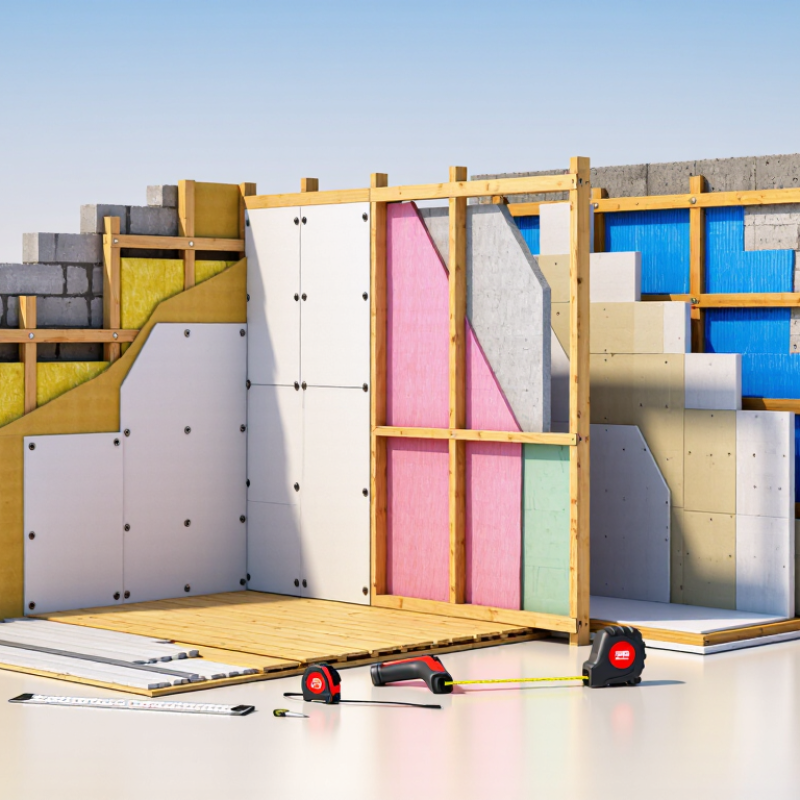
Insulated plasterboard combines a gypsum facing with a bonded insulation layer, often PIR or phenolic foam. The board creates a smoother interior finish while reducing heat flow through walls. Its performance depends on the insulation’s thickness and thermal conductivity, not just the board’s appearance. Check the declared U-value or R-value, and compare products using the same measurement method.
ENERGY STAR estimates that comprehensive air sealing and insulation upgrades can cut heating and cooling costs by an average of 15%. That figure applies to combined home improvements, not insulated plasterboard alone. Still, it shows why wall performance matters. A cold external wall can feel uncomfortable even when the room thermostat reads 20°C. Insulated boards may help, but gaps at sockets, edges, and window reveals can weaken the result.
Measure the wall depth before choosing a board. A thicker layer can improve thermal resistance, yet it also reduces room space and may complicate skirting or door trims. Check the existing wall for dampness first. Covering a persistently wet wall can conceal damage. Fire performance, sound reduction, and moisture control also depend on the full wall build-up, not one board in isolation. Sometimes the best choice is less obvious. A site assessment can reveal hidden issues.
Identifying Your Building’s Insulation Requirements
Choosing insulated plasterboard starts with the building, not the board.
Identify whether the wall is solid masonry, a cavity wall, or a timber frame. Check drawings if available, then inspect exposed edges, window reveals, and service openings. These details can reveal existing insulation and the space available. Start with the room. A cold north-facing bedroom may need different attention from a warm internal wall.
Next, consider climate, room use, and the wall’s current performance. A qualified energy assessor can measure heat loss and recommend a target U-value; local building requirements may also set minimum standards. Note drafts, cold surface patches, and condensation, but do not assume insulation alone will solve them.
Damp may point to leaks or poor ventilation. That matters.
The required board thickness depends on the insulation material, wall condition, and available space around sockets, skirting, and window frames. Thicker boards can reduce room dimensions and complicate fittings. One easy-to-miss issue is moisture: adding an internal layer can make a cold wall more vulnerable to condensation if the build-up is poorly designed.
I would check ventilation and moisture risks before choosing a product. Exact needs can be unclear until the wall is inspected, so treat online estimates as a starting point, not a final specification.
Comparing Insulation Materials and Board Types
Choosing plasterboard with insulation means matching the board to the room and the insulation to its main needs. Mineral wool helps reduce heat loss and can also soften sound between rooms. Rigid foam boards are thinner for similar thermal performance, which can help where space is tight. But they may offer less sound absorption. Check the product’s stated thermal performance and suitability for the wall or ceiling, rather than judging by thickness alone.
Board types matter too. Standard plasterboard suits many dry rooms, while moisture-resistant boards are designed for humid areas such as bathrooms. They are not waterproof, so exposed shower zones need an appropriate waterproofing system. Insulated plasterboard combines a facing board with a rigid insulation layer. It can speed up work, though cutting and fitting around sockets or uneven walls takes care. Small gaps can reduce performance. I have found that the neatest-looking board is not always the easiest to fit.
Tips: Measure the wall carefully and compare the full build-up, including framing and finishes. Check fire and moisture requirements for the room. Follow the manufacturer’s installation guidance, and ask a qualified installer if the wall has damp, wiring, or unusual construction. A little extra planning helps.
How to Choose Plaster Boards with Insulation?
Typical thermal conductivity of common insulation cores used with insulated plasterboard
Lower thermal conductivity (λ) means better insulating performance for the same thickness. Phenolic foam and PIR typically provide strong insulation in a thinner layer, while EPS, XPS, and mineral wool are also common choices. Values shown are representative; check the declared value for the specific product. Choose the plasterboard facing for the room’s requirements, such as moisture resistance or fire performance.
Checking Board Performance, Safety, and Compatibility
How to Choose Plaster Boards with Insulation?
Checking Board Performance, Safety, and Compatibility
A plasterboard’s finish tells you little about its insulation value. Check the declared thermal resistance, thickness, and test standard on the product data sheet. ENERGY STAR reports that air sealing and adding insulation can save typical U.S. households about 15% on heating and cooling costs. That figure is a whole-home estimate, not a promise for one insulated board. Looks can mislead. Also check whether the board’s fire performance applies to the complete wall or ceiling assembly; a board alone does not establish the rating. ASTM E119 evaluates fire resistance of building assemblies, while ASTM C1396 covers gypsum board specifications.
Compatibility matters at least as much as the stated R-value. Match the board to the framing, cavity depth, and existing vapor-control layers. In a cold room, a poorly placed vapor retarder may trap moisture behind the board. Check local building requirements and the manufacturer’s installation guidance before closing the wall. Pay attention to cut edges, gaps around sockets, and compressed insulation; small flaws can weaken real-world performance. I would not rely on a single number here. The right assembly depends on climate and construction details.
Tips: Compare product data sheets, confirm fire-test assembly details, and inspect the wall cavity for moisture risks before installation. If the layers are unclear, pause and get qualified advice.
Selecting the Right Plaster Board for Your Project
Selecting the right plasterboard for an insulated wall starts with the room, not the product label. The International Energy Agency’s 2023 Global Status Report for Buildings and Construction states that buildings used 30% of global final energy in 2022. That figure gives insulation real importance, but a board’s stated thermal value does not tell the whole story. Check the complete wall build-up, including the existing masonry, framing, and any air gaps. A thicker insulated board can improve thermal performance, yet it also reduces floor space and may complicate window reveals or socket placement.
Match the board to the conditions. For a dry, even internal wall, an insulated plasterboard may offer a quicker installation than fitting separate insulation and board. Uneven or damp walls need closer assessment; covering moisture can hide a problem rather than solve it. Consider fire and acoustic requirements, fixing method, and whether the assembly needs a vapour-control layer. Ask for the declared thermal resistance and installation guidance, then compare them with the proposed wall system. I would not choose on thickness alone. Site details can change the right answer.
Tips: Measure reveals and finished floor space before ordering. Check the wall for moisture. Confirm that fixings suit the substrate, and have a qualified building professional review condensation risks where the wall build-up is uncertain.



 Skip to main content