Video door phones now sit at the intersection of home security, access control, and connected devices. Grand View Research’s Smart Home Market Size, Share & Trends Analysis Report estimated the global smart home market at USD 127.8 billion in 2024, with strong growth projected through 2030. That figure covers many product categories, not video door phones alone. Still, it signals why buyers should scrutinize suppliers, not just attractive product photos. A clear screen is useful. A stable connection, readable night image, and dependable indoor monitor matter more.
Searches for “Skynex Manufacturer Produce Video Door Phone” should lead to practical checks, not assumptions. Ask for current product specifications, wiring diagrams, sample footage, and documented quality-control procedures. Request evidence of relevant certifications and test reports, then confirm that the documents match the exact model being offered. A factory’s ability to explain firmware updates, spare parts, and warranty handling can reveal more than a polished catalog. Small details matter. Check how the unit performs in low light, how quickly calls connect, and whether outdoor buttons feel solid. One caveat: a successful sample does not guarantee consistent production. It is worth asking how batches are inspected and how faults are recorded. This guide outlines a careful way to compare manufacturers, assess technical claims, and choose a partner with evidence behind its promises.
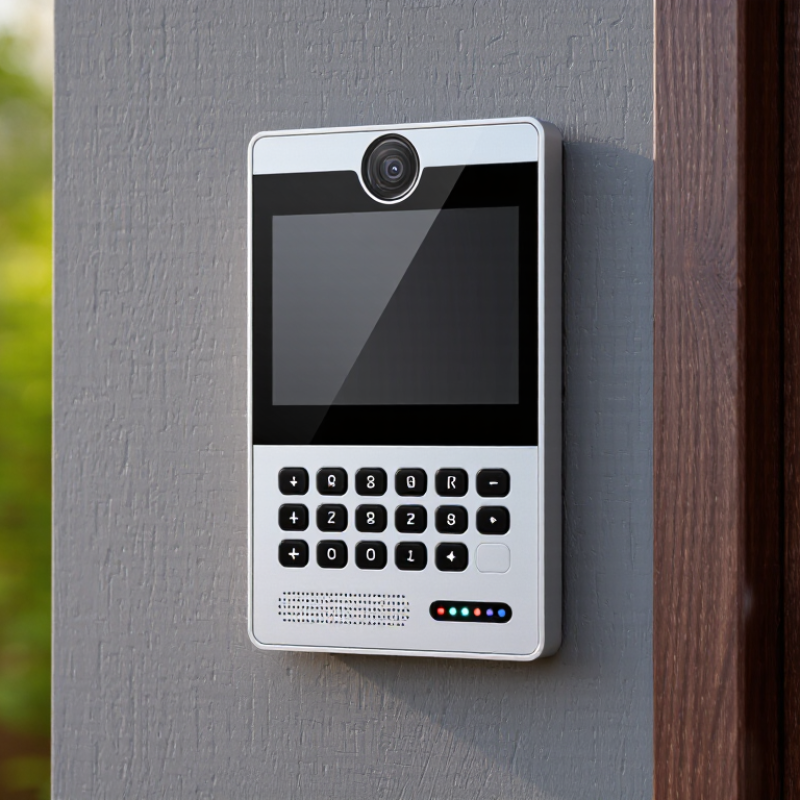
A clear requirement begins with the building, not a product brochure. Start with the building. Count the entrances, apartments, and indoor stations, then note where existing cables run. A small block with one lobby needs different equipment from a multi-entry site with several floors. Record typical visitor volume and whether residents need to answer calls from a mobile device.
Define the essentials: screen size, camera viewing angle, night visibility, audio clarity, and door-release control. Check the camera view at the actual entrance; a wide lens can still miss a visitor standing close to the wall. Ask which wiring types and network connections the system supports. Confirm whether it works with existing locks or requires extra components. These details affect installation time and cost.
Think about daily use, too. Can an older resident read the screen easily? Are buttons distinct, and is the menu available in the users’ preferred languages? Request written information on warranty coverage, replacement parts, technical support hours, and firmware updates. Ask for a sample unit or a live demonstration before approving a large order. It is easy to over-specify features. Still, leaving out cable compatibility or support details can create expensive surprises later. Decide which features are essential and which can wait.
Verify the manufacturer’s registered company name, factory address, and export records before evaluating a sample. Names should match across business documents, invoices, and the production site. Ask for a live video walkthrough of the assembly line, testing area, and finished-goods storage.
A showroom can look convincing. It proves little.
Request recent production records and quality procedures, then compare them with the unit you received. Check model labels, wiring, firmware version, and test results for consistency.
Production capability also means repeatable inspection, not just a large facility. Ask how incoming components are checked, how defects are logged, and who approves corrective actions. For a video door phone, request evidence of audio, camera, night-vision, and network-function tests.
The 2024 Data Breach Investigations Report found that 68% of breaches involved a human element, highlighting why staff training and controlled access matter.
The 2024 Cost of a Data Breach Report placed the global average breach cost at US$4.88 million.
Ask how production systems and device credentials are protected. I would not treat one clean audit as proof; it is only a snapshot. Cross-check answers with dated records, and note any gaps that the manufacturer cannot explain clearly.
A reliable video door phone manufacturer should provide more than polished product photos. Ask for sample units and inspect the screen in bright daylight, speaker clarity, button response, and night-image detail. Check whether the casing feels solid and whether connectors stay secure after repeated installation. Small details matter. A sample may perform well on a desk but behave differently beside a metal gate or under a covered porch. Test it in conditions close to the intended site.
Review certificates and test reports, not just icons on a brochure. Confirm the documents match the exact model and hardware version you plan to buy. Check who issued them, when they expire, and which markets they cover. Ask about inspection records, warranty terms, spare-part availability, and the process for reporting defects. A careful supplier should answer directly and share traceable documentation. If a document is unclear, pause and verify it independently.
Compatibility can be easy to overlook. Confirm wiring type, power requirements, door-lock output, network options, and monitor-to-camera support before placing an order. Request wiring diagrams and a written list of supported devices. Then test one complete system before scaling up. I have seen planning focus too heavily on screen size; that is not enough. Existing cables, router placement, and lock specifications can still cause delays. Be candid about what remains untested.
A reliable video door phone manufacturer should discuss customization in practical terms. Ask whether the display size, camera angle, cable layout, and mounting plate can suit your building. For example, a narrow entrance may need a wider viewing angle, while an older property may require compatibility with existing wiring. Request a sample or clear drawings before approving a production run. Small differences matter. A promised feature is less useful if installers cannot fit it cleanly.
Check the warranty in writing, not just in a sales conversation. Look for its length and coverage of parts, labor, shipping, and firmware-related faults. Ask what happens if several units from one batch develop the same problem. A longer warranty can sound reassuring, but vague exclusions weaken it. Read the details carefully.
After-sales support should be tested before you place a large order. Ask how to reach technical staff, what response time they aim for, and whether replacement parts and installation guides remain available. Share a realistic issue, such as a screen that loses its image after a wiring change, and notice how clearly the team responds. I have found that a quick reply is not always a useful one. Clear troubleshooting steps and honest limits are better signs of dependable support.
When comparing quotes, ask every manufacturer to price the same configuration: monitor size, camera resolution, wiring method, power supply, and warranty period. A low total may exclude mounting brackets, sample charges, or protective packaging. Request itemized costs and delivery terms. That matters.
Check reliability with evidence, not promises. Ask for a recent product sample and test call clarity, night images, button response, and connection stability. Request production photos, quality-control records, and references from buyers with similar order sizes. Confirm who handles repairs and how quickly replacement parts can be shipped. Not proof.
Compare the answers alongside the prices. A detailed quote that explains component specifications and lead times is easier to assess than a one-line offer. Check that the company’s address, business documents, and payment account name are consistent. If a seller avoids direct questions or changes specifications between emails, pause and ask for clarification. Even a tidy comparison sheet can create false confidence; sample testing may reveal issues that paperwork misses. Allow time for that step before placing a larger order.
| Comparison Item | Offer A | Offer B | Offer C | What to Compare |
|---|---|---|---|---|
| Quoted unit price and currency | Not provided — enter quoted value | Not provided — enter quoted value | Not provided — enter quoted value | Compare the same model, configuration, order quantity, and included accessories. |
| Minimum order quantity | Not provided — enter quoted quantity | Not provided — enter quoted quantity | Not provided — enter quoted quantity | Check whether the minimum applies per model, color, or order. |
| Sample cost and availability | Not provided — confirm in writing | Not provided — confirm in writing | Not provided — confirm in writing | Confirm sample price, shipping cost, dispatch time, and whether any sample charge is credited against a later order. |
| Production lead time | Not provided — enter quoted time | Not provided — enter quoted time | Not provided — enter quoted time | Ask when the lead time starts and whether it covers production only or also inspection and packing. |
| Warranty and after-sales support | Not provided — record terms | Not provided — record terms | Not provided — record terms | Compare warranty duration, exclusions, remedy process, spare-parts availability, and response arrangements. |
| Shipping terms and charges | Not provided — record terms | Not provided — record terms | Not provided — record terms | Confirm the named delivery location, applicable Incoterms® rule and version, freight, insurance, and who handles import clearance. |
| Payment terms and quote validity | Not provided — record terms | Not provided — record terms | Not provided — record terms | Check deposit and balance conditions, payment milestones, accepted currency, and the quotation’s expiry date. |
| Customization and included accessories | Not provided — list inclusions | Not provided — list inclusions | Not provided — list inclusions | Compare the exact bill of materials, required functions, language or interface options, packaging, and any customization charges. |
| Verification Area | Evidence to Request | How to Check | Current Status |
|---|---|---|---|
| Business identity and manufacturing capability | Registered business details, manufacturing address, product range, and a live factory or production walkthrough. | Check that the contracting entity, payment beneficiary, and disclosed production site are consistent. Clarify whether production is in-house or outsourced. | Not provided — verify before ordering |
| Quality management system | Current quality-management certificate, including certificate number, scope, site, and issuing certification body. | Verify the certificate with the issuing body or its official directory. A quality-system certificate alone does not prove that a specific product meets its requirements. | Not provided — verify before ordering |
| Product safety and market compliance | Test reports and declarations applicable to the product configuration and intended destination market. | Check the model, tested configuration, report date, laboratory details, and applicable market requirements. IEC 62368-1 is a safety standard for audio/video and information and communication technology equipment; applicability should be confirmed for the product and market. | Not provided — verify before ordering |
| Restricted substances | Relevant material declarations or test documentation for the supplied configuration. | For markets where it applies, check the product’s conformity with applicable RoHS requirements. Confirm the covered model and destination market rather than relying on a generic statement. | Not provided — verify before ordering |
| Ingress-protection claims | Test report supporting any stated IP rating for the relevant enclosure and configuration. | If an IP rating is claimed, check the test evidence against the applicable IEC 60529 classification and confirm that it covers the supplied product. | Not provided — verify before ordering |
| Product performance and compatibility | Datasheet, wiring or network details, operating conditions, interface information, and a working sample. | Test the sample against the project’s required functions and installation conditions. Confirm compatibility with the intended system before approving a bulk order. | Not provided — verify before ordering |
| Production consistency | Written inspection plan, acceptance criteria, and pre-shipment inspection options. | Agree on measurable checks before production and document how defects, rework, and rejected units will be handled. | Not provided — verify before ordering |
| Traceability and support | Product labeling or batch-tracking approach, spare-parts policy, and a documented support contact process. | Ask how issues are linked to production batches and obtain written support and replacement terms before placing the order. | Not provided — verify before ordering |
Scan QR code to download the app
LSP Products was founded by plumbers over 50 years ago with a focus on unparalleled innovation, superior product quality, and best-in-class service to the plumbing industry. Our primary focus is the new construction market where we develop products that make installations easy and provide significant cost savings to the plumbing/mechanical contractor. LSP has a manufacturing facility located in Monterrey, Mexico and a distribution center in Dallas, Texas. We are proud to offer many products designed and made in North America… About LSP
Submit the form below to receive the document via email.