Choosing the right Traction Lift is not simply a matter of comparing speed, price, and cabin size. It involves understanding building use, passenger flow, shaft conditions, energy goals, and long-term maintenance needs. A lift that performs well in a modern office may feel oversized or inefficient in a small residential building. Details matter.
Experienced lift consultants usually begin with real operating conditions. How many people travel during the morning rush? How often will the lift carry heavy equipment? Is the machine room limited, or is a machine-room-less design more practical? These questions help connect technical specifications with daily use. Reliable manufacturers should provide clear documentation, maintenance guidance, warranty terms, and evidence of compliance with applicable local safety requirements.
Still, choosing equipment is rarely perfect. Initial estimates can miss future traffic growth, renovation costs, or uncomfortable noise levels. I have seen attractive specifications become less impressive after installation planning revealed restricted access or difficult servicing. That is why independent advice and site measurements remain valuable. Small oversights can become expensive later.
This guide presents seven practical tips for evaluating a Traction Lift with greater confidence. It considers drive systems, capacity, speed, efficiency, safety features, installation conditions, and after-sales support. The goal is not to promote one universal solution. It is to help building owners, architects, and facility managers ask better questions before signing a contract. A careful decision begins with evidence, realistic expectations, and a willingness to reconsider the first choice.
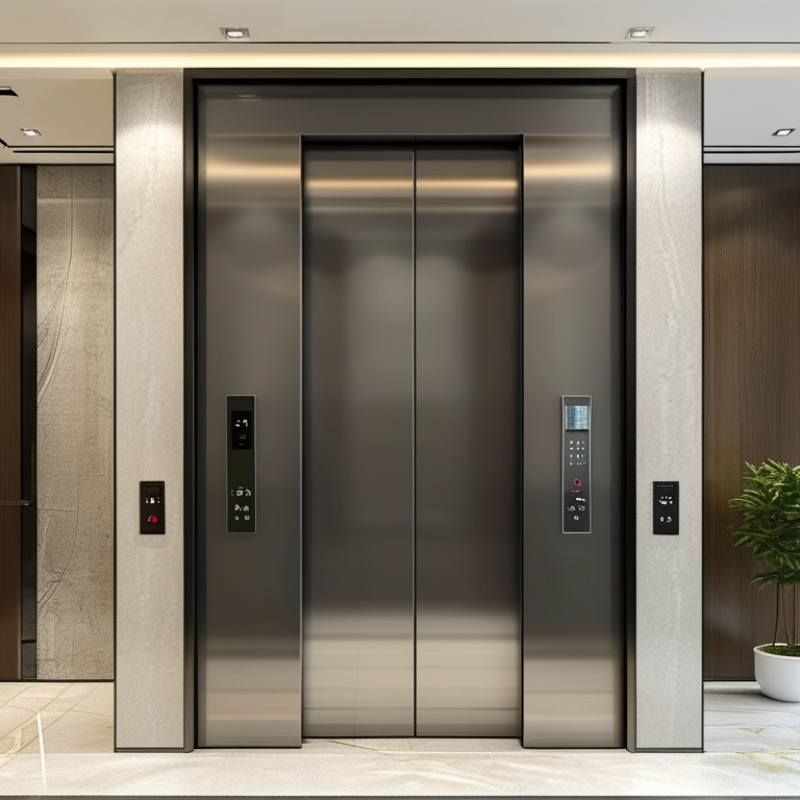
A traction lift moves its car through ropes, a sheave, and a counterweight. The motor turns the sheave, while friction pulls the ropes upward or downward. A brake holds the car when travel stops. This simple movement depends on careful balance, accurate control, and regular inspection. Small rope wear can affect ride quality.
There are two common traction types: geared and gearless. Geared systems use a gearbox and suit many low- to mid-rise buildings. Gearless systems connect the motor directly to the sheave, supporting higher speeds and taller travel. Machine-room-less designs place key equipment near the shaft, saving space but sometimes complicating maintenance access. Ask how technicians will reach each component.
Choosing correctly means checking seven practical points: building height, passenger capacity, traffic patterns, travel speed, available space, energy use, and maintenance support. A busy office may need faster dispatch and stronger door cycles. A residential building may value quiet starts and smooth stops more. Counterweight sizing also matters, because poor balance increases motor effort. Do not judge only by rated speed. Actual comfort appears when the lift starts, levels, and opens its doors.
I have seen specifications look impressive on paper yet feel unsuitable during peak traffic. That is an important weakness in many early assessments. Review site measurements, expected loads, stopping frequency, and emergency access with qualified professionals. Test conditions matter. A lift that performs well empty may respond differently with a full car and frequent stops.
7 Tips for Choosing the Right Traction Lift
Assessing Building Requirements, Capacity, and Travel Needs
Start with the building itself. Count floors, stops, occupants, peak arrival times, and available shaft space. A lift that fits the drawings may still fail the morning rush. CIBSE Guide D evaluates five-minute handling capacity, waiting time, and average journey time. These measures are more useful than speed alone. Test passenger demand for offices, apartments, hospitals, and mixed-use buildings separately. Their traffic patterns differ sharply.
Check seven practical points: building height, travel distance, rated capacity, car size, speed, duty cycle, and evacuation planning. For an eight-stop office, compare a 1,600-kilogram car with projected lunchtime demand. Do not select capacity from floor area alone. Loading changes during deliveries, events, and shift changes. It is easy to underestimate this.
Review power quality, machine-room conditions, maintenance access, and standby operation. The U.S. Department of Energy reports that elevators and escalators can use 2–10% of electricity in commercial buildings. Regenerative drives may reduce energy waste, but savings depend on traffic and control settings. ASME A17.1/CSA B44 provides widely used safety requirements for lift design and testing. Ask for documented calculations, inspection records, and realistic performance simulations. My own preference is to leave modest reserve capacity. Perfect forecasts are rare.
| Tip | Assessment Area | Key Questions | Typical Planning Guidance | Selection Considerations |
|---|---|---|---|---|
| 1 | Building Layout and Available Space | Is there a suitable machine-room location, overhead clearance, pit, and shaft area? | Confirm shaft dimensions, pit depth, overhead height, entrance width, and structural load limits before selecting equipment. | Machine-room-less traction systems can reduce dedicated room requirements, but they still need compliant access, maintenance clearance, and adequate structural support. |
| 2 | Rated Capacity | How many passengers, wheelchairs, carts, or goods must the lift carry? | Common passenger-lift capacities range from approximately 450 kg to 2,000 kg; higher capacities may be required for hospitals, freight, or public buildings. | Base the rating on the heaviest expected load, not only the average passenger count. Allow space for mobility devices, service carts, and peak-use conditions. |
| 3 | Travel Distance and Number of Floors | How far must the car travel, and how many stops will it serve? | Traction lifts are generally well suited to multi-floor buildings and longer travel distances. Exact limits depend on local codes and the selected system design. | Longer travel may require additional guide-rail, rope, controller, and emergency-planning considerations. Verify the full travel height rather than counting floors alone. |
| 4 | Speed and Traffic Demand | How frequently will the lift operate during normal and peak periods? | Low-rise buildings may use around 0.5–1.0 m/s, while many commercial or high-rise applications use approximately 1.0–4.0 m/s, subject to design requirements. | Higher speed can reduce waiting and journey times, but may increase installation cost, control-system complexity, energy use, and maintenance requirements. |
| 5 | Energy Efficiency and Operating Pattern | Will the lift make frequent trips, carry uneven loads, or operate continuously? | Variable-speed drives and regenerative systems can improve efficiency, especially in buildings with frequent operation and balanced or heavily loaded trips. | Compare standby power, lighting, ventilation, drive efficiency, and expected annual trips. Energy performance should be evaluated together with traffic performance. |
| 6 | Comfort, Noise, and Ride Quality | Are vibration, stopping accuracy, acceleration, or adjacent-room noise important? | Modern traction systems can provide smooth acceleration and leveling when properly designed, installed, and maintained. | Review controller performance, guide-rail alignment, machine isolation, door operation, and target stopping accuracy. Residential and healthcare projects often require extra attention to noise and comfort. |
| 7 | Safety, Compliance, and Lifecycle Support | Does the proposed lift meet local regulations, inspection rules, and emergency requirements? | Confirm compliance with the applicable local building, accessibility, fire-safety, electrical, and lift-safety standards before procurement. | Evaluate emergency lowering, backup power options, door protection, overload detection, firefighter operation where required, spare-parts availability, inspection access, and long-term maintenance planning. |
Note: Final capacity, speed, dimensions, travel, and safety features must be confirmed through a site survey and the requirements of the applicable local codes and authorities.
7 Tips for Choosing the Right Traction Lift
Compare efficiency beyond the motor. 1. Request measured kWh per trip, not only rated motor power. The U.S. Department of Energy reports that elevators can consume 2–10% of a commercial building’s electricity. 2. Check standby demand. ISO 25745-2 evaluates both running and standby energy. A lift waiting quietly can still waste power. 3. Ask about regenerative braking. It can return energy to the building, especially in busy, tall buildings.
4. Match speed to traffic, not marketing claims. A 1.75 m/s lift may serve a small office better than a faster model. The Council on Tall Buildings and Urban Habitat recommends traffic analysis before selecting elevator performance. Longer queues often matter more than top speed. 5. Examine acceleration and deceleration. Smooth starts prevent the uncomfortable body pull passengers notice near the doors. 6. Review floor-to-floor time, door speed, and dispatch logic together. Speed alone can mislead.
7. Test ride comfort during peak use. ISO 18738-1 measures vibration and noise, while field testing reveals real passenger experience. Listen for rattling panels and feel the final leveling. Those details matter. I have seen specifications look excellent while a crowded lift felt slow and harsh. That is a useful warning. Energy-saving settings may also increase waiting time, so compare annual energy data with actual traffic patterns. Ask for independent test records, maintenance history, and clear assumptions before signing.
This indicative benchmark compares common traction-lift configurations using representative operating values. Geared systems are generally suitable for moderate speeds, while gearless systems support higher speeds. Regenerative drives can reduce energy consumption by returning braking energy to the building electrical system. Lower energy use and lower cabin vibration generally indicate better efficiency and ride comfort. Actual results vary with load, travel height, traffic pattern, control settings, and building design.
A traction lift should be judged beyond its finish and speed. Check the brake, overspeed governor, and emergency stopping systems against ASME A17.1/CSA B44 or EN 81 requirements. Test door sensors with a slow approach; they should reopen without trapping a hand, bag, or mobility aid. Confirm emergency communication works from the car, even during a power failure. Small details matter.
Accessibility deserves practical testing. The World Health Organization estimates that 1.3 billion people, or 16% of the global population, live with significant disability. Measure the car entrance, button height, handrail position, floor contrast, and audible announcements. Try the lift with a wheelchair and a loaded trolley. A compliant drawing may still feel awkward in use. That is an uncomfortable gap.
Maintenance records reveal more than promises. Ask for inspection dates, fault history, brake tests, door adjustments, and rescue-response procedures. Seven-day availability is not the same as reliable service. Review whether maintenance follows the manufacturer’s schedule and applicable inspection rules. Check ventilation, lighting, water protection, and machine-room access. Keep records digitally, but verify them on site. Human oversight remains essential.
7 Tips for Choosing the Right Traction Lift
Reviewing Costs, Compliance Standards, and Supplier Support
A traction lift should be judged by lifetime value, not only its purchase price. Request a detailed quotation covering the motor, controller, rails, cabin, installation, testing, and taxes. Ask about shaft preparation and electrical upgrades. These hidden items can change the budget quickly. A 1,000-kilogram lift may suit a small office, while a busy apartment building needs stronger traffic planning. Compare energy use, expected maintenance, replacement parts, and possible downtime. Cheap equipment can become expensive when service visits are slow.
Compliance deserves careful attention. Ask which local elevator codes apply and who performs the required inspections. Check for door interlocks, emergency communication, overspeed protection, emergency lighting, and safe evacuation procedures. Accessibility details matter too, including cabin dimensions, control height, audible signals, and landing accuracy. Keep certificates, test records, drawings, and maintenance instructions in one accessible file. Do not rely on verbal assurances. Standards and enforcement practices can differ between regions.
Supplier support often determines the lift’s practical performance. Look for a documented response time, trained technicians, stocked replacement parts, and clear warranty conditions. Ask who handles breakdowns at night. Ask how quickly critical components can arrive. A site survey should include traffic patterns, noise limits, temperature, and installation access. Speak with recent customers if possible. One weakness remains easy to overlook: projected maintenance costs may be too optimistic. Review them again after real usage data becomes available.
Scan QR code to download the app
LSP Products was founded by plumbers over 50 years ago with a focus on unparalleled innovation, superior product quality, and best-in-class service to the plumbing industry. Our primary focus is the new construction market where we develop products that make installations easy and provide significant cost savings to the plumbing/mechanical contractor. LSP has a manufacturing facility located in Monterrey, Mexico and a distribution center in Dallas, Texas. We are proud to offer many products designed and made in North America… About LSP
Submit the form below to receive the document via email.