How to Choose the Right Industrial Rigging Equipment?

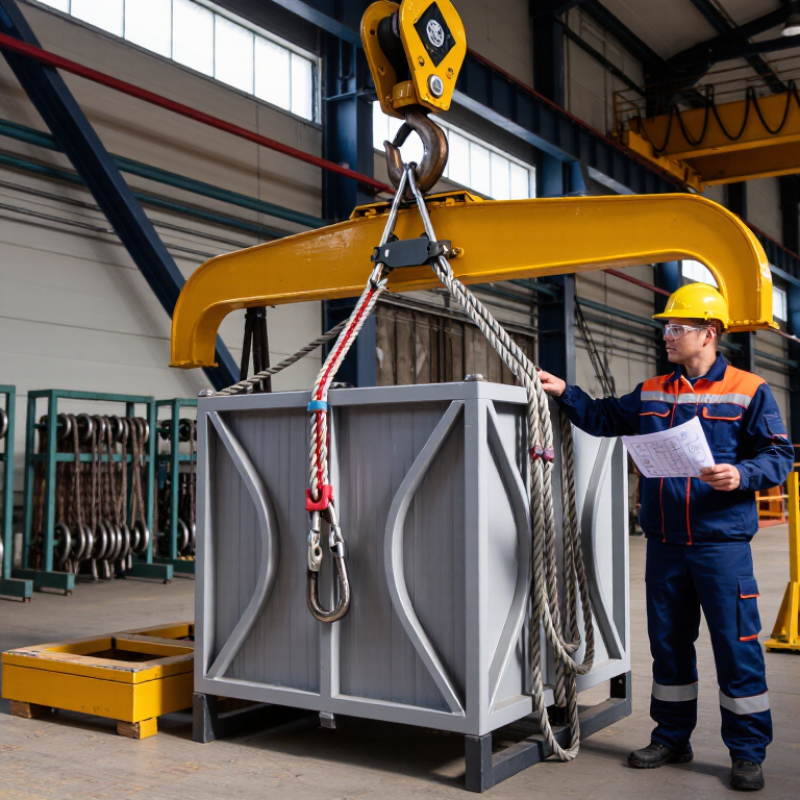
Choosing the right Industrial Rigging equipment begins long before a crane hook leaves the ground. The decision affects workers, structures, cargo, and the entire lifting sequence. A qualified rigger must examine the load’s weight, center of gravity, lifting points, travel path, and surrounding conditions.

Rigging educator Mike Parnell offers a practical reminder: “Every lift deserves a plan that matches the load, the equipment, and the environment.” That principle guides responsible equipment selection. Wire rope slings, chain slings, synthetic slings, shackles, spreader beams, and hoists each serve different purposes. Their working load limits must match the actual lift, not an optimistic estimate. Sling angles matter too. A shallow angle increases tension quickly.

Small details can decide the outcome.

Look for sharp edges, heat, chemicals, abrasion, moisture, and limited headroom. Inspect identification tags, stitching, hooks, latches, and visible damage before use. Standards and manufacturer instructions should support every decision. Local requirements may also influence inspection intervals and operator qualifications.

A checklist helps, but it cannot replace judgment. An apparently simple steel frame may shift when its center of gravity is misunderstood. That mistake is easy to make. The safest approach combines documented calculations, experienced supervision, suitable equipment, and a clear communication plan. This guide explains how to compare those factors without treating cost as the only measure of value. Reliable Industrial Rigging is not about choosing the strongest tool. It is about choosing the correct tool for the real conditions.
How to Choose the Right Industrial Rigging Equipment?

Understanding Industrial Rigging Equipment and Its Main Categories

How to Choose the Right Industrial Rigging Equipment?

Industrial rigging equipment supports, lifts, positions, and secures heavy loads. Its main categories include wire rope slings, chain slings, synthetic web slings, shackles, hoists, and lifting beams. Each category handles different weights, shapes, temperatures, and movement patterns. A synthetic sling suits delicate surfaces, while a chain sling tolerates heat and abrasion better. Wire rope offers strength for demanding vertical lifts.

Selection starts with the load’s weight, center of gravity, lifting points, and working environment. Check the rated capacity, sling angle, and connection type before lifting. A narrow sling angle increases tension significantly. That detail is easy to overlook. Shackles must match the sling and load direction. Hoists also require suitable capacity, travel distance, and controlled movement.

Experienced crews inspect equipment before every shift. They look for broken wires, stretched links, cuts, burns, bent pins, and unreadable identification tags. A damaged item should leave service immediately. Never guess the load weight. Never rely on appearance alone. Equipment can look sound and still contain hidden damage. In practice, checklists improve consistency, but they are not perfect. Weather, poor lighting, and rushed communication can still create risks. Competent personnel should follow current inspection requirements, manufacturer instructions, and site lifting procedures. Training matters as much as equipment choice.
Defining Load Requirements and Selecting the Proper Working Capacity

Choosing industrial rigging equipment starts with defining the real load, not guessing its weight. Record the load’s gross mass, center of gravity, lifting points, dimensions, and surface condition. Include pallets, packaging, hooks, shackles, and temporary attachments.

A 10,000-kilogram load does not always require 10,000 kilograms of working load limit. A two-leg sling shares force unevenly when the angle changes. At a 60-degree angle, each leg carries about 5,774 kilograms before accounting for additional factors. At 30 degrees, the force rises to 10,000 kilograms per leg. That difference is easy to overlook.

60° 5,774 kilograms 30° 10,000 kilograms per leg

Leave room for error.

OSHA 1910.184 requires employers to inspect slings and follow marked safe working limits. ASME B30.9 also emphasizes inspection, protection, and correct sling configuration. These requirements support practical site experience: sharp edges, shock loading, heat, and twisting can reduce usable capacity. A sling may look sound while suffering internal damage.

The U.S. Bureau of Labor Statistics reported 5,283 fatal workplace injuries in 2023, including 1,314 in transportation and material-moving occupations. The figure is not limited to rigging, but it shows why lifting controls deserve measurable planning. Select equipment only after confirming the weakest component’s capacity. Then verify the load path with a competent person.

I have seen teams calculate the load correctly but ignore the lifting angle. That is an uncomfortable mistake. Records should state the assumed angle, environmental limits, inspection date, and rejected-equipment criteria. A clear calculation is useful. An untested assumption is not.

Matching Rigging Tools to Lifting Conditions and Work Environments

Choosing industrial rigging equipment starts with the lifting conditions, not the catalogue. Start with the load. Confirm its weight, centre of gravity, lifting points, and surface temperature. A web sling may suit a clean indoor lift, while sharp edges require corner protection or a properly rated chain sling. For corrosive areas, inspect materials and coatings carefully. Conditions change.

In field inspections, I look beyond working load limits. Sling angles, shock loading, side pulling, wind, heat, chemicals, and limited headroom can reduce safe capacity. A 60-degree sling angle behaves differently from a 30-degree angle. The lift plan must reflect the real setup, including uneven floors and sudden movement. A perfect-looking arrangement can still be wrong.

The U.S. Bureau of Labor Statistics recorded 5,283 fatal workplace injuries in 2023. Great Britain’s Health and Safety Executive reported 138 worker fatalities during 2023/24. These figures cover many industries, not rigging alone, but they reinforce the need for disciplined equipment selection and inspection.

Use manufacturer load tables, current inspection records, and competent-person assessments. Never rely on memory or appearance. Even experienced crews can overlook a damaged eye, mismatched shackle, or unstable attachment point. I would also challenge one common assumption: choosing stronger equipment is not always safer. Excess capacity can increase weight, handling difficulty, and clearance problems. The right tool matches the load and environment precisely.

Checking Safety Standards, Compatibility, and Equipment Quality

Choosing rigging equipment begins with the applicable safety standard, not the catalogue photograph. OSHA 29 CFR 1910.184 requires slings to be inspected before each day’s use. It also requires damaged slings to be removed from service. OSHA’s crane safety analysis recorded 72 crane-related fatalities annually, on average, from 2003 to 2010. That figure is old, but not irrelevant. It shows why a small cut, bent hook, or missing latch deserves immediate attention. Verify working load limit, angle factors, temperature limits, and identification tags. Never treat a higher capacity as automatically safer. Uneven loading can still overload one leg.

Compatibility requires more than matching capacity. Check the hook throat, shackle pin, sling width, load geometry, and lifting points together. A sling may pass inspection yet fail at a sharp corner without edge protection. ASME B30.9 provides inspection and removal guidance for slings, while HSE’s LOLER guidance generally calls for thorough examination of lifting accessories every six months, or more often when conditions demand it. Keep certificates, inspection dates, and operator training records accessible at the lifting area. Quality is visible in traceable materials, readable markings, controlled heat treatment, and consistent proof testing. Still, paperwork can create false confidence. A certificate cannot correct poor rigging practice. Before the lift, a competent person should conduct a hands-on check and confirm the planned load path. Sometimes the best decision is to stop.

How to Choose the Right Industrial Rigging Equipment? - Checking Safety Standards, Compatibility, and Equipment Quality

Equipment Type Relevant Safety Standards Typical Working Load Limit Guidance Compatibility Checks Quality Indicators Inspection and Use Controls
Wire Rope Slings OSHA 29 CFR 1910.184; ASME B30.9; applicable national lifting regulations. The rated capacity depends on rope diameter, construction, core, hitch type, number of legs, and sling angle. Use the manufacturer’s marked capacity table; never estimate capacity from diameter alone. Confirm that hooks, shackles, and lifting points fit the eye size and have compatible rated capacities. Protect the rope from sharp edges and small-diameter bending points. Legible identification tag, uniform splicing or end fittings, correct rope construction, secure ferrules, and no broken wires, kinks, crushing, bird-caging, heat damage, or corrosion. Inspect before each shift or use. Remove from service for severe localized wear, damaged fittings, excessive broken wires, distortion, or heat and chemical damage.
Alloy Steel Chain Slings OSHA 29 CFR 1910.184; ASME B30.9; EN 818-4 for assembled chain slings where applicable. Capacity is determined by chain grade, diameter, number of legs, hitch configuration, and angle. Chain grade markings and the supplied rating chart must be checked before use. Use only compatible alloy components, master links, shortening devices, and hooks. Do not mix components unless the assembly is approved and rated for the resulting configuration. Permanent grade marking, traceable identification tag, matching components, properly seated fittings, and no unauthorized welding, heating, or alterations. Check for stretched, bent, cracked, gouged, or excessively worn links. Do not shock-load, knot, drag, or expose the chain to temperatures or chemicals outside its rating.
Flat Webbing Slings OSHA 29 CFR 1910.184; ASME B30.9; EN 1492-1 for flat woven webbing slings. Capacity varies with material, width, eye configuration, and hitch type. Straight, choker, and basket ratings are different and must be read from the identification label. Select a sling wide and long enough for stable load contact. Use edge protection at corners and avoid contact with sharp, abrasive, hot, or chemically reactive surfaces. Readable label, consistent stitching, protected eyes, even width, and no cuts, burns, melted fibers, pulled stitches, chemical attack, or damaged protective coating. Inspect the full length before use. Remove immediately if the label is missing or unreadable, or if load-bearing fibers are exposed or damaged.
Round Slings OSHA 29 CFR 1910.184; ASME B30.9; EN 1492-2 for roundslings. The rated capacity depends on sling construction, hitch type, and angle. The protective jacket is not the load-bearing element, so hidden core damage must be considered. Use suitable edge protection and ensure the sling is not twisted, bunched, trapped, or loaded over a radius smaller than the specified minimum. Permanent capacity label, intact jacket, even diameter, secure eyes, and no cuts, snags, heat damage, contamination, or exposed core fibers. If the jacket is damaged enough to expose or possibly damage the core, remove the sling from service. Do not tie knots or use a damaged sling with a reduced rating.
Shackles ASME B30.26; ASTM A354 or equivalent material requirements where specified; applicable lifting regulations. Use the marked working load limit for the shackle type and configuration. Side loading, sling angles, and multiple-leg arrangements can reduce the allowable capacity. The pin diameter and bow must accommodate the sling without binding. Load the shackle in line whenever possible and prevent the pin from contacting the load. Permanent WLL and size markings, correct pin, uniform body shape, clean threads, and no cracks, gouges, excessive wear, bending, or unauthorized repairs. Verify that the pin is fully engaged and secured. Do not replace a shackle pin with a bolt or use a shackle with illegible markings.
Eye Bolts and Lifting Points ASME B30.26; ASME B18.15 for forged eyebolts; manufacturer installation instructions. Capacity depends on design, thread engagement, mounting orientation, and loading direction. Shoulder eyebolts generally require full seating against the load and straight-line loading unless specifically rated otherwise. Match thread diameter, pitch, grade, and engagement length. Check that the base material and tapped hole are strong enough for the intended load. Clear WLL and orientation markings, undamaged threads, correct shoulder contact, sound mounting surface, and no bending, cracks, corrosion, or deformation. Install and torque according to the supplied instructions. Do not paint over markings, use bent eyebolts, or apply angular loading beyond the stated rating.
Manual or Powered Hoists ASME B30.16 for overhead hoists; ASME B30.21 for lever hoists; applicable electrical and workplace safety regulations. The hoist capacity must be equal to or greater than the maximum lifted load, including below-the-hook equipment. Never exceed the marked rated load. Confirm headroom, lift height, beam or trolley capacity, power supply, duty cycle, hook throat size, and compatibility with the supporting structure. Legible nameplate, functioning brakes and limit devices, undamaged load chain or wire rope, operational controls, and current inspection records. Inspect before use and follow the required periodic inspection schedule. Avoid side pulling, overloading, shock loading, and lifting people unless the equipment is specifically designed and approved for that purpose.
Spreader Beams and Lifting Beams ASME B30.20 for below-the-hook lifting devices; ASME BTH-1 for design category and service class where applicable. Use the marked rated load and specified load distribution. The capacity can change with lifting-point spacing, sling angle, beam orientation, and attachment configuration. Verify top and bottom connection capacities, center of gravity, beam length, headroom, deflection limits, and the capacity of the crane and supporting rigging. Nameplate with rated load and configuration limits, visible weld quality, certified lifting points, sound pins and fittings, and documented design or proof-test information. Check for cracks, deformation, corrosion, loose hardware, damaged welds, and missing safety devices. Use only the approved configuration and keep inspection records.
Selection rule: Choose equipment using the lowest rated capacity in the complete lifting system, including the crane, hoist, lifting points, connectors, slings, and below-the-hook devices. Always follow the current product instructions, applicable local regulations, and a documented lift plan. Working load limits must not be inferred from appearance, dimensions, or material type alone.

Inspecting, Maintaining, and Replacing Rigging Equipment Safely

Choosing industrial rigging equipment begins with its working load, lifting angle, environment, and frequency of use. Yet safe performance depends on more than selecting the correct capacity. Every sling, hook, shackle, chain, and wire rope needs inspection before use. Small flaws matter.

Look for broken wires, stretched links, crushed sections, cuts, burns, corrosion, distorted hooks, and missing identification tags. Check safety latches for smooth movement. Dirt can hide damage, so clean equipment before detailed inspection. Do not guess. A rushed inspection can feel efficient, but it creates false confidence. One overlooked defect may affect the entire lift.

Maintenance should follow the equipment maker’s instructions and the site’s written procedures. Store rigging off the floor, away from moisture, chemicals, sharp edges, and direct heat. Apply only approved lubricants, and never conceal damage with paint or temporary repairs. Keep inspection dates, findings, load conditions, and corrective actions in clear records. Records reveal patterns.

Remove damaged equipment from service immediately. Mark it clearly and place it in a controlled area. A qualified person should decide whether replacement is necessary. Replacement is safer when wear, age, repeated overload, or uncertain history is involved. Reusing questionable gear saves little. Before each lift, confirm that the equipment matches the load and setup. Controls must remain understandable, even during pressure.

The chart shows the minimum design factors specified by OSHA 29 CFR 1910.184 for common types of alloy steel chain, wire rope, metal mesh, synthetic web, and synthetic round slings. Before use, confirm the sling identification, rated capacity, inspection status, and applicable regulations. Remove equipment from service when it shows cuts, burns, deformation, corrosion, broken wires, stretched links, damaged fittings, or illegible markings.

LSP App

Download the LSP App now

Scan QR code to download the app

We use cookies to personalize content, utilize website traffic analytics & support our marketing initiatives. By continuing to browse our site you consent to receive our cookies. For more information see our Privacy Statement
Ok