Choosing the right Galvanized Nails for your project can be a challenge. These nails are coated with zinc, preventing rust and corrosion. This makes them ideal for outdoor tasks. However, not all galvanized nails are created equal. You need to consider the specific requirements of your project.
Galvanized Nails come in various sizes, types, and coatings. The right choice can significantly impact the durability of your work. A lightweight project may not require heavy-duty nails, but something more substantial will. Understanding the thickness, length, and application is crucial for success.
It’s easy to overlook factors like the weight of materials you’re working with. Also, remember that choosing a cheaper option might save money now but could lead to problems later. Reflect on your needs carefully. Are you prepared for the long-term? In the end, the right Galvanized Nails can enhance your project's longevity and integrity.
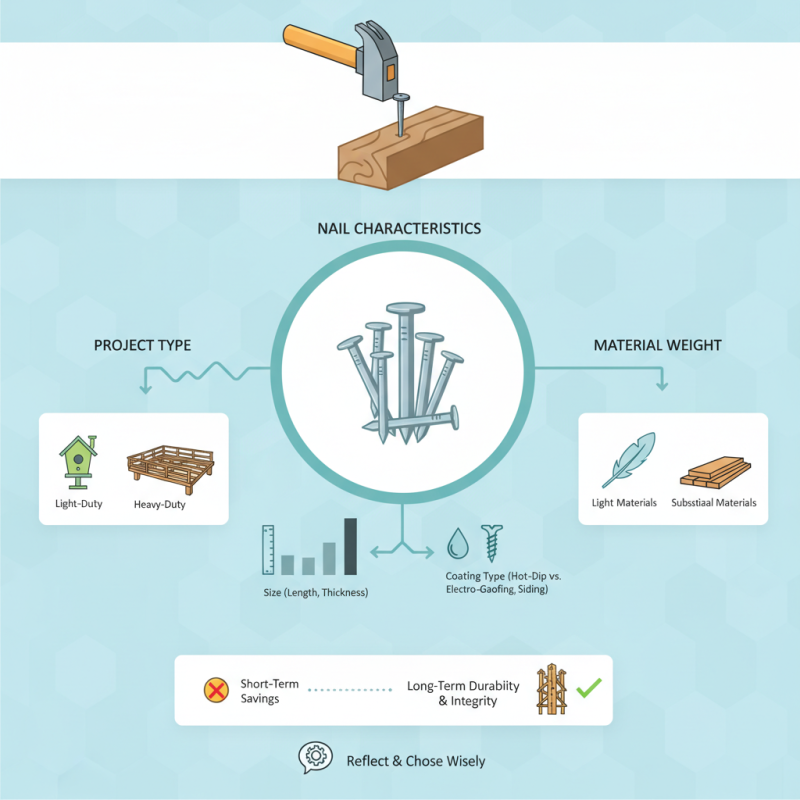
Galvanized nails are essential for a variety of construction projects. They are coated with zinc, which protects them from rust. Understanding the different types can help you choose the right one. Common types include hot-dipped and electro-galvanized nails. Hot-dipped nails are thicker and offer better corrosion resistance. Electro-galvanized nails, on the other hand, are lighter and may not last as long in wet conditions.
When selecting nails, consider the project’s environment. Will they be exposed to moisture? Hot-dipped nails may be your best bet. They resist rust better in such situations. However, if you’re working indoors or in a dry area, electro-galvanized might suffice. Also, take note of nail size. Larger nails can provide better holding power, but they can also split wood if you’re not careful.
Not all galvanizing processes are equal. Some may not offer enough protection for specific projects. It’s vital to research and source nails wisely. Failing to do so can lead to issues down the line. Think about the materials you will be using as well. Not all nails perform well with every type of wood. The right selection can make a significant difference in your project’s durability and success.

When choosing galvanized nails, understanding project requirements is crucial. Focus on size, length, and coating to ensure durability. A report by the American Fasteners Institute suggests that nails should match the material and stress of your project. For example, heavier applications may require thicker, longer nails, while simpler tasks might only need smaller sizes.
Coating matters too. Standard galvanized nails feature a zinc coating, which provides corrosion resistance. However, different projects may benefit from specific coatings. For instance, a marine environment necessitates a more robust coating to withstand moisture. A study from the Fastener Quality Act shows that the right coating prolongs nail life by 20%.
Pay attention to these details before starting. Size and length should align with the project needs. If you opt for too long nails, they may split wood. Too short, and they won't hold securely. Each decision has repercussions. A thoughtful approach can prevent future complications, ensuring the integrity of your work.
This bar chart illustrates the different sizes and lengths of galvanized nails suitable for various construction projects, helping you make an informed decision based on your project requirements.
When selecting galvanized nails for your project, evaluating the environmental conditions is crucial. Temperature, humidity, and exposure to elements can impact nail performance. For example, a report by the American Society for Testing and Materials (ASTM) indicates that high humidity can accelerate corrosion. Choosing nails with appropriate coatings is essential. In environments prone to moisture, opt for hot-dipped galvanized nails. They offer superior protection compared to electro-galvanized options.
Tips: Always assess the placement of your project. If it’s outdoors, shield the nails from direct exposure whenever possible. Use a protective sealant as an extra layer against the elements. The National Association of Home Builders suggests monitoring local weather patterns. Understanding local climate helps predict the performance longevity of the nails you choose.
In certain situations, you may find that the specifications fall short of your expectations. Nails can rust or break under extreme conditions. It’s essential to reflect on the material's limitations and the project’s requirements. Not every galvanized nail works for every project. Sometimes, enhancing with additional treatments can provide a better outcome. Consider conducting small tests in various conditions to evaluate performance before committing to a larger batch.
When selecting galvanized nails, consider the materials you will be working with. Different materials require different nail types. For example, if you are working with wood, use smooth or spiral-shank galvanized nails. These provide a strong grip and resist rust. If your project involves metal, opt for nails specifically designed for metal fastening. They tend to have sharper points for easier penetration.
Tips: Always check the gauge of the nail. A thicker nail will hold better, but it may split thinner wood. Think about the length too. Longer nails penetrate deeper and provide better support.
For masonry work, choose masonry nails or special coatings. Regular galvanized nails may not hold up. They can corrode quickly in harsh environments. It’s essential to consider where your project will be located. Is it indoors or outdoors? The setting impacts the nail’s performance and longevity.
Tips: As you work, keep an eye on the nail's condition. A bent or damaged nail can weaken the whole structure. Don't hesitate to replace them as needed. Reflect on your choices throughout the project to ensure durability and safety.
When it comes to installing galvanized nails, attention to detail is crucial. Proper installation ensures longevity. Research indicates that improperly installed nails can lead to a 30% increase in rust-related failures over time. Ensure the nails penetrate the material adequately but avoid overdrive. Overdriving can compromise their protective coating, leading to premature corrosion.
Maintenance is equally important. Regularly inspect the areas where nails are used. Look for signs of rust or deterioration. According to a study by the American Institute of Steel Construction, nails exposed to moisture without adequate protection can rust within two years. This vigilance can help catch problems early. In humid climates, consider adding a sealant or finish to improve corrosion resistance.
Remember, not all projects are created equal. Some settings are more prone to corrosion due to environmental conditions. For instance, coastal areas often accelerate the breakdown of coatings. Be mindful of where you use galvanized nails. Not every situation allows for their permanent use without proper maintenance. Adapt your approach based on these factors to preserve the integrity of your work.
| Nail Type | Recommended Use | Length (inches) | Gauge | Corrosion Resistance |
|---|---|---|---|---|
| Common Nails | Framing, general construction | 2 to 3.5 | 16 | Moderate |
| Decking Nails | Decking and outdoor projects | 2.5 to 3 | 16 | High |
| Roofing Nails | Shingle installation | 1 to 1.5 | Tac | Very High |
| Finish Nails | Trim work and cabinetry | 1 to 2.5 | 18 | Low |
| Concrete Nails | Brick and concrete work | 2 to 4 | 12 | Moderate |
Scan QR code to download the app
LSP Products was founded by plumbers over 50 years ago with a focus on unparalleled innovation, superior product quality, and best-in-class service to the plumbing industry. Our primary focus is the new construction market where we develop products that make installations easy and provide significant cost savings to the plumbing/mechanical contractor. LSP has a manufacturing facility located in Monterrey, Mexico and a distribution center in Dallas, Texas. We are proud to offer many products designed and made in North America… About LSP
Submit the form below to receive the document via email.