Choosing Mini Sprinklers for global sourcing in 2026 requires more than comparing prices and catalog photos. Buyers must connect field conditions with measurable product performance. A sprinkler that works well in a greenhouse may fail in sandy soil, strong wind, or low-pressure irrigation systems. Flow rate, spray radius, operating pressure, filtration needs, nozzle material, and replacement availability deserve careful review.
Brian Vinchesi, a recognized irrigation designer and engineer, has emphasized this practical principle: “Good irrigation design starts with matching water delivery to the site.” That idea remains highly relevant for international procurement. A responsible buyer should request laboratory data, uniformity results, pressure-flow curves, and samples from each shortlisted supplier. Product claims alone are not enough.
Small details matter. Check thread dimensions. Test clogging resistance. Inspect plastic thickness. Ask how suppliers control batch consistency. It is also wise to examine packaging, lead times, export experience, and technical support across regions. Compliance documentation should be verified for the destination market, not simply copied from another order.
No checklist is perfect. I have seen apparently identical Mini Sprinklers perform differently after transport, storage, and installation. That uncomfortable fact deserves attention. A limited field trial can reveal uneven coverage, leaking connections, or fragile components before a large purchase is approved. For global sourcing in 2026, the strongest decision combines engineering evidence, supplier transparency, practical testing, and a willingness to question convenient assumptions. Lowest cost may look attractive. Reliable water distribution usually costs less over time.
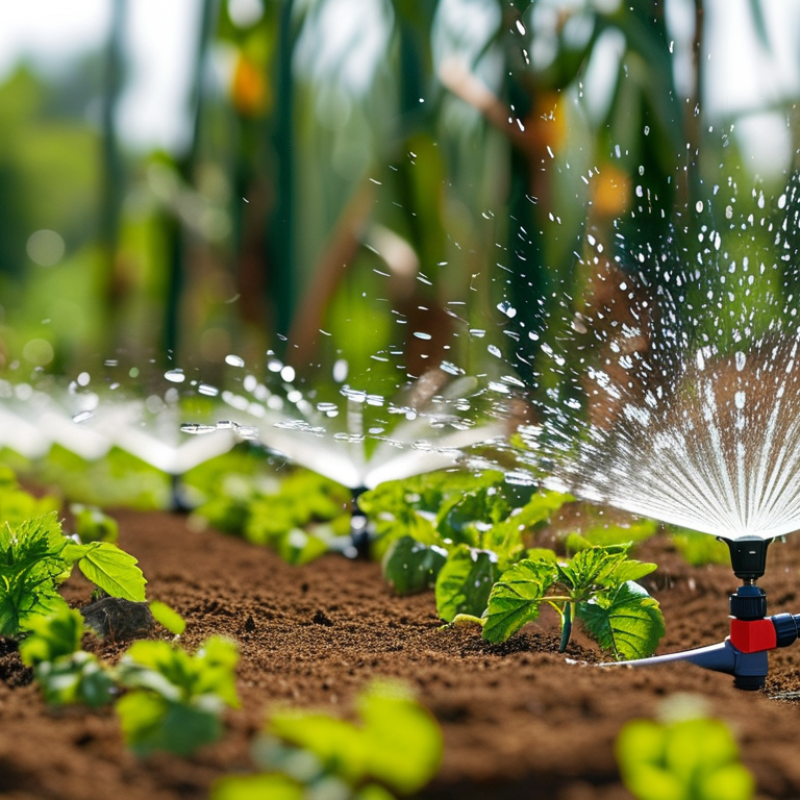
Mini sprinklers differ by water pattern, operating pressure, and installation position. Rotating models distribute water in a circular pattern, making them suitable for orchards, nurseries, and open vegetable beds. Fixed models provide steady coverage for smaller planting areas. Half-circle and strip patterns work better beside walls, greenhouse edges, or narrow crop rows. Coverage is not universal.
Adjustable-flow sprinklers help buyers manage different soil types and plant stages. Stake-mounted units suit young trees and uneven ground. Inverted models can serve hanging crops or protected cultivation systems. For sandy soil, finer droplets may reduce dry patches, but wind can carry them away. Heavier droplets often perform better in exposed fields. Test the pattern.
Global sourcing requires more than checking flow rate. Compare nozzle materials, filtration needs, pressure tolerance, connection sizes, and resistance to sunlight or fertilizer exposure. A practical evaluation should measure uniformity at the lowest expected pressure. Field teams can place collection cups beneath the spray and compare water depth after a timed run. This simple test reveals hidden variation. My own trials have shown that a compact sprinkler may look efficient, yet clog quickly when filtration is weak. That mistake is easy to repeat. Suppliers should provide test data, installation guidance, and traceable quality records. Local climate, crop spacing, water quality, and maintenance skills should guide the final type selection.
When sourcing mini sprinklers globally in 2026, begin with the crop, soil, and watering schedule. A greenhouse bench needs different delivery than a dusty orchard row. Measure pressure at the furthest outlet, not only at the pump. Record flow rate, spacing, elevation changes, and filtration limits. I have seen a small pressure drop create dry circles near the row end. That mistake looked minor on paper. It was expensive in practice.
Coverage should match plant spacing and the intended wetting pattern. Compare diameter, distribution uniformity, droplet size, and precipitation rate under working pressure. A sprinkler that reaches far may still leave weak edges. Wind makes this worse. Test several units in a grid, then collect water in identical cups for fifteen minutes. Calculate variation between cups. Repeat the test with clean and partly loaded filters. Real irrigation water is rarely perfect.
Spray performance also depends on nozzle geometry, rotation stability, and clogging resistance. Ask suppliers for test data, material specifications, and tolerances, then verify samples independently. Check startup behavior, low-pressure performance, and spray changes after continuous operation. A unit can pass a showroom test and fail outdoors. Do not trust one afternoon. Record temperature, pressure, and water quality during trials. I would also challenge my assumptions: uniform spray is not always efficient when evaporation is high. A slower, targeted pattern may protect roots better, but field observations must confirm it.
| Mini Sprinkler Type | Typical Watering Requirement | Recommended Pressure | Typical Flow Rate | Approx. Wetted Diameter | Spray Pattern | Coverage and Performance Notes | Sourcing Checkpoints |
|---|---|---|---|---|---|---|---|
| Full-Circle Spinner | Uniform watering for orchards, nurseries, vegetable beds, and open planting areas. | 1.5–3.0 bar | 35–120 L/h | 4–8 m | 360° | Good area coverage when installed in a square or triangular layout. Use overlapping patterns to reduce dry zones at the perimeter. | Confirm nozzle color coding, flow uniformity, anti-drain performance, and compatibility with 4 mm or 6 mm distribution tubing. |
| Half-Circle Spinner | Perimeter rows, greenhouse edges, fence lines, and rectangular planting zones. | 1.5–3.0 bar | 20–70 L/h | 3–6 m | 180° | Limits overspray outside the growing area and can improve water-use efficiency along boundaries. | Check left- and right-direction versions, connector orientation, pressure-compensation options, and sealing performance. |
| Quarter-Circle Spinner | Corners of greenhouses, nursery benches, raised beds, and small landscaped sections. | 1.5–3.0 bar | 10–40 L/h | 2–4 m | 90° | Provides targeted corner coverage with less water falling on paths, walls, or non-crop surfaces. | Verify spray-angle consistency, mounting stability, and whether the unit requires a separate stake or riser. |
| Strip or Rectangular Sprayer | Long, narrow beds, greenhouse rows, propagation benches, and closely spaced crops. | 1.0–2.5 bar | 20–80 L/h | 1.5–3 m wide × 4–10 m long | Rectangular | Can reduce overlap in narrow plots, but spacing and orientation must be tested to avoid uneven ends. | Request a measured distribution map, end-to-end uniformity results, and installation drawings for row spacing. |
| Micro-Jet Sprayer | Young trees, container plants, flower beds, and crops requiring a gentle, relatively fine spray. | 1.0–2.5 bar | 15–90 L/h | 2–6 m | 360°, 180°, or 90° | Offers flexible spray options and commonly supports interchangeable deflectors or nozzles. Fine droplets may be more affected by wind. | Check droplet behavior, wind sensitivity, removable parts, UV resistance, and whether flow changes when the deflector is replaced. |
| Bubbler or Localized Mini Sprinkler | Individual trees, shrubs, pots, and root-zone irrigation where broad coverage is unnecessary. | 0.8–2.0 bar | 10–60 L/h | 0.3–1.5 m | Localized or small circle | Reduces wetting of foliage and surrounding surfaces. It is not suitable when a continuous, wide spray pattern is required. | Confirm clog resistance, outlet geometry, pressure range, and whether the discharge remains stable at low inlet pressure. |
| Pressure-Compensating Mini Sprinkler | Long irrigation runs, sloped sites, zones with variable elevation, and systems requiring consistent application. | 1.5–3.5 bar | 25–100 L/h | 3–7 m | Model-dependent | Helps maintain a more consistent flow across pressure variations, although it cannot correct inadequate filtration or insufficient supply pressure. | Request the compensation range, minimum operating pressure, flow-versus-pressure curve, and independent uniformity test data. |
| Anti-Drain Mini Sprinkler | Multi-zone systems where pipe drainage, low-point discharge, or delayed start-up must be minimized. | 1.5–3.0 bar | 20–90 L/h | 3–7 m | Model-dependent | Reduces unintended drainage after shutdown and can improve start-up uniformity across multiple irrigation zones. | Check opening and closing pressure, internal seal durability, cleaning access, and compatibility with automatic valves. |
Material choice affects service life, clogging risk, and landed cost. Polypropylene and POM bodies resist many fertilizers and remain lightweight. However, poor UV stabilization can make plastic brittle in hot warehouses.
Stainless steel shafts tolerate repeated movement and mineral deposits better than untreated metal. Brass is strong, but it may increase weight and raise corrosion concerns in aggressive water.
FAO AQUASTAT reports that agriculture accounts for about 70% of global freshwater withdrawals, making reliable distribution equipment commercially important. Field experience shows that a cheaper nozzle can become expensive after one dry season.
Durability testing should include:
Ask suppliers for test methods, not only service-life claims. The ISO 15886 series provides a useful reference for agricultural sprinkler performance and testing. ISO 9261 can support checks for related irrigation emitters and connections.
Thread compatibility also matters.
Confirm ISO 7-1, ISO 228-1, or ASME B1.20.1 requirements before ordering samples.
These standards are not interchangeable. I have seen fittings appear identical, yet leak after several hours of operation.
Tips:
Small details decide whether a sprinkler survives real farms.
Global sourcing of mini sprinklers in 2026 requires evidence, not attractive catalogs. FAO’s AQUASTAT data reports that agriculture uses about 70% of global freshwater withdrawals. This pressure makes flow control and distribution uniformity commercially important. Ask suppliers for pressure-flow curves, nozzle materials, and test records from recent production batches. Request samples from different cavities, not one perfect unit. Test them at 1.5, 2.0, and 2.5 bar. Small differences become visible quickly.
Check whether the factory follows ISO 9001 procedures and whether products meet relevant irrigation standards, such as ISO 15886 where applicable. CE documentation may be necessary for certain European-market components, but a logo alone proves little. Verify certificates through the issuing body. Ask for laboratory reports, traceability records, and corrective-action history. This takes time. It also exposes weak suppliers.
Pricing should include molds, packaging, inspection, inland transport, freight, duties, and replacement parts. Industry logistics reports continue to show that freight volatility can materially change landed cost, even when unit prices look stable. Request three price breaks, such as 1,000, 10,000, and 50,000 pieces. Compare water output, warranty terms, and defect allowances beside each quote. Minimum orders deserve negotiation. A lower MOQ may carry a higher unit cost, but it can reduce inventory risk. However, I would not accept an unusually low MOQ without checking production consistency. That assumption can fail. Supplier audits, pilot orders, and independent sampling create stronger purchasing evidence than promises.
How to Choose Mini Sprinklers for Global Sourcing in 2026?
In 2026, choosing mini sprinklers means controlling quality before production starts. FAO AQUASTAT estimates that agriculture uses about 70% of global freshwater withdrawals. Small flow-rate errors can therefore create visible waste in the field. Specify operating pressure, discharge rate, spray radius, droplet pattern, UV resistance, and filter compatibility. Do not trust catalog photos. Request pressure-flow curves, material declarations, test results, and lot traceability. Use ISO 2859-1 sampling plans for incoming inspections. Check blocked outlets, cracked threads, uneven spray, and seal deformation. Record test videos with batch numbers.
UNCTAD reports that maritime shipping carries over 80% of global trade by volume. Carton strength and moisture protection deserve serious attention. Use dividers for fragile stakes and nozzles. Add desiccant when humid routes are expected. The World Bank’s 2023 Logistics Performance Index surveyed 4,090 trade professionals across 139 economies. Its framework evaluates customs, infrastructure, shipment quality, tracking, and delivery timeliness. Compare forwarders using these dimensions, not only freight prices. Build buffer time around port congestion and inspection delays. Small fittings disappear easily.
Import compliance starts with accurate classification and consistent documents. Confirm the correct HS code with a licensed customs professional in each destination market. Prepare commercial invoices, packing lists, origin information, product specifications, and applicable safety evidence. The OECD’s 2022 Trade Facilitation Indicators compare 163 economies and connect smoother border procedures with lower trade costs. Check destination labeling and language requirements before sealing cartons. Paperwork matters. One weakness remains common: supplier certificates may be outdated or copied. Recheck critical claims against independent laboratory records, even when the factory appears experienced.
Quality Control, Shipping, and Import Compliance Priorities
This planning index ranks the practical importance of each evaluation area when sourcing mini sprinklers internationally in 2026. Product testing, packaging efficiency, traceability, shipping documentation, and destination-market compliance should be reviewed before placing a purchase order.
Scan QR code to download the app
LSP Products was founded by plumbers over 50 years ago with a focus on unparalleled innovation, superior product quality, and best-in-class service to the plumbing industry. Our primary focus is the new construction market where we develop products that make installations easy and provide significant cost savings to the plumbing/mechanical contractor. LSP has a manufacturing facility located in Monterrey, Mexico and a distribution center in Dallas, Texas. We are proud to offer many products designed and made in North America… About LSP
Submit the form below to receive the document via email.