How to Choose Aesthetic Washi Tape for Your Business
Choosing Aesthetic Washi Tape is more than picking a pretty roll. For a stationery, gift, or packaging business, tape can shape the first impression before a customer opens the parcel. The right pattern should suit your brand, work reliably on your materials, and remain practical to reorder. Small details matter.
Industry reports offer useful context, though none can guarantee that a particular tape design will sell. Smithers’ The Future of Global Packaging to 2028 tracks continued change in packaging markets, making material performance and consistent supply important considerations for businesses. Deloitte’s 2024 Gen Z and Millennial Survey found that 62% of Gen Z respondents and 59% of millennials felt worried or anxious about climate change. That finding is not proof that customers will choose sustainable tape. It does suggest that clear, honest material claims deserve attention.
For a real-world selection, compare adhesive strength, paper thickness, print sharpness, and color consistency across sample rolls. Test the tape on the actual box, envelope, or journal cover. A delicate floral print may look lovely on screen, then disappear against kraft paper. Annoying, but common. Check minimum order quantities and lead times, too; a beautiful design is less useful if restocking becomes difficult. This guide explains how to weigh appearance, function, sourcing, and cost, while keeping customer expectations realistic. The best choice is rarely the most decorative one alone.
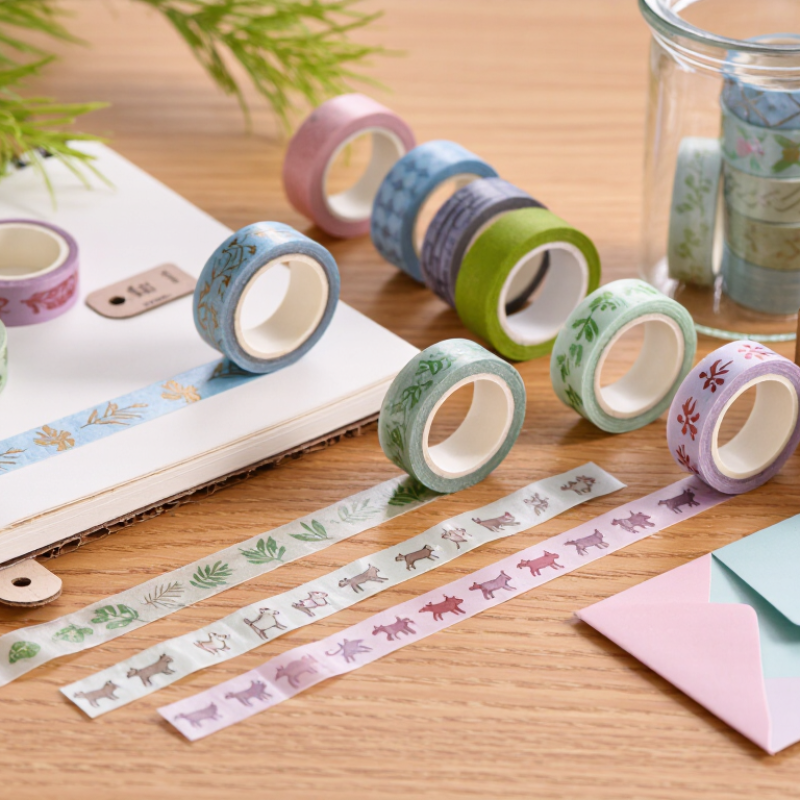
Define Your Business Needs for Aesthetic Washi Tape
Before choosing aesthetic washi tape, decide what your business needs it to do. Is it sealing tissue paper, decorating product boxes, or adding a handwritten-feeling detail to orders? These uses call for different widths, adhesive strength, and print designs. A narrow tape may suit gift wrapping, while a wider roll can carry a repeating pattern across a mailer. Write down your packaging dimensions and typical order volume. Small details matter.
Set a practical goal, too. You might want packaging to feel more personal, make seasonal releases easier to recognize, or add color without changing your entire box design. McKinsey’s 2021 Next in Personalization report found that 71% of consumers expect personalized interactions, while 76% feel frustrated when they do not receive them. That research covers personalization broadly, not washi tape specifically, but it suggests that thoughtful details can support a more tailored customer experience. Keep expectations realistic.
Next, check production constraints. Confirm minimum order quantities, proofing options, print-color limits, and delivery timing before approving a design. Test a sample on your actual packaging; paper texture and adhesive can behave differently than expected. Peel it back. Does it lift fibers, wrinkle, or leave residue? I have seen attractive mockups fail on rough kraft boxes. That’s an easy mistake to make. Choose a design your team can apply consistently, even during a busy packing shift.
Compare Tape Materials, Finishes, and Design Options
Aesthetic washi tape should match both your packaging needs and your visual style. Paper tape has a soft, matte feel and tears easily by hand, making it useful for wrapping boxes or sealing tissue paper. Rice-paper blends are often thin and slightly translucent, so printed colors may look softer than they do on screen. Check the tape’s adhesive on your actual packaging surface; textured kraft paper can behave differently from smooth cardstock.
Finishes change the impression. Matte surfaces feel understated, while foil details catch the light but may raise production costs. Glossy coatings can make colors look vivid, though fingerprints may show. For designs, small repeating motifs suit narrow tape, while larger illustrations need enough width to remain readable. Ask for a physical sample when possible. A digital proof can hide subtle shifts in color.
Tips: Test a short strip on a packed box, then leave it overnight. Check whether edges lift, ink rubs off, or the tape tears unevenly. Don’t judge only by appearance. Print alignment can be imperfect, and a pattern that looks charming on a screen may feel crowded in use. Keep one plain option for busy packaging days.
Choosing a Washi Tape Width
Common widths range from 5 mm to 25 mm. Narrow tape suits fine accents and small labels, while wider tape gives larger artwork more room. These are common format options, not a ranking; availability varies by supplier.
Assess Print Quality, Adhesion, and Product Compatibility
Aesthetic washi tape should look refined, but print quality must survive close inspection. Check a sample under daylight and warm indoor light. Fine lettering should remain crisp, while pale colors should not disappear against the paper. Smithers valued the global label market at about $46.5 billion in 2022, reflecting demand across many label types—not washi tape alone. That broader market signals why consistent, readable printing matters. Ask suppliers for production samples, color specifications, and details about how they check each print run. Tiny flaws show.
Adhesion needs a practical test, not a confident claim. Apply tape to the actual surface: a coated gift box, kraft paper, glass, or a product sleeve. Press it down, then peel it back after a day. Look for lifted corners, paper fibers, and sticky residue. If the tape will be repositioned, test that too; gentle removal can vary with surface texture and storage conditions. ASTM D3330/D3330M describes standard methods for measuring peel adhesion of pressure-sensitive tape, but a lab result cannot fully predict performance on every business package.
Compatibility includes more than the surface. Check tape width against label space, roll dimensions against dispensers, and print colors against your packaging palette. Test a finished parcel after handling and brief storage. A detail worth reconsidering: decorative tape may not secure a heavy package, even when it feels firmly attached. Keep samples and record the surface, application pressure, and removal time, so purchasing decisions rest on repeatable checks rather than appearance alone.
Evaluate Suppliers, Pricing, and Minimum Order Requirements
When choosing aesthetic washi tape, compare suppliers on more than color range. Request physical samples and check opacity, adhesion, print alignment, and how cleanly the tape tears by hand. Ask for the paper weight, roll length, core size, and packaging details in writing. A soft sage print may look lovely online, yet appear dull under shop lighting. Samples matter.
Pricing needs a like-for-like comparison. Include unit price, plate or setup fees, sample charges, freight, and the cost of rejected rolls. Deloitte’s 2023 Global Chief Procurement Officer Survey identifies cost reduction as a leading procurement priority, but the cheapest quote may not deliver the lowest usable cost. Ask suppliers to price several quantity tiers and disclose what changes between them. Small details count.
Minimum order requirements can shape cash flow and storage needs. Request the MOQ per design, not just per order, and ask whether designs can share a production run. McKinsey’s 2022 supply-chain survey found that 45% of respondents had no visibility beyond their first-tier suppliers. That finding concerns supply-chain visibility broadly, not washi tape specifically; still, it supports asking where materials are sourced and how delays are communicated. Keep the answers. Honestly, I would also ask what happens if print colors vary slightly between batches.
Test Samples and Plan Your Tape’s Business Use
How to Choose Aesthetic Washi Tape for Your Business
Choosing attractive washi tape starts with physical testing, not a screen preview. Order several samples with different widths, textures, adhesives, and print finishes. Apply each tape to kraft paper, coated cartons, glassine bags, and recycled mailers. Check whether the edge lifts after 24 hours. Test before scaling.
Record adhesion, tear quality, color accuracy, residue, and application speed. A tape that looks delicate may split during packing. A strong adhesive may damage thin paper. Keep the weak option visible. It may suit temporary seasonal wrapping better. Smithers’ report, The Future of Sustainable Packaging to 2028, identifies recyclability, material reduction, and responsible sourcing as major packaging pressures. Therefore, test removal and disposal behavior, not only appearance. PwC’s 2024 Voice of the Consumer Survey found that 80% of consumers would pay more for sustainably produced goods, with an average acceptable premium of 9.7%. That supports careful material choices, but customer claims still need evidence. Looks can mislead.
Plan the tape’s business role before selecting a final design. Use one style for sealing orders, another for product inserts, and a limited design for campaign packaging. Measure tape used per parcel, labor time, sample cost, and minimum order quantity. A small spreadsheet can reveal hidden waste. My first instinct would favor the most decorative sample, but it might slow packing and raise costs. Leave room for revision after ten real shipments. Customer feedback may challenge the original aesthetic plan.
 Skip to main content