How to Choose a Cell Phone Box Making Machine in 2026?
Choosing a Cell Phone Box Making Machine in 2026 requires more than comparing prices and production speeds. Modern phone packaging must look precise, protect delicate devices, and support efficient factory operations. A machine may produce attractive boxes, yet still create waste, slow changeovers, or unstable folding. These details matter during every shift.
Walter Soroka, a respected packaging educator, described packaging as “the science, art, and technology of enclosing and protecting products for distribution, storage, sale, and use.” His words remain useful when evaluating box-making equipment. A reliable Cell Phone Box Making Machine should handle rigid paperboard, sharp creases, clean edges, and consistent corner forming. It should also suit the box structure, material thickness, adhesive system, and expected order volume.
Look closely at the machine’s working table. Can operators reach the feeding area safely? Are adjustments clearly marked? How long does a format change take? A ten-minute delay may seem minor, but repeated delays can consume hours each week. Energy use, spare-part access, training support, and inspection systems deserve equal attention.
The cheapest option is not always economical. Neither is the fastest machine. A realistic decision compares output, reject rates, maintenance needs, and product quality over several years. Buyers should request samples using their actual board and box dimensions. Do not rely only on showroom demonstrations.
This guide offers a practical framework for comparing machines in 2026. Some recommendations may not fit every factory. That is worth admitting. Production conditions differ, and even a well-designed machine can disappoint without skilled operation and regular maintenance.
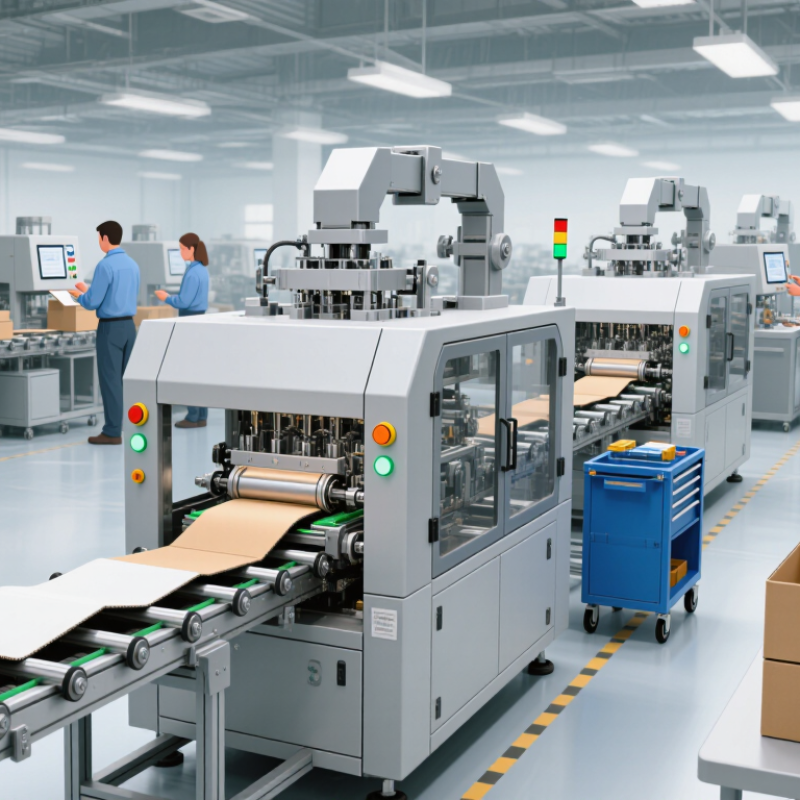
Define Box Specifications: 300–400 GSM Paperboard and 1.2–2.5 mm Rigid Board
Choosing a cell phone box making machine in 2026 starts with accurate board specifications. For folding cartons, 300–400 GSM paperboard offers a practical balance between print quality, stiffness, and material cost. However, GSM does not equal thickness. Moisture, fiber direction, and coating can change feeding performance. Smithers’ 2024 packaging outlook identifies premium presentation and sustainable fiber packaging as continuing market priorities. This makes stable board handling increasingly important.
Rigid boxes require a different approach. Boards measuring 1.2–2.5 mm need stronger creasing, accurate corner forming, and reliable wrapping control. A machine designed only for thin folding cartons may crush edges or create uneven corners. Industry testing reports from the Paper and Packaging Board sector commonly emphasize caliper consistency and compression performance. In practical trials, check blank feeding, glue coverage, corner alignment, and surface damage at production speed. Do not judge performance from ten samples. That is often misleading.
Tips: Ask for trials using your actual 300–400 GSM paperboard and 1.2–2.5 mm rigid board. Measure finished box dimensions after 24 hours. Test both coated and uncoated sheets. Review waste rates, changeover time, and operator adjustments. A perfect specification sheet can still fail on the factory floor. I would also leave tolerance for future materials, because packaging development rarely stays predictable.
Verify Precision Against ISO 12647 and ±0.1 mm Die-Cutting Tolerance
How to Choose a Cell Phone Box Making Machine in 2026?
When choosing a cell phone box making machine in 2026, verify more than speed and appearance. Ask for printed samples and production records. ISO 12647 provides a useful framework for controlling color, density, and print consistency. However, it does not replace mechanical testing. The machine should maintain clean registration between printed sheets, creasing lines, and die-cut edges. Small errors become obvious around camera holes, corners, and narrow folding panels.
Request a die-cutting trial using your actual board thickness and coating. Measure at least ten boxes from different production points. The target should remain within ±0.1 mm, not only on the first sample. Check edge quality under bright light. Rough fibers often indicate unsuitable pressure, a worn die, or unstable feeding. A perfect first setup is unrealistic. Operators may need several adjustments, especially with laminated or textured materials. That practical limitation should appear in the supplier’s testing report.
Tips: Confirm repeatability, not just maximum precision. Measure length, width, crease position, and diagonal alignment. Keep calibration records and inspect tools regularly. Ask whether the machine can export inspection data. A camera system helps, but it cannot correct poor material handling. Also test changeover time between box sizes. Slow adjustments can quietly reduce daily output, even when the final boxes look accurate.
How to Choose a Cell Phone Box Making Machine in 2026?
Verify print-process consistency with ISO 12647 principles and confirm that absolute die-cutting deviation remains within the ±0.1 mm acceptance limit.
The chart shows absolute die-cutting deviation from six production checks. A suitable machine should keep every measured value below the 0.10 mm tolerance line while maintaining stable print-process control. ISO 12647 supports consistent print reproduction, but the ±0.1 mm die-cutting requirement should be verified separately through machine trials and inspection records.
Compare Automation Using 85% OEE, Changeover Time, and Labor Savings
When choosing a cell phone box making machine in 2026, measure production behavior, not brochure speed. An 85% OEE target is useful, but it is not a guarantee. OEE combines availability, performance, and quality, so one weak area can hide behind another. A line may run at 90% speed yet lose hours during setup. Ask for recorded data using comparable board thickness, box dimensions, and print finishes. Short trials reveal more than impressive demonstrations.
Automation becomes valuable when changeovers are frequent. For example, a folding carton line handling six box sizes should document tool changes, cleaning, parameter entry, and first-good-piece approval. A ten-minute reduction per changeover can recover nearly an hour across a busy shift. Recipe storage, guided adjustments, and accessible glue stations reduce operator guesswork. Still, automatic does not mean effortless. Poorly prepared blanks or unstable board moisture can stop an advanced line.
Labor savings need careful calculation. Compare operators per shift, inspection time, material handling, maintenance coverage, and overtime, rather than counting fewer hands alone. A realistic model includes training, spare parts, energy, and rejected boxes. In one evaluation, the projected saving looked excellent until manual quality checks were added. That changed the payback period. I would request a 24-hour acceptance test, with OEE logged by shift and every stoppage coded. Numbers can be uncomfortable. That is useful.
 Skip to main content