China has become a major production base for connected access hardware, from apartment locks to hotel-grade electronic systems. Grand View Research estimates that the global smart lock market was valued at approximately USD 2.8 billion in 2023. Its report also projects strong growth through 2030, supported by residential security upgrades, property automation, and mobile access.
The opportunity is substantial. The evaluation is not simple.
For global buyers, identifying a reliable Smart Lock Manufacturer China requires more than comparing factory prices. A capable supplier should demonstrate consistent production records, documented quality controls, and practical experience with international projects. Buyers should examine ANSI/BHMA, CE, FCC, UKCA, or other relevant certifications, depending on the destination market. These marks do not replace independent verification.
Industry research from MarketsandMarkets also highlights growing demand for biometric, Bluetooth, Wi-Fi, and cloud-connected smart locks. However, connectivity can introduce installation, cybersecurity, and after-sales challenges. A polished product sample may not represent long-term field performance. That is an uncomfortable but important distinction.
This guide reviews leading Chinese manufacturers through a buyer-focused lens. It considers product engineering, testing capability, OEM and private-label support, software integration, production scale, and export experience. It also examines details often missed during sourcing, such as emergency power access, mechanical key quality, battery warnings, firmware updates, and replacement-part availability.
No ranking can fit every project. A hotel operator, distributor, and residential developer may need different suppliers. Therefore, the strongest manufacturer is not always the largest one. It is the partner whose capabilities match the buyer’s risk profile, technical requirements, and target market.
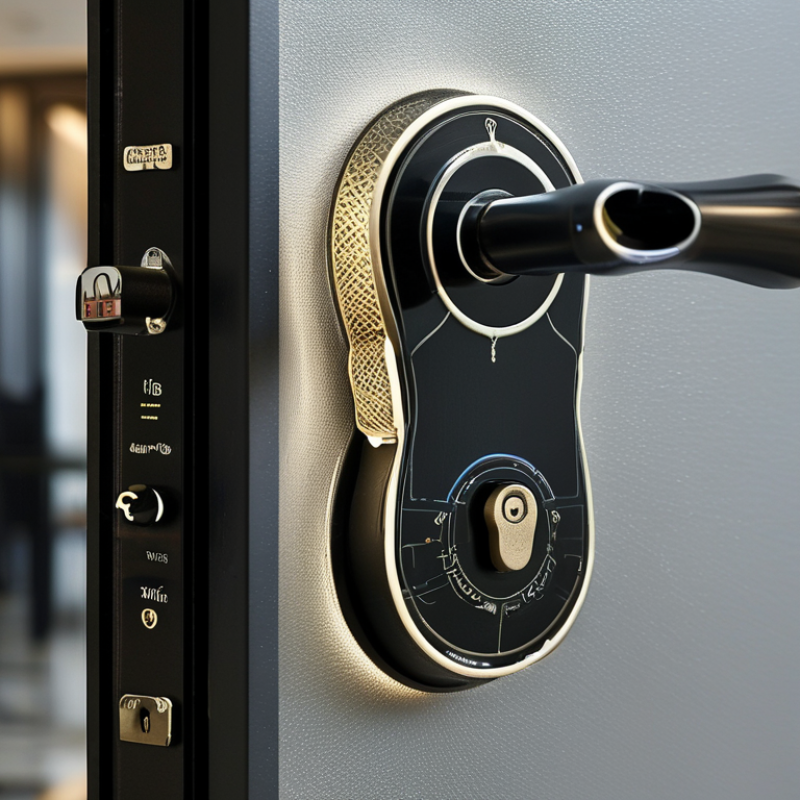
What defines a leading smart lock manufacturer in China? It is not a glossy catalog or a low quotation. A credible manufacturer shows controlled production, tested materials, and clear responsibility after shipment. Experience appears in small details: aligned deadbolts, stable fingerprint sensors, sealed battery compartments, and packaging that survives long transport. Engineers should explain failure rates, not only successful demonstrations. That honesty matters.
Professional capability also requires traceable quality control. Ask for incoming material checks, assembly inspections, endurance testing, and final function tests. Request sample reports and production records. A serious factory can explain firmware updates, data protection, emergency access, and battery failure procedures. Requirements differ by market, so export documents and relevant certifications must match the destination. Vague answers deserve caution.
Authority grows through verifiable projects, technical staff, and responsive service. A useful supplier should provide samples, realistic lead times, installation guidance, and spare-part plans. Visit the facility when possible, or arrange an independent audit. Do not trust photographs alone. They can be old. Even experienced manufacturers may miss a packaging weakness or underestimate local installation habits. Trial orders reveal more than promises. Measure return rates, response speed, and user feedback before scaling production. The best partnership leaves room for correction, because smart locks face real doors, weather, users, and occasional mistakes.
| Evaluation Dimension | What Leading Manufacturers Typically Demonstrate | Verifiable Buyer Checkpoints | Global Relevance |
|---|---|---|---|
| Product Portfolio | Residential, apartment, hotel, office, cabinet, and retrofit smart-lock configurations with multiple door-fit options. | Request product drawings, door-thickness ranges, backset measurements, cylinder options, and installation manuals. | A broad portfolio reduces redesign costs for distributors serving different markets and door standards. |
| Access Methods | A combination of fingerprint, PIN code, mechanical key, RFID or NFC card, mobile application, and temporary access credentials. | Verify supported credential types, administrator limits, user-management functions, emergency access, and offline operation. | Multiple access methods support residential, hospitality, rental, and commercial use cases. |
| Connectivity | Support for commonly used wireless technologies such as Bluetooth Low Energy, Wi-Fi, Zigbee, Z-Wave, or Matter, depending on the model. | Confirm frequency bands, gateway requirements, API availability, mobile operating-system support, and interoperability test results. | Protocol compatibility affects installation complexity, smart-home integration, and regional market acceptance. |
| Security Architecture | Encrypted communication, role-based access control, audit logs, signed firmware updates, secure credential storage, and account protection. | Request a security white paper, vulnerability-response procedure, update policy, data-storage location, and penetration-test summary. | Cybersecurity controls are essential when locks connect to cloud platforms, property-management systems, or home networks. |
| Mechanical Durability | Tested lock bodies, reinforced components, corrosion-resistant finishes, controlled motor performance, and repeat-cycle testing. | Ask for cycle-test results, salt-spray test conditions, operating-temperature range, ingress information, and failure-rate records. | Durability requirements vary by climate, door type, traffic level, and building application. |
| Compliance and Testing | A documented compliance program covering applicable electrical, radio, battery, environmental, and product-safety requirements. | Check relevant documentation for CE, FCC, UKCA, RoHS, REACH, SRRC, or other destination-market requirements; verify certificate scope and model numbers. | Compliance must be confirmed for the exact model and target market rather than assumed from a factory-wide certificate. |
| Customization Capability | OEM and ODM support for firmware, packaging, finishes, user interfaces, mounting parts, private-label documentation, and regional requirements. | Review engineering-change procedures, prototype timelines, tooling ownership, software customization limits, and minimum order quantities. | Customization helps importers align products with local door hardware, channel positioning, and regulatory needs. |
| Manufacturing Quality Control | Incoming-material inspection, assembly controls, end-of-line functional testing, barcode traceability, and documented corrective actions. | Request quality manuals, inspection plans, sample test reports, defect classifications, batch traceability, and factory-audit access. | Consistent process control is more useful than production volume alone when evaluating long-term supply reliability. |
| Software and Lifecycle Support | Defined firmware-support periods, application maintenance, remote diagnostics, change logs, and an incident-response contact. | Confirm update frequency, end-of-support terms, cloud-service continuity, data-export options, and customer-service response targets. | Smart locks require software support throughout their service life, not only during initial installation. |
| Supply and Service Capacity | Stable component sourcing, documented production capacity, spare-parts planning, multilingual technical support, and export experience. | Evaluate lead-time records, forecast procedures, buffer-stock options, warranty terms, replacement-part availability, and escalation channels. | Reliable after-sales service lowers warranty costs and protects distributor relationships in overseas markets. |
| Commercial Transparency | Clear quotations covering tooling, samples, packaging, software fees, certifications, shipping terms, warranty obligations, and payment conditions. | Compare total landed cost, minimum order quantity, sample charges, tooling ownership, replacement policy, and contract responsibilities. | Transparent commercial terms make supplier comparisons more accurate than unit price alone. |
Note: Certification and protocol requirements vary by product configuration and destination market. Buyers should verify current documents for the exact model, production site, and intended country of sale.
Scan QR code to download the app
 Skip to main content