Best China PVC 2-Piece Ball Valve Supplier?

Choosing the best China PVC 2-Piece Ball Valve supplier requires more than comparing catalog prices. The right partner should demonstrate material knowledge, consistent production, reliable testing, and clear technical communication. A polished website is helpful. It is not proof.

As thermoplastics piping consultant John L. McCready says, “A valve is only reliable when its materials, design, installation, and service conditions agree.” This practical view matters on real projects. A valve installed beside a chemical dosing skid may face corrosion, pressure changes, frequent cycling, and limited maintenance access. Its body, seals, stem, and connection method must suit those conditions.

Look for suppliers that identify PVC grades, sealing materials, pressure ratings, temperature limits, and applicable test procedures. Ask for dimensional drawings, sample inspection records, batch traceability, and evidence of pressure testing. Small details matter. A stiff handle may signal poor assembly. Uneven molding can reveal process weakness. Leaking seats are unacceptable.

Experience also matters during selection. A capable supplier will ask about media, flow requirements, pipe standards, installation position, and operating frequency. They should explain limitations instead of promising universal compatibility. That honesty builds trust.

No supplier is perfect. Even experienced factories can face inconsistent batches, delayed communication, or packaging damage. The better question is whether problems are detected, documented, and corrected quickly. This guide compares China-based manufacturers through that practical lens, helping buyers evaluate product quality, technical support, customization, export capability, and long-term value before placing an order.
Best China PVC 2-Piece Ball Valve Supplier?

What Is a PVC 2-Piece Ball Valve?

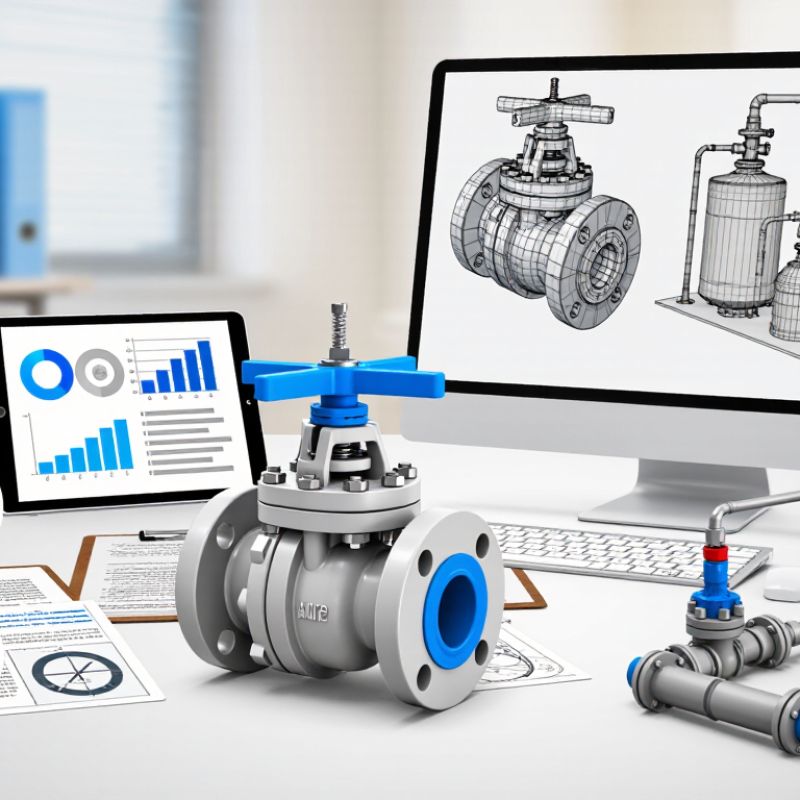
A PVC 2-piece ball valve controls liquid flow with a quarter-turn handle. Inside, a drilled plastic ball rotates between two sealing seats. When the hole aligns with the pipe, fluid passes through. Turning the handle 90 degrees blocks the passage.

The “2-piece” design means the valve body has two main sections joined during assembly. This structure can simplify production and inspection. However, it does not always mean every part is replaceable in service. PVC offers good corrosion resistance for water, irrigation, and many compatible chemicals. Temperature, pressure, fluid concentration, and connection type still require careful checking. Socket, threaded, and flanged ends suit different installation conditions. A reliable supplier should provide clear pressure ratings, material data, dimensional drawings, and batch inspection records. Small details matter. An incorrectly selected seal can fail earlier than expected.

Tips: Confirm the medium before ordering. Check maximum working temperature and pressure together, not separately. Avoid forcing the handle beyond its normal quarter-turn. Support nearby pipes to reduce stress on the valve body. During installation, clean pipe ends and allow solvent cement to cure fully. “Maintenance-free” sounds convenient, but it deserves caution; seals can age, and poor alignment may cause leakage. A practical inspection should include handle movement, joint condition, and signs of chemical attack.
What Standards Define a Reliable China PVC Ball Valve Supplier?

Best China PVC 2-Piece Ball Valve Supplier?

What Standards Define a Reliable China PVC Ball Valve Supplier?

A reliable supplier follows documented standards, not only attractive catalog claims. For PVC valves, ask for material data linked to ASTM D1784 or an equivalent standard. EN ISO 16135 can help verify thermoplastic valve design and performance. For drinking-water applications, request the relevant NSF/ANSI 61 approval. Requirements vary by market.

Look for a controlled quality system, such as ISO 9001, with clear inspection records. Each batch should include resin details, production dates, pressure-test results, and operator records. I have inspected valves where the body looked clean, but the socket depth was inconsistent. A small gap matters. It can cause leakage during installation.

Practical testing is equally important. The supplier should check shell strength, seat sealing, operating torque, and repeated opening cycles. Ask whether tests follow ISO 5208 or another accepted method. Confirm pressure ratings at the actual service temperature, because PVC weakens as heat rises. Good suppliers also provide dimensional drawings and samples before bulk production. Their answers should be specific, measured, and traceable.

No factory is flawless. That is why corrective-action records deserve attention. A supplier that admits a previous problem and explains the fix may be more dependable than one promising perfection.

Still, verify every claim through independent inspection when the application is critical.

How to Compare Materials, Design, and Manufacturing Quality

Best China PVC 2-Piece Ball Valve Supplier?

Comparing a PVC 2-piece ball valve starts with material, not price. Look for pressure-rated PVC with consistent wall thickness and clean, uniform color. Unstable resin can cause brittle threads or cloudy surfaces. For seals, EPDM suits many water applications, while PTFE handles more demanding chemical conditions. Confirm the seal compound with test data, not a sales description.

Design details reveal practical experience. A full-port ball should allow smooth flow and reduce pressure loss. Check the stem support, handle strength, thread depth, and body connection. I prefer suppliers that provide drawings, pressure ratings, temperature limits, and sample valves for inspection. Turn the handle repeatedly. It should feel firm, not gritty. Small defects matter.

Manufacturing quality needs evidence. Ask about injection-molding controls, assembly torque, leak testing, and batch traceability. A reliable factory should record pressure-test results and inspect dimensions with calibrated tools. Request production samples from different batches, because one perfect sample proves little. Packaging also matters; damaged threads can appear after transport. Factory visits can help, although they do not replace independent testing. No checklist is perfect. A supplier may meet specifications yet still overlook a rough seat or uneven socket. Pay attention to those uncomfortable details.

Best China PVC 2-Piece Ball Valve Supplier? - How to Compare Materials, Design, and Manufacturing Quality

A practical comparison framework for evaluating PVC 2-piece ball valve suppliers

Evaluation Dimension Recommended Specification Acceptable Evidence from the Supplier Quality Risk if Not Verified
Valve body material PVC-U pressure-grade compound suitable for the intended fluid and temperature range. A compound conforming to recognized material requirements such as ASTM D1784 is preferable. Material grade, compound classification, technical data sheet, and batch traceability. Brittleness, deformation, chemical incompatibility, or premature cracking.
Alternative body materials Use CPVC when higher temperature resistance is needed and verify chemical compatibility. Do not assume PVC-U and CPVC have identical pressure-temperature ratings. Published pressure-temperature curves and application-specific chemical-resistance data. Loss of strength at elevated temperature or stress cracking caused by aggressive media.
Ball and stem design Full-port or reduced-port ball as required by the application; anti-blowout stem; smooth, accurately machined ball surface. Cross-sectional drawings, assembly specifications, and sample inspection results. High pressure loss, difficult operation, stem ejection, or leakage around the stem.
Seat material PTFE or reinforced PTFE for broad chemical resistance; select the seat according to temperature, pressure, and fluid compatibility. Seat material certificate, operating limits, and leakage-test results after cycling. Torque increase, seat deformation, leakage, or shortened service life.
O-ring material EPDM is commonly used for water and many dilute chemicals; FKM may suit oils and higher-temperature applications. Compatibility must be checked for each medium. O-ring compound identification, hardness range, and chemical compatibility chart. Swelling, hardening, shrinkage, or external leakage.
Pressure rating Common PVC ball valves are often rated around PN10 or PN16 at reference temperatures, but the actual rating depends on size, design, and temperature. Pressure-temperature chart, nominal pressure designation, and applicable test standard. Overstressed valve body, leakage, or failure during operation.
Connection standard Specify solvent-socket, metric spigot, ISO 7-1 tapered pipe thread, or ASME B1.20.1 NPT thread according to the piping system. Dimensional drawings, thread gauges, socket dimensions, and sample-fit verification. Incorrect assembly, cross-threading, joint leakage, or incompatibility with existing piping.
Applicable product standard ISO 16135 is a relevant standard for thermoplastics valves used in industrial applications. The selected standard should match the market and application. Declaration of conformity, standard edition, test scope, and independent laboratory report when required. Unclear performance claims and difficulty demonstrating compliance to customers or inspectors.
Shell and seat testing Hydrostatic shell and seat tests should follow the agreed valve standard or test procedure. Test pressure and hold time must be documented rather than described only as “100% tested.” Inspection plan, calibrated gauges, test records, acceptance criteria, and sampling or 100% inspection policy. Undetected casting, molding, assembly, or sealing defects.
Operating torque Torque should be consistent across the size range and compatible with the handle, actuator, or automation system. Torque measurement data for clean and pressure-loaded conditions. Handle breakage, actuator oversizing, incomplete opening, or difficult maintenance.
Dimensional consistency Critical dimensions should remain within the approved drawing tolerances, especially end-to-end length, socket depth, thread dimensions, and mounting interface. First-article inspection report, control plan, calibrated measuring equipment, and retained samples. Installation delays, misalignment, inconsistent interchangeability, or field leakage.
Injection-molding quality Uniform wall thickness, controlled molding temperature, minimal weld-line weakness, and no visible voids, sink marks, or contamination. Molding process controls, cavity inspection, visual standards, and nonconformance records. Hidden stress concentration, cracking, dimensional instability, or reduced pressure resistance.
Cycle and durability testing Require documented open-close cycling under defined pressure and temperature conditions; the cycle count must be agreed before purchase. Cycle-test method, sample size, failure criteria, and before-and-after leakage data. Rapid wear, seat leakage, increasing torque, or early field replacement.
Traceability and quality system Each production lot should be traceable to material, molding date, inspection result, and packing record. Lot codes, inspection records, corrective-action process, and current quality-management certification where applicable. Difficult root-cause investigation and inconsistent quality between shipments.
Documentation and samples Approve a production sample against the final drawing, material specification, markings, packaging, and test requirements before mass production. Signed technical specification, approved sample, inspection checklist, and change-control procedure. Unapproved substitutions, specification drift, and disputes over product performance.
Selection note: The best supplier is not necessarily the lowest-cost option. Compare the complete specification, pressure-temperature rating, material compatibility, documented testing, dimensional consistency, and traceability before placing a production order.

Which Certifications and Services Should Buyers Verify?

Best China PVC 2-Piece Ball Valve Supplier?

Buyers should verify certifications before comparing prices. ISO’s 2022 Survey recorded more than 1.2 million ISO 9001 certificates worldwide, but certification alone proves little about valve performance. Request the certificate number, issuing body, validity period, and exact factory scope. The scope should include plastic valve design or manufacturing, not only general trading.

For potable-water projects, check NSF/ANSI/CAN 61 or an accepted local equivalent. This standard evaluates materials that contact drinking water. For environmental controls, ISO 14001 can indicate a structured management system. RoHS and REACH documentation may also matter when valves enter regulated markets. However, declarations should identify the PVC compound, seals, lubricants, and additives. Generic documents are weak evidence.

Ask for batch traceability, dimensional inspection records, torque data, and hydrostatic test reports. ISO 9393 provides relevant testing principles for thermoplastic valves. The supplier should explain pressure ratings at different temperatures, thread standards, socket dimensions, and seal materials. Request samples from normal production, not specially polished pieces. PlasticsEurope reported global plastics production at about 400 million tonnes in 2022, showing the scale of the material industry, but scale does not guarantee consistency. A supplier may offer fast customization and low minimum orders. That sounds useful, yet rushed changes can create leakage risks. I would also verify spare-part availability, complaint response time, packaging protection, and independent pre-shipment inspection. One certificate is never enough.

Best China PVC 2-Piece Ball Valve Supplier: Certifications and Services to Verify

Buyer verification priority for product standards, compliance documents, and inspection services

The priority scale is a practical buyer checklist, not a supplier ranking. ISO 16135 and ISO 9393-1/2 address thermoplastic ball-valve requirements and pressure testing. NSF/ANSI/CAN 61 applies when the valve is intended for drinking-water contact. ISO 9001, EN 10204 3.1 material documentation, RoHS/REACH declarations, pressure testing, dimensional inspection, and traceability records should be verified according to the destination market and application.

How to Select the Best Supplier for Your Application?

Best China PVC 2-Piece Ball Valve Supplier?

How to Select the Best Supplier for Your Application?

Selecting a PVC 2-piece ball valve supplier should begin with the application, not the catalog price. Define the medium, working pressure, temperature range, pipe size, connection standard, and operating frequency. A valve for clean water may fail early in chemical service. Ask for material details, including PVC grade, seal composition, and stem design.

Practical experience matters during supplier evaluation. Request dimensional drawings, pressure-test records, and sample valves before placing a large order. Check whether each valve receives leakage and shell testing. Review production capacity, inspection methods, and batch traceability. A reliable supplier should explain tolerances clearly, not hide behind general certificates. Technical answers should match the actual valve model.

Small details often expose larger weaknesses. Inspect the handle fit, seat movement, thread quality, and molding marks on a sample. Ask how replacement parts are managed after delivery. Confirm packaging for long-distance transport, especially around the actuator or threaded ends. A low quotation can become expensive after delays, inconsistent batches, or unsuitable seals. I have seen specifications look complete while one pressure condition remained unclear. That deserves a second review. Supplier selection is not perfectly predictable, so record assumptions and test the valve under realistic site conditions before approval.

LSP App

Download the LSP App now

Scan QR code to download the app

We use cookies to personalize content, utilize website traffic analytics & support our marketing initiatives. By continuing to browse our site you consent to receive our cookies. For more information see our Privacy Statement. 
Ok