Buying shuttering magnets across borders involves more than comparing prices. The right choice affects panel alignment, setup time, and the finish of precast concrete elements. Small details matter. A magnet that suits one formwork system may not fit another, even when dimensions look similar.
Before requesting quotations, define the application clearly. Note the formwork material, steel plate thickness, panel layout, concrete pressure, and expected reuse cycles. Then compare the magnet’s dimensions, switching mechanism, holding-force data, and surface protection. Ask suppliers how test results were measured; figures without conditions can be difficult to compare. If possible, inspect a sample on your own formwork. A practical trial can reveal awkward release handles or movement under vibration. It is not a perfect guarantee.
Global sourcing adds more questions. Confirm drawings, tolerances, packaging, spare parts, and lead times in writing. Request clear product specifications and check that the supplier can explain its quality-control process. For coastal storage or humid job sites, discuss corrosion protection and handling instructions. Packaging deserves attention too; a damaged housing can delay installation before the magnets reach the site. Not every buyer needs the highest-rated model. In some cases, that choice adds cost without solving a real problem.
The seven tips in this guide help buyers assess fit, performance, supplier reliability, and delivery risks. Use them as a starting point, not a substitute for engineering review. Conditions vary from project to project. A checklist helps, though it cannot replace a careful trial under realistic working conditions.
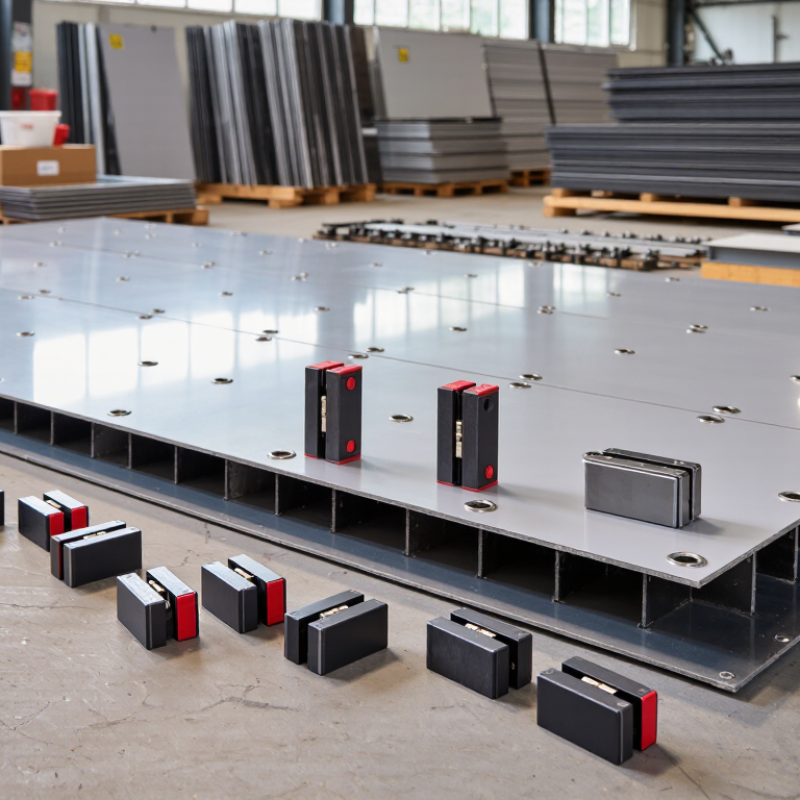
Shuttering magnets are compact fixtures that hold steel formwork in position during precast concrete production. A typical unit contains a permanent magnet assembly inside a steel casing, with a lever or button to switch its magnetic force on and off. When activated, magnetic flux passes through the magnet’s base into the steel casting bed, clamping the form without drilling or welding. Release the switch, and the form can be moved. Simple in principle.
The concrete does not touch the magnet’s rated pull-off force directly; it pushes against the form, which transfers load to the magnet and bed. ACI 347R-14, Guide to Formwork for Concrete, uses 150 lb/ft³ (about 2,400 kg/m³) as a normal-weight concrete reference in form-pressure calculations. That figure helps explain why placement speed, concrete temperature, and form height matter when choosing a magnet. A strong rating alone is not enough. Dust, grout, paint, or a slightly warped steel bed can reduce contact and holding performance. Check the actual bed thickness and surface, then follow the magnet supplier’s load and spacing guidance. Small gaps matter. One easy mistake is treating a catalogue rating as a guaranteed site result; it is not.

Shuttering magnets should be selected for the formwork interface, not by holding force alone. On a steel casting bed, compact magnetic boxes suit straight, repeatable runs. A side-rail magnet can be more practical when crews reposition long edge profiles often. For timber, aluminum, or plastic forms, the magnet needs a steel carrier or adapter; it cannot grip a non-magnetic surface directly.
Precast production is expanding: MarketsandMarkets’ 2023 Precast Concrete Market report estimated growth from US$130.4 billion in 2023 to US$174.1 billion by 2028. That trend makes repeatable setup valuable, but it does not make one magnet type right for every mold. Match the unit’s footprint and release method to the bed thickness, profile height, access for removal, and expected concrete pressure. ACI 347R guidance treats formwork pressure and support as design considerations; a magnet’s catalog pull rating is not a substitute for checking the complete assembly.
A small test pays off. Set the profile on a clean bed, lock the magnet, then check for rocking and movement during vibration. Fit matters more. One awkward detail: grout, rust, or a slight bed warp can reduce real contact, even when the rated force looks generous. Record the setup that works, but recheck it after changing profile material or dimensions.
| Tip | Formwork or Use Case | Suitable Magnet Type | Why It Can Fit | What to Check Before Buying |
|---|---|---|---|---|
| 1 | Steel formwork with repeated panel layouts | Standard push-button shuttering magnet | The integrated button engages the magnetic unit and is designed for quick positioning and release on compatible steel beds or forms. | Check the steel contact surface, available installation space, button access, and the supplier’s stated holding-force test conditions. |
| 2 | Layouts where the magnet must be positioned or released from the side | Side-release or side-operation magnet | A side-access mechanism can be more practical when vertical clearance above the magnet is limited. | Confirm the operating direction, tool clearance, magnet orientation, and whether workers can safely reach the release mechanism. |
| 3 | Timber or plywood formwork used with a steel casting bed | Magnet box or magnet with a formwork adapter | The magnet anchors to the steel bed while an adapter or box provides a mounting interface for the formwork profile. | Match the adapter dimensions to the profile and verify that the assembly transfers the expected load without rocking or slipping. |
| 4 | Aluminum or other non-ferromagnetic formwork | Magnet assembly used with a compatible steel plate or adapter | A magnet cannot directly hold to non-ferromagnetic aluminum. A suitable ferromagnetic component may provide the required magnetic contact. | Check the complete load path, attachment method, steel plate thickness, and whether the adapter is approved for the formwork system. |
| 5 | Edge and corner sections requiring a specific profile position | Corner magnet or shaped adapter assembly | A purpose-shaped contact or adapter can help locate edge forms where a standard flat assembly may not fit well. | Compare the actual corner geometry, clearances, and contact area; do not assume a standard magnet fits every corner profile. |
| 6 | Heavy-duty or custom formwork profiles | Custom magnet box or multi-magnet assembly | A configured assembly can accommodate non-standard profile dimensions or mounting arrangements when a standard unit is unsuitable. | Provide drawings and design loads. Have the assembly checked for contact, load direction, stability, and release access before production. |
| 7 | Any application where formwork may shift, vibrate, or carry substantial loads | Magnet type selected by verified load requirements, with mechanical restraint where required | Magnetic holding performance depends on the contact conditions and load direction; a rated pull force alone does not establish safe resistance to sliding or overturning. | Account for steel thickness, surface flatness, coatings, debris, air gaps, vibration, and safety factors. Follow the formwork design and manufacturer’s instructions. |
A listed holding force is only useful when its test conditions are clear. Ask how the value was measured, including steel plate thickness, surface condition, and pull direction. A smooth, thick test plate may produce a higher result than a real formwork surface. Request a dated test report and confirm that it matches the magnet’s model and configuration. Details matter.
Tips: Compare the stated force with your actual formwork setup. Check dimensions, magnet spacing, and release mechanism in the technical drawing. Ask whether the force is measured vertically or as resistance to sliding; these are not interchangeable. If possible, arrange a sample test on clean steel similar to your site material. Record the setup and results.
Review material and dimensional tolerances, operating temperature, and any stated limits for repeated use. Ask for written clarification when a specification is vague. I would not treat one laboratory number as a guarantee for every job; real surfaces can be uneven, painted, or dusty. That difference is easy to overlook. Rechecking the figures against your installation plan may feel repetitive, but it can prevent a costly mismatch.
Compare suppliers using the same technical checklist, not brochure claims. McKinsey Global Institute’s 2017 construction report estimated labor productivity growth at roughly 1% annually over two decades. That figure does not measure magnet performance, but it underscores the cost of avoidable site delays. Ask each supplier for rated holding force, test conditions, and batch-level records. Ask for proof.
Check what a certificate actually covers. ISO 9001 certifies a quality management system, not a shuttering magnet’s holding force or service life. ISO 2859-1 provides acceptance-sampling procedures for inspecting batches; it does not replace product testing. Request the certificate’s scope, issuing body, validity, and the inspection records tied to your order. For a practical comparison, specify the same steel plate thickness and surface condition, then test samples with a calibrated pull gauge. Record the results.
Details matter. A clean test plate may produce different results from a painted, uneven formwork surface. Ask how the supplier controls magnet dimensions, coatings, and assembly, and whether failed batches trigger corrective action. A small pilot on your actual formwork can expose fit or release problems before a larger purchase. I would still treat one successful sample cautiously: it cannot confirm consistent production. Compare traceability and repeat-test data, not just the strongest reading.
International shipping for shuttering magnets needs more than a freight quote. Confirm the magnet dimensions, quantity, gross weight, and packaging before booking. Ask the supplier for a packing list and clear loading photos. These details help your forwarder estimate space and reduce confusion at the receiving dock. Build in extra time for port handling and inland delivery. Schedules can shift, even when the paperwork looks complete.
Tip 1: Protect the magnets during transit. Request secure cartons or crates, with separators that prevent magnets from striking each other. Label each package with its weight and handling direction. Share unloading requirements with the site team before delivery. A forklift may be available at the warehouse, but not at the jobsite. Check this early.
Tip 2: Plan installation and support before shipment. Send the supplier drawings or photos of the formwork, so the team can confirm magnet placement and operating steps. Arrange a remote demonstration for installers, and keep a simple checklist near the work area. Ask for spare parts, cleaning guidance, and a named contact for technical questions. Record batch details and installation issues. Small mistakes are easy to miss during a rushed first setup; I would allow time for a second check.
Plan international shipping, installation, and after-sales support with these indicative time ranges.
The bars show indicative calendar-day ranges, not guaranteed service times. Transit, customs, and delivery depend on the route, shipping method, documentation, and local conditions. Confirm schedules and response commitments with your supplier and logistics provider.
Scan QR code to download the app
LSP Products was founded by plumbers over 50 years ago with a focus on unparalleled innovation, superior product quality, and best-in-class service to the plumbing industry. Our primary focus is the new construction market where we develop products that make installations easy and provide significant cost savings to the plumbing/mechanical contractor. LSP has a manufacturing facility located in Monterrey, Mexico and a distribution center in Dallas, Texas. We are proud to offer many products designed and made in North America… About LSP
Submit the form below to receive the document via email.